Colorado’s Democratic primary delivered a significant upset this week, as state Attorney General Phil Weiser defeated Sen. Michael Bennet to win the party’s nomination for governor. The result reflects a broader pattern emerging in Democratic primaries nationwide, where voters are increasingly willing to challenge long-standing party figures and back candidates positioned as outsiders to the party establishment.
Weiser’s victory places him as the clear favorite heading into the November general election in a state that has become reliably Democratic at the presidential level.
Primary Results
With about 83 percent of the vote counted late Tuesday night, Weiser led Bennet by a margin of roughly 55 percent to 45 percent. Bennet, a two-term U.S. senator and former Denver schools superintendent, entered the race as the perceived frontrunner and had once held a wide polling lead.
U.S. senators have historically fared well in open gubernatorial primaries, making Bennet’s loss notable. Nationally, sitting senators had not lost such a primary since 1942.
Weiser framed his win as a rejection of establishment politics, telling supporters that voters had chosen new leadership over what he described as politics driven by insiders and outside money.
Broader Trend
The gubernatorial race was not sharply ideological. Both Weiser and Bennet are generally seen as mainstream liberals. Still, the outcome is being viewed as part of a wider pushback among Democratic voters following Donald Trump’s 2024 election victory.
Weiser’s campaign sought to draw a contrast between his record and Bennet’s time in Washington. He highlighted Bennet’s votes to confirm several Trump cabinet nominees and portrayed Congress as an ineffective counterweight to the former president. Weiser also emphasized his own record of suing the Trump administration more than 60 times on issues ranging from immigration to environmental policy.
Bennet, meanwhile, faced criticism for relying on a super PAC that received significant funding from former New York City Mayor Michael Bloomberg. In the closing weeks of the race, Bennet loaned his campaign $1 million, a move that signaled concern about the tightening contest.
Other Colorado Races
The primary results across Colorado reinforced the sense of a growing insurgent mood within the party.
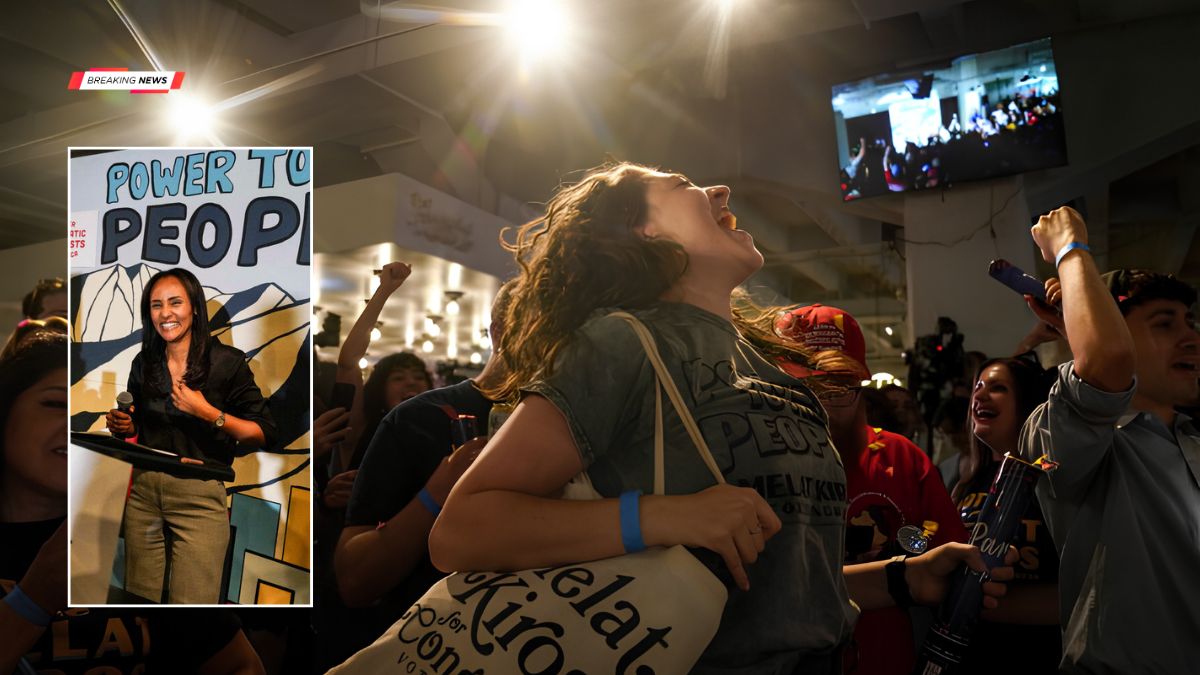
In the state’s 8th Congressional District, state Rep. Manny Rutinel defeated a more centrist Democratic opponent. In Denver’s 1st District, 29-year-old democratic socialist Melat Kiros held a narrow lead over 15-term Rep. Diana DeGette, with most observers expecting remaining ballots to favor younger and more progressive voters.
Kiros’s campaign, backed by Sen. Bernie Sanders and the group Justice Democrats, has drawn national attention. If her lead holds, it would mark another defeat for long-serving Democratic incumbents and groups aligned with party leadership.
Not all progressive challengers prevailed, however. Sen. John Hickenlooper defeated progressive challenger Julie Gonzales, though by a narrower margin than some past races. Hickenlooper significantly outraised Gonzales, which likely helped blunt the challenge.
Colorado’s Political Landscape
Colorado’s shift did not happen overnight. The state voted Republican in presidential elections as recently as 2004, but decades of population growth and an influx of younger, college-educated voters have reshaped its electorate. Democrats now control every statewide office and both chambers of the legislature.
That transformation has set the stage for tensions within the party itself. Colorado Democrats have long cultivated a reputation for pragmatism and business-friendly governance. The latest primary results suggest that a growing share of the party’s voters want a more confrontational and activist approach.
What Comes Next
If Weiser wins in November, he will succeed Gov. Jared Polis, a Democrat known for his libertarian streak and occasional willingness to break with party orthodoxy. The primary results suggest Colorado Democrats are reassessing what kind of leadership they want as the state continues to evolve politically.
While the long-term impact of this shift remains uncertain, the message from Tuesday’s primary was clear: incumbency and establishment backing no longer guarantee victory in Colorado’s Democratic Party.
FAQs
Who won Colorado’s Democratic gubernatorial primary?
State Attorney General Phil Weiser defeated Sen. Michael Bennet.
Was the race highly ideological?
No, both candidates are considered mainstream Democrats.
Why is Bennet’s loss notable?

U.S. senators rarely lose open gubernatorial primaries.
Did progressives win other races in Colorado?
Yes, several insurgent candidates won or led in key primaries.
What does this signal for Colorado Democrats?
Voters appear more willing to challenge party establishment figures.