
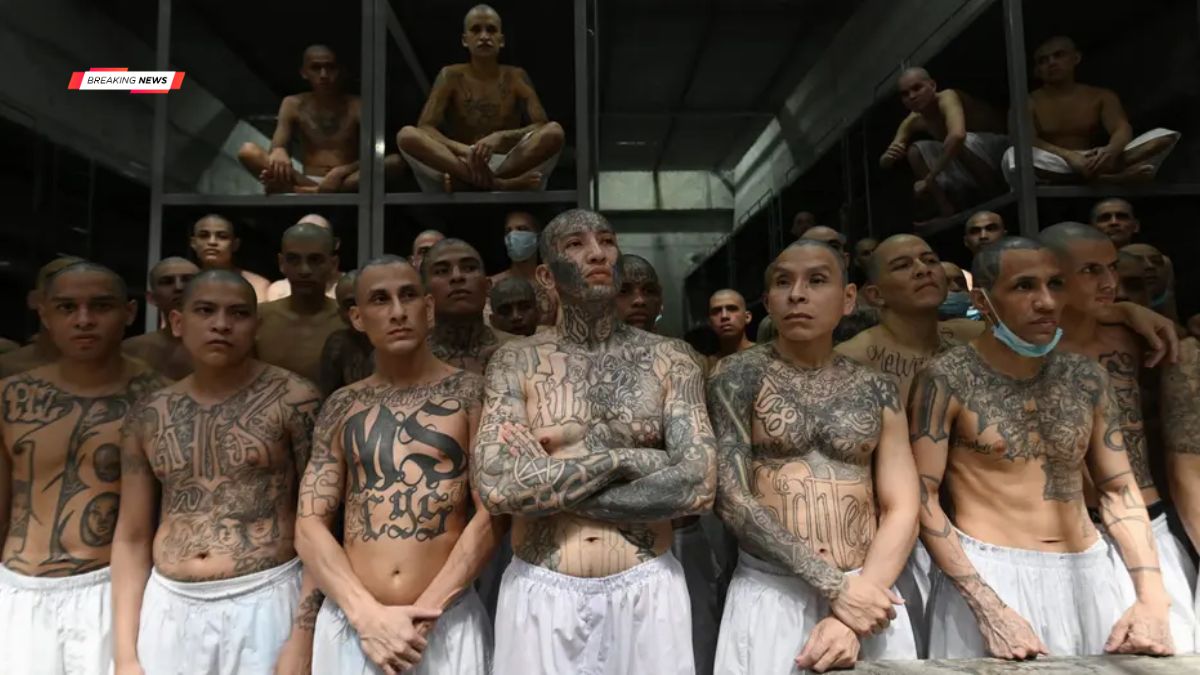
Prisons are designed to separate convicted offenders from society, but in some cases they have also become places where criminal organizations strengthen their influence. Inside correctional facilities around the world, certain prison gangs have developed structures that allow them to recruit members, enforce internal rules, and maintain communication with associates outside prison.
A 2026 report from Penal Reform International (PRI) highlights how overcrowding, corruption, limited oversight, and inadequate prison resources have allowed organized crime groups to expand their influence in some correctional systems. While the size and reach of these gangs vary, many have been linked by law enforcement and researchers to criminal activities that extend beyond prison walls.
Here are eight prison gangs that have had a significant impact inside correctional facilities and, according to authorities and researchers, have influenced criminal activity outside prison.
Primeiro Comando da Capital (PCC)
Founded in 1993 inside Taubaté prison in São Paulo, Brazil, Primeiro Comando da Capital (PCC) began as an alliance among prisoners who said they wanted to protect inmates from abuse.
Over time, Brazilian authorities identified the PCC as one of the country’s largest organized crime groups. Investigators say its leaders have maintained influence over drug trafficking, robberies, extortion, and other criminal enterprises, even while incarcerated.
The group’s operations have expanded beyond Brazil through connections to neighboring countries and international trafficking routes.
Comando Vermelho
Comando Vermelho, also known as the Red Command, emerged during the 1970s inside Rio de Janeiro’s Cândido Mendes prison.
Originally formed for mutual protection among inmates, the organization later expanded into drug trafficking, weapons distribution, and other organized criminal activities.
Authorities have documented a long-running rivalry between Comando Vermelho and the PCC, with conflicts contributing to violent incidents inside Brazilian prisons and beyond.
Tren de Aragua
Tren de Aragua originated in Venezuela and became closely associated with Tocorón prison, where authorities say gang leaders established a base of operations.
According to researchers, the group expanded into crimes including extortion, kidnapping, smuggling, and human trafficking while extending its presence into several countries in Latin America.
Experts caution that some public claims regarding the gang’s international coordination remain the subject of ongoing research.
Los Lobos and Los Choneros
Ecuador’s prison system has experienced repeated violence involving rival gangs Los Lobos and Los Choneros.
Their competition for influence inside correctional facilities has been linked to deadly prison riots and broader criminal conflicts outside prison.
According to Penal Reform International, hundreds of inmates have died in prison violence in Ecuador since 2020, underscoring the challenges authorities face in maintaining control.
Mexican Mafia
The Mexican Mafia, commonly known as La Eme, is one of the most influential prison gangs in the United States.
Although its core membership is relatively small, federal authorities say the organization has exercised influence over numerous Southern California street gangs through extortion, intimidation, and organized criminal activity.
Federal prosecutions have linked members to offenses including drug trafficking, violent crime, kidnapping, illegal gambling, and racketeering.
Aryan Brotherhood
The Aryan Brotherhood was established in California prisons during the late 1960s.
The gang is known for its white supremacist ideology and has been the subject of multiple federal investigations involving violent crime, racketeering, drug distribution, and assaults.
Law enforcement officials say the organization’s reputation for violence has allowed it to maintain influence despite its comparatively small membership.
Barrio 18 and MS-13
Barrio 18 and Mara Salvatrucha, better known as MS-13, originated in Los Angeles before expanding throughout Central America.
Authorities in Guatemala and other countries have documented the gangs’ influence inside prisons, where members have organized protests, riots, and coordinated responses following government crackdowns.
Government data released in 2026 identified thousands of active members from both gangs inside Guatemala’s correctional facilities.
South Africa’s Number Gangs
South Africa’s Number Gangs, known as the 26s, 27s, and 28s, are among the world’s oldest prison gang systems.
Researchers describe the groups as having detailed internal hierarchies, rituals, rules, and disciplinary structures that have shaped prison culture for decades.
Their long history demonstrates how organized prison gangs can develop parallel systems of authority within correctional institutions.
Challenges
According to Penal Reform International, prison gangs often thrive where correctional systems face overcrowding, understaffing, corruption, and limited resources.
The organization notes that more than 100 countries operate prisons above 110 percent capacity, conditions that can make it more difficult for authorities to maintain control and prevent organized criminal activity.
Governments have introduced measures including high-security units, communication restrictions, enhanced surveillance, and prison transfers to limit gang influence. Researchers note that while these strategies can disrupt criminal networks, long-term solutions also require addressing the underlying conditions that allow gangs to grow.
The 2026 report concludes that reducing prison gang influence depends not only on stronger security measures but also on improving prison management, oversight, staffing, and rehabilitation efforts to reduce opportunities for organized crime to flourish.
FAQs
What is the PCC prison gang?
PCC is a Brazilian prison gang founded in 1993 in São Paulo.
Which U.S. prison gang is known as La Eme?
La Eme is another name for the Mexican Mafia.
What are South Africa’s Number Gangs?

They are the 26s, 27s, and 28s prison gang system.
Why do prison gangs gain influence?
Experts cite overcrowding, corruption, and weak prison oversight.
Who published the 2026 prison gang report?
The report was released by Penal Reform International.