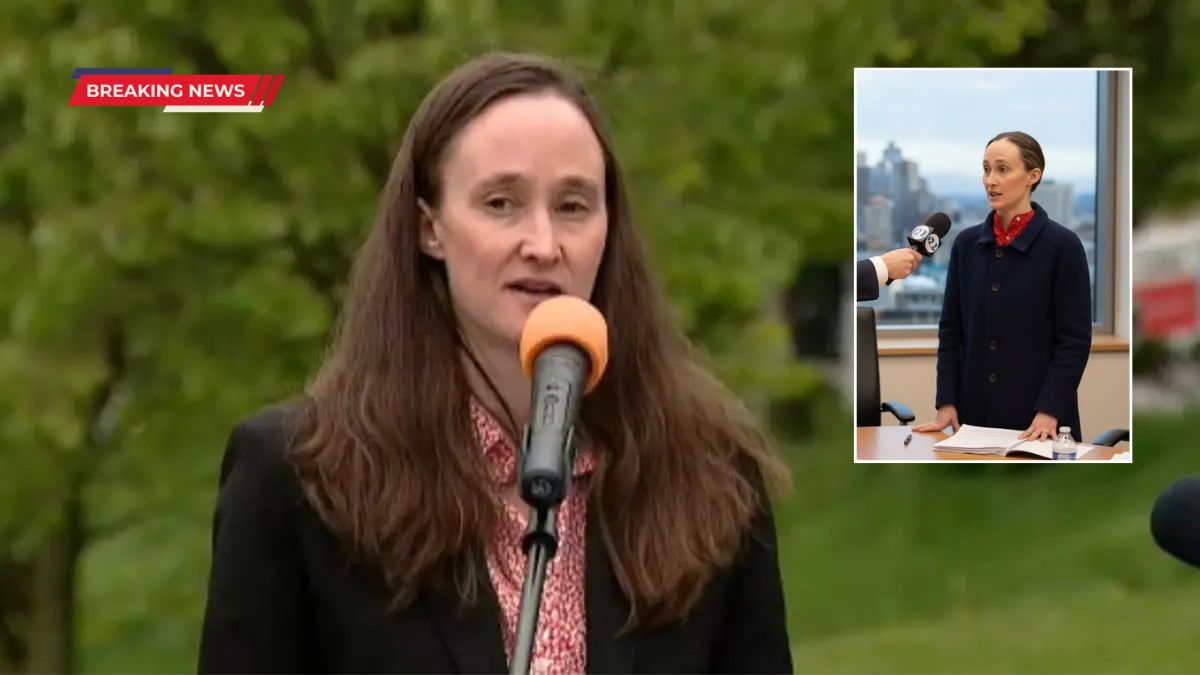
An unusual moment during a media event involving Seattle Mayor Katie Wilson is drawing attention after a staff member interrupted an interview and pulled the mayor away following a question about surveillance cameras and public safety.
The incident occurred during a recent press interaction with KOMO reporter Chris Daniels. Wilson was asked whether recent gun violence incidents in Seattle had changed her views on the use of CCTV cameras across the city. Before the mayor could fully answer, a junior staffer stepped in and ended the exchange.
Video of the interaction quickly circulated online, leading to criticism from political commentators and communications professionals who argued the interruption created unnecessary attention around the issue.
Exchange
During the interview, Daniels asked Wilson whether a rise in violent incidents had shifted her position on surveillance cameras as a public safety tool.
Wilson began responding before a city staff member interrupted and physically guided her away from the conversation. The moment appeared abrupt on camera and immediately became the focus of discussion online.
The interruption overshadowed the original topic of the media event and shifted attention toward the mayor’s communication strategy and handling of press questions.
Incident Summary
| Detail | Information |
|---|---|
| Mayor Involved | Katie Wilson |
| Reporter | Chris Daniels |
| News Outlet | KOMO |
| Main Topic | CCTV cameras and gun violence |
| What Happened | Staffer interrupted interview |
| Public Reaction | Criticism over media handling |
Reaction
The incident prompted debate among political observers, journalists, and communications professionals about how elected officials should respond to difficult or unexpected questions.
Some critics argued the interruption made the situation appear more damaging than the question itself. Others said it reflected the challenges public officials face when navigating live media environments, particularly during high-pressure political moments.
Communications experts often recommend a strategy known as “bridging,” where officials briefly acknowledge a question before redirecting attention back to the event’s main subject. In this case, critics said the decision to end the exchange abruptly may have intensified public interest in the CCTV issue.
The clip continued spreading across social media platforms, where users debated both the substance of the question and the staffer’s response.
Surveillance
The question raised during the interview centered on the use of CCTV cameras in Seattle and whether rising concerns about gun violence should influence city policy.
Public surveillance systems remain a debated topic in many major cities across the United States. Supporters often argue cameras can assist law enforcement investigations, deter crime, and improve public safety monitoring.
Opponents, however, frequently raise concerns about privacy, government oversight, and the long-term expansion of surveillance technologies.
Seattle has historically seen strong public debate around surveillance policies, particularly regarding privacy protections and data collection practices.
CCTV Debate
| Supporters Say | Critics Say |
|---|---|
| Cameras help investigations | Privacy concerns remain |
| Footage may deter crime | Potential government overreach |
| Useful during emergencies | Risk of expanded monitoring |
Communications
The episode has also sparked broader discussion about media management within Wilson’s administration as the first-term mayor continues adapting to the demands of public office.
Political communications teams often play a significant role in coordinating press access, scheduling interviews, and helping officials navigate sensitive topics. However, interruptions during live interviews can sometimes attract more scrutiny than the original question.
Analysts noted that short and direct responses are often more effective than avoiding questions entirely, particularly when cameras are rolling.
The situation illustrates how quickly unscripted moments can become major discussion points in modern political coverage, especially when clips spread rapidly online.
Scrutiny
As Seattle continues addressing issues related to crime, public safety, and policing policy, questions about surveillance technology are likely to remain part of public debate.
For Wilson, the incident reflects the broader pressures facing new city leaders balancing policy discussions with constant media attention. Public officials are increasingly expected to respond immediately to difficult questions while maintaining message discipline in live settings.
At the same time, moments involving visible staff intervention often draw additional public curiosity because they can create the impression that officials are avoiding discussion.
The mayor’s office has not indicated whether the interruption reflected a planned media strategy or a spontaneous decision by staff during the interaction.
Attention
While the original question focused on CCTV policy, much of the public discussion following the incident has centered on the handling of the interview itself.
Media experts note that moments involving interruptions or attempts to end interviews can sometimes extend the lifespan of a story rather than contain it. In today’s digital environment, short video clips frequently become focal points for political commentary and online debate.
As discussion continues, the incident serves as another example of how live political interactions can quickly shift from policy conversations to broader questions about transparency, communications strategy, and public perception.
FAQs
Who interrupted Katie Wilson’s interview?
A junior Seattle city staff member interrupted it.
What question was asked?
A question about CCTV cameras and gun violence.
Which reporter asked the question?

KOMO reporter Chris Daniels asked it.
Why did the clip gain attention?
The interruption sparked criticism online.
What broader issue did it raise?
Debate over political media handling and transparency.