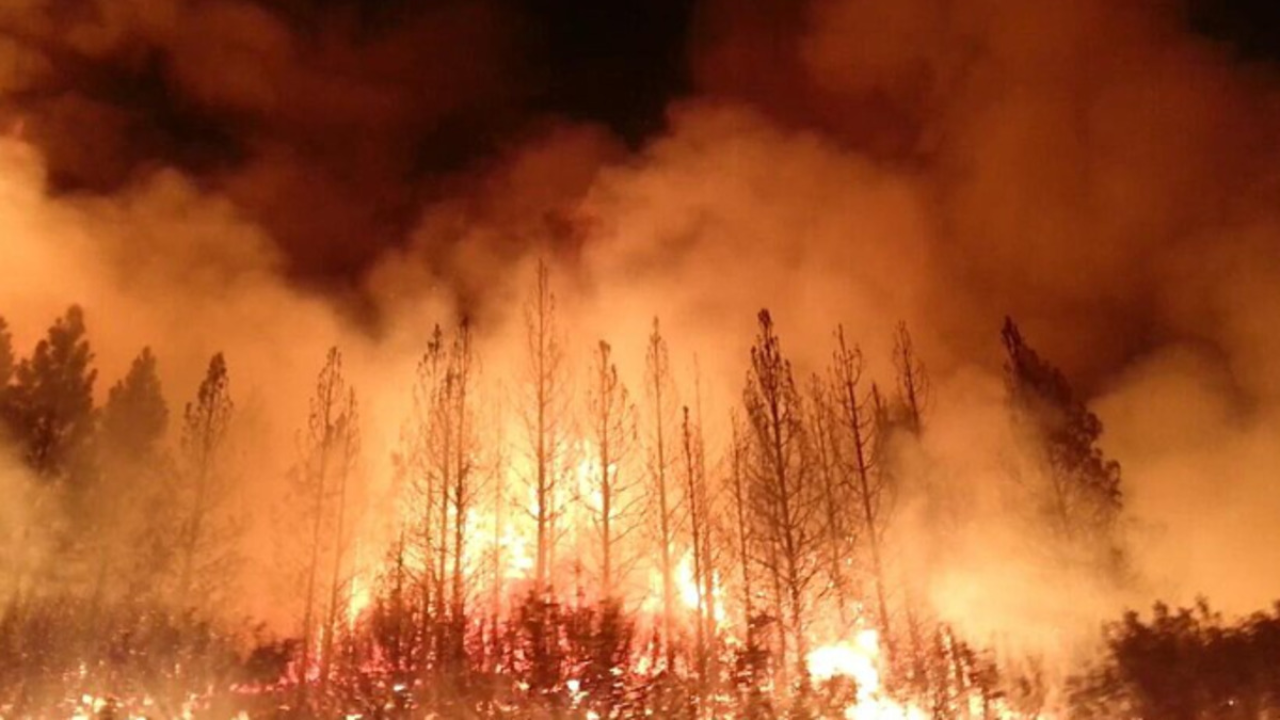
LOS ANGELES, California — A new study by researchers at the University of California, Los Angeles (UCLA) has found that high-severity wildfires in California are now burning nearly 30 times more acreage than they did four decades ago, highlighting the growing intensity of the state’s wildfire crisis. The research points to a dramatic increase in fires that destroy entire forest canopies and ecosystems, raising concerns about long-term environmental recovery, public safety, and climate resilience.
The study examined wildfire patterns across California over approximately 40 years, comparing the extent of high-severity burns from the 1980s with recent fire seasons. Researchers concluded that while wildfires have always been part of California’s natural landscape, the frequency and scale of the most destructive fires have increased substantially due to a combination of climate change, prolonged drought, rising temperatures, fuel accumulation, and expanding development near fire-prone areas.
Scientists emphasized that the findings provide important evidence for policymakers and land managers as they develop wildfire mitigation strategies, forest restoration programs, and emergency preparedness plans aimed at reducing future wildfire risks.
UCLA Researchers Identify Dramatic Increase in High-Severity Fires
The UCLA research team analyzed decades of satellite imagery, historical fire records, and vegetation data to measure changes in wildfire behavior throughout California. Their findings showed that the acreage affected by high-severity fires—fires intense enough to kill most trees and permanently alter landscapes—has increased approximately thirtyfold since the early 1980s.
Researchers noted that high-severity fires differ significantly from lower-intensity burns, which often play a beneficial ecological role by clearing underbrush and maintaining healthy forests. In contrast, high-severity fires can devastate entire ecosystems, destroy wildlife habitats, reduce biodiversity, and make natural forest regeneration far more difficult.
According to the study, the increase has been especially noticeable during recent decades, when California has experienced several record-breaking wildfire seasons. Scientists believe that multiple environmental factors have combined to create conditions that allow fires to spread faster and burn hotter than in previous generations.
The research also suggests that these trends may continue unless significant efforts are made to reduce wildfire fuels and improve forest management practices.
Climate Change and Forest Conditions Fuel Larger Fires
Researchers identified several interconnected factors contributing to the dramatic rise in high-severity wildfires. Among the most significant are increasing temperatures associated with climate change, prolonged drought conditions, earlier snowmelt, and lower moisture levels in vegetation.
These environmental changes leave forests and grasslands significantly drier for longer periods, creating conditions in which fires ignite more easily and spread rapidly. Scientists also noted that decades of fire suppression have allowed dense vegetation and dead trees to accumulate, providing additional fuel when fires occur.
Population growth in the wildland-urban interface, where homes and communities are built near forests and open land, has further complicated wildfire management. Fires in these areas not only threaten ecosystems but also place thousands of residents, firefighters, and emergency responders at greater risk.
Researchers emphasized that while climate change is an important driver, improved forest management, prescribed burning, and vegetation thinning remain essential tools for reducing wildfire intensity.
Study Highlights Need for Long-Term Wildfire Adaptation
The findings underscore the importance of adapting California’s wildfire policies to reflect changing environmental conditions. Researchers recommend expanding fuel reduction projects, restoring fire-resilient forests, increasing prescribed burns under controlled conditions, and investing in early detection technologies.
The study also highlights the need for improved land-use planning, particularly in regions where residential development continues expanding into fire-prone landscapes. Scientists believe communities can become more resilient by adopting fire-resistant building materials, creating defensible space around homes, and strengthening emergency evacuation planning.
In addition to protecting communities, researchers argue that restoring healthier forests will improve biodiversity, reduce carbon emissions from catastrophic fires, and enhance the long-term stability of California’s natural ecosystems.
The report serves as a reminder that wildfire management requires cooperation among scientists, government agencies, local communities, and land managers to address increasingly severe fire seasons.
Study Overview
| Category | Details |
|---|---|
| Study | UCLA Wildfire Research |
| Institution | University of California, Los Angeles (UCLA) |
| Location | California, USA |
| Main Finding | High-severity fires now burn about 30 times more acreage than 40 years ago |
| Study Period | Approximately 40 years |
| Key Factors | Climate change, drought, higher temperatures, fuel buildup, expanding development |
| Environmental Impact | Forest loss, habitat destruction, reduced biodiversity |
| Suggested Solutions | Prescribed burns, forest restoration, vegetation management, fire-resistant planning |
| Focus | Wildfire severity and long-term trends |
| Current Status | Research published and available for policymakers and land managers |
The UCLA study provides compelling evidence that California’s wildfire landscape has changed dramatically over the past four decades. With high-severity fires now burning roughly 30 times more land than in the early 1980s, researchers warn that the state’s forests, wildlife, and communities face increasing risks if current trends continue.
Scientists stress that addressing the problem will require a combination of climate adaptation, improved forest management, responsible land-use planning, and investments in wildfire prevention. While California cannot eliminate wildfires entirely, experts believe that reducing fuel loads, restoring healthy ecosystems, and strengthening community preparedness can significantly lessen the impact of future fire seasons.
The findings offer valuable guidance for policymakers as California continues to confront one of its most pressing environmental and public safety challenges.
FAQ’s:
What did the UCLA study find?
The study found that high-severity wildfires in California now burn approximately 30 times more acreage than they did about 40 years ago.
What are high-severity fires?
High-severity fires are intense wildfires that kill most trees in an affected area, severely damage ecosystems, and make forest recovery much more difficult.
What factors are contributing to the increase?

Researchers identified climate change, prolonged drought, rising temperatures, fuel accumulation, and development near fire-prone areas as major contributing factors.
Why is the study important?
The findings help scientists, policymakers, and land managers better understand changing wildfire patterns and develop more effective prevention and mitigation strategies.
What solutions do researchers recommend?
The study recommends expanding prescribed burns, restoring forests, reducing excess vegetation, improving land-use planning, increasing fire-resistant construction, and strengthening community wildfire preparedness.