
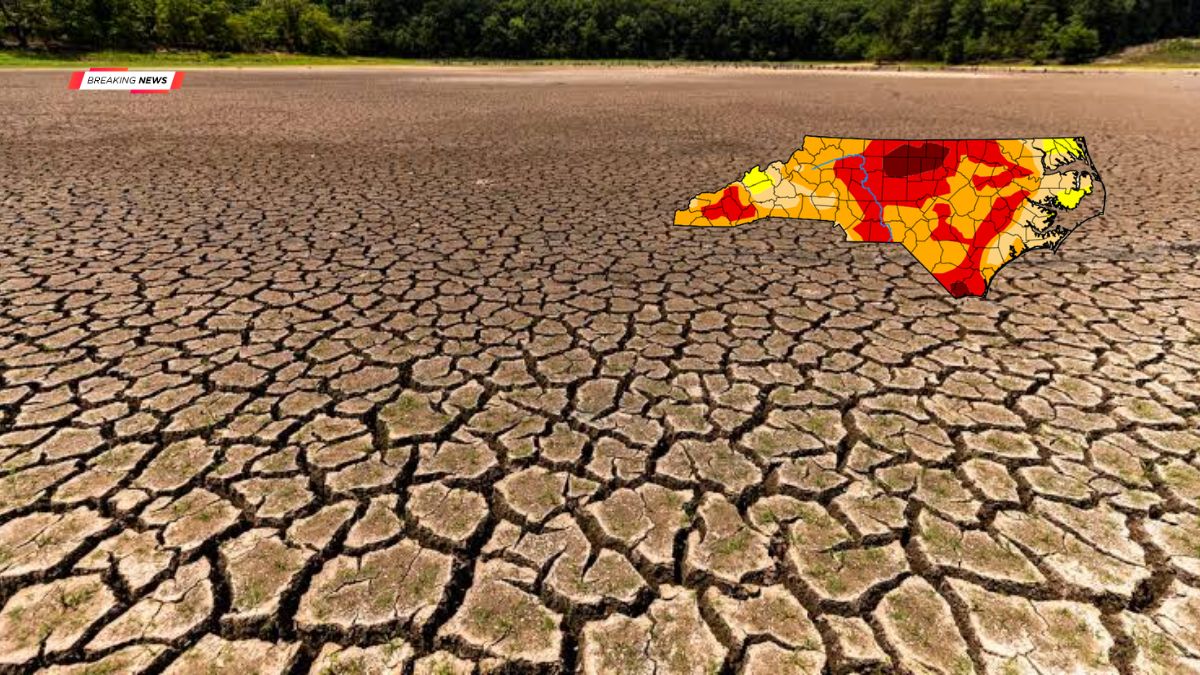
Recent rainfall has continued to improve drought conditions across North and South Carolina, according to the latest U.S. Drought Monitor update released Thursday. Several counties have seen their drought classifications improve following weeks of above-average rainfall, and forecasters expect additional progress as the region moves toward fall.
While some areas remain under drought conditions, officials say the overall outlook has become more encouraging.
Improvements
The latest drought update shows that parts of Mecklenburg, Gaston, Lincoln, Iredell, Rowan, York, Chester, and Lancaster counties have improved from Moderate Drought to Abnormally Dry.
In western North Carolina, conditions have also improved. Areas in the mountains that were previously experiencing more severe drought are now classified under Moderate Drought.
However, Severe Drought conditions remain in parts of Union, Stanly, and Anson counties.
| Drought Status | Areas Affected |
|---|---|
| Abnormally Dry | Parts of Mecklenburg, Gaston, Lincoln, Iredell, Rowan, York, Chester, Lancaster |
| Moderate Drought | Mountain areas of North Carolina |
| Severe Drought | Parts of Union, Stanly, and Anson counties |
Rainfall
The North Carolina Drought Management Advisory Council said heavy rainfall during late July and early August played the biggest role in the latest improvements.
The recent storms delivered enough rainfall to replenish soil moisture and improve water supplies across much of the region.
Officials say the additional rainfall has helped ease drought conditions that developed earlier this summer.
Lakes
The rainfall has also increased water levels in several lakes.
According to the advisory council, Lake Norman’s water level has risen by approximately 1.5 feet over the past two weeks, bringing it closer to normal levels.
Improving lake levels are an important indicator of recovering water resources and can help support local water supplies.
Conservation
As water levels recover, some communities have begun easing water conservation measures.
In Union County, the City of Monroe recently reduced its restrictions from Stage 2 to Stage 1 water conservation after Lake Twitty reached full pool and Lake Lee approached full capacity.
Officials will continue monitoring lake levels and rainfall before making any additional changes to water conservation policies.
Outlook
Although rain chances are expected to become more scattered over the coming week, forecasters say the overall weather pattern continues to support periodic rainfall across the Carolinas.
August is historically the wettest month of the year in Charlotte, which could further improve drought conditions if rainfall continues.
The Climate Prediction Center also projects continued improvement through late summer and into fall, with forecasts suggesting that some areas could see drought conditions reduced further or eliminated altogether if the current weather pattern persists.
FAQs
Which counties saw drought improvements?
Several counties in North and South Carolina improved this week.
What caused the drought improvement?
Heavy rainfall in late July and early August.
Which areas remain in severe drought?

Parts of Union, Stanly, and Anson counties.
How much did Lake Norman rise?
About 1.5 feet over the past two weeks.
What is the outlook for fall?
Forecasters expect drought conditions to continue improving.