
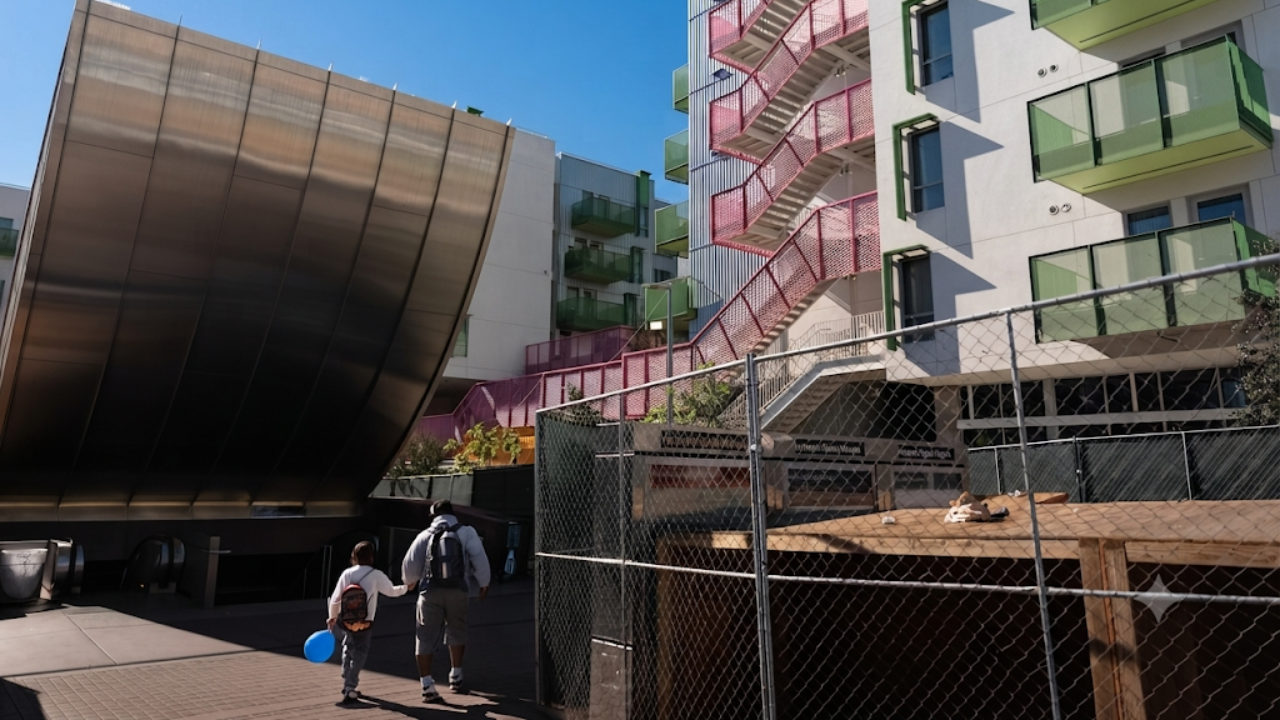
Los Angeles, California, USA — A new California housing law is expected to reshape residential development across Los Angeles by allowing more apartment construction near major public transportation hubs. The legislation, known as Senate Bill 79 (SB 79), aims to encourage higher-density housing around rail stations, bus corridors, and other transit centers in an effort to address California’s ongoing housing shortage while promoting greater use of public transportation.
Supporters believe the law will make it easier to build new homes in locations where residents can access trains, buses, and other transit options without relying heavily on personal vehicles. By encouraging transit-oriented development, lawmakers hope to increase housing availability, reduce commuting times, lower greenhouse gas emissions, and improve affordability in one of the nation’s most expensive housing markets.
The legislation has attracted support from housing advocates, urban planners, and environmental organizations, while some local officials and neighborhood groups have expressed concerns regarding infrastructure, traffic, parking, and local planning authority.
The measure represents another significant step in California’s broader effort to expand housing production and respond to growing demand across the state.
New Law Encourages Transit-Oriented Housing
Senate Bill 79 focuses on increasing residential development near public transportation by allowing greater housing density in areas surrounding transit infrastructure. The legislation seeks to reduce barriers that have historically limited apartment construction close to rail stations and major bus routes.
Supporters argue that locating more homes near transit offers several public benefits. Residents may enjoy shorter commutes, reduced transportation costs, and improved access to employment, education, healthcare, and other essential services. Increased housing near transit can also encourage greater use of buses and trains, helping reduce roadway congestion and vehicle emissions.
Urban planning experts have long advocated for concentrating new housing around existing transportation infrastructure rather than expanding development farther from city centers. Such development patterns are often viewed as more efficient because roads, utilities, and public services already exist in many transit-rich neighborhoods.
The law is expected to influence future planning decisions throughout Los Angeles and other California communities served by public transportation.
Addressing California’s Housing Shortage
California continues facing one of the nation’s most severe housing shortages, with demand significantly exceeding available supply in many metropolitan areas. Rising home prices and rental costs have made affordability a growing challenge for families, workers, and young professionals throughout Los Angeles.
Lawmakers supporting SB 79 believe increasing opportunities for apartment construction can help improve housing availability over time. Although new developments alone will not immediately solve affordability concerns, expanding overall housing supply remains a central objective of the state’s long-term housing strategy.
Housing advocates argue that restrictive zoning policies have limited residential construction in many neighborhoods for decades. By modifying development rules near transit hubs, the legislation seeks to encourage additional private investment while supporting regional housing production goals.
Developers may now have greater flexibility to propose multifamily housing projects in locations previously subject to lower-density zoning restrictions.
Supporters and Critics Debate Local Impact
Supporters of the legislation describe transit-oriented housing as an important component of sustainable urban growth. Environmental organizations note that placing more residents near public transportation may reduce automobile dependence, improve air quality, and contribute to California’s climate goals.
Business groups and some housing advocates also believe increased residential construction could stimulate economic activity by creating construction jobs and expanding the local housing inventory.
However, critics have raised concerns regarding increased population density, parking availability, school capacity, water resources, and traffic congestion in neighborhoods expected to experience additional development. Some local officials have also questioned whether state legislation should override certain local land-use planning decisions.
Despite differing viewpoints, the law establishes a framework that is expected to influence residential development discussions across Los Angeles for years to come.
What the Law Could Mean for Los Angeles
Los Angeles possesses one of the country’s largest public transportation systems, including rail lines operated by Los Angeles Metro and extensive regional bus networks. Areas located near transit stations may become attractive locations for future apartment projects under the new legislation.
Urban planners suggest that increased residential density near transit could support local businesses by expanding customer populations while encouraging more walkable communities. Mixed-use developments combining housing, retail, and community amenities may also become increasingly common.
Implementation will occur over time as developers evaluate opportunities, local governments update planning procedures where necessary, and individual projects move through approval processes. Actual construction timelines will vary depending on financing, permitting, environmental review, and market conditions.
Although immediate changes may not be visible everywhere, the legislation establishes new opportunities that could significantly influence Los Angeles housing development in the coming years.
Law Overview
| Category | Details |
|---|---|
| Legislation | Senate Bill 79 (SB 79) |
| Location | Los Angeles, California, USA |
| Purpose | Encourage apartment construction near transit hubs |
| Housing Type | Higher-density residential development |
| Transit Focus | Rail stations, bus corridors, major transit centers |
| Supporters’ Goals | Increase housing supply and transit use |
| Concerns Raised | Density, parking, infrastructure, local control |
| Expected Impact | Expanded transit-oriented housing opportunities |
| Long-Term Objective | Address housing shortage |
| Current Status | New California law |
Senate Bill 79 represents a significant policy initiative aimed at expanding housing opportunities near public transportation throughout Los Angeles and other California communities. By encouraging higher-density apartment construction around transit hubs, lawmakers hope to increase housing availability while supporting sustainable urban growth and reducing dependence on automobiles.
Although supporters and critics continue debating the law’s long-term effects, the legislation marks another important step in California’s effort to address its persistent housing shortage. Future apartment developments made possible under SB 79 may reshape neighborhoods, strengthen transit systems, and influence regional planning for years to come. As implementation progresses, developers, local governments, and residents will closely watch how the new law affects housing production, affordability, and community development across Los Angeles.
FAQ’s:
What is SB 79?
SB 79 is a California law designed to encourage more apartment construction near public transportation hubs.
Where will the law have an impact?
The legislation is expected to affect Los Angeles, California, USA, as well as other transit-served communities across the state.
Why was the law introduced?

It aims to increase housing supply, improve access to public transportation, and support sustainable urban development.
Why do some people oppose the law?
Critics have expressed concerns about increased density, parking availability, infrastructure demands, and reduced local planning authority.
Will apartments be built immediately?
No. Individual projects will still require planning, financing, permitting, and construction before new housing becomes available.