
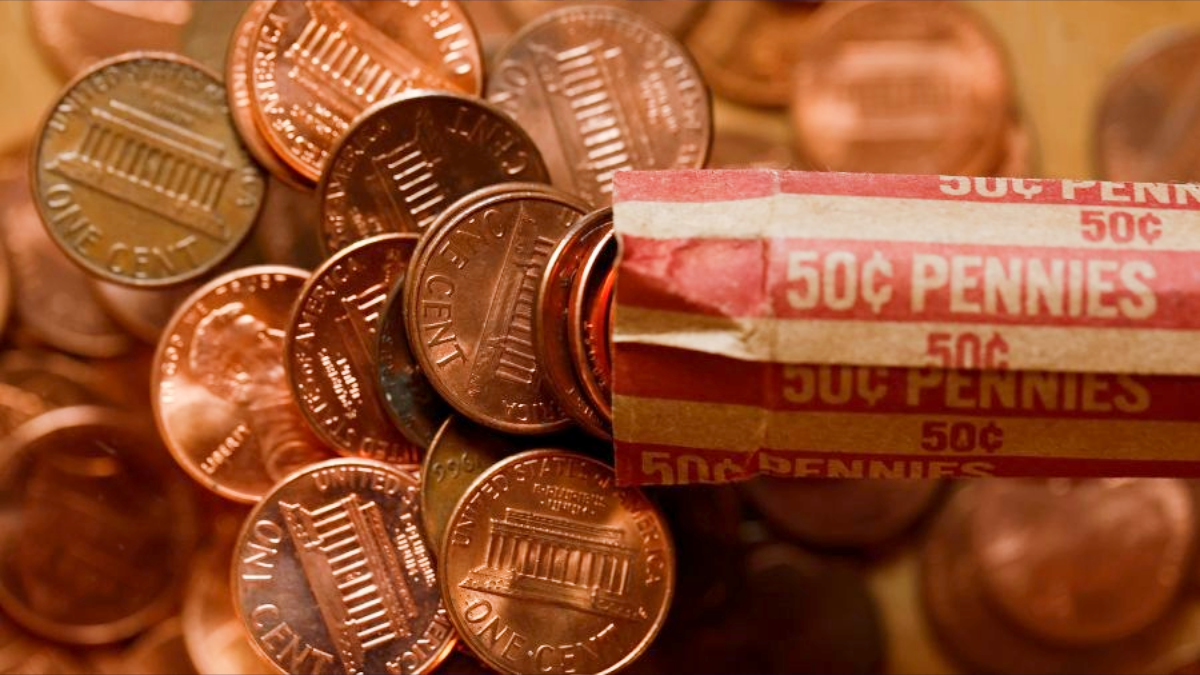
Washington state has enacted a new law clarifying how cash transactions can be handled as penny production in the United States comes to an end. The change follows the federal government’s decision to suspend manufacturing of the one-cent coin, a denomination that has been in circulation since the late 18th century. With fewer pennies available, lawmakers said clearer guidance was needed for retailers and consumers navigating everyday cash purchases.
Background
The United States Mint stopped producing pennies last year, citing rising manufacturing costs that exceeded the coin’s face value. According to the Mint, it cost more than three cents to produce a single penny in 2025, continuing a long trend of losses tied to low-denomination coins.
As pennies have become less available, some businesses have struggled to provide exact change for cash purchases. In recent months, retailers across the country have adopted different approaches, including requesting exact change or adjusting prices informally. Washington’s new law seeks to standardize how those adjustments may be made.
Legislation
House Bill 2334 was signed into law on March 23 and officially took effect on June 11. The legislation allows, but does not require, retailers to round in-person cash transactions to the nearest five-cent increment.
Lawmakers emphasized that the law is intended to provide consistency and transparency rather than force businesses to change how they operate. Retailers may continue accepting exact change if available, and customers are allowed to pay the precise amount if they have it.
Rounding
Under the new law, rounding applies only to in-person transactions paid with cash. Electronic payments, including debit and credit cards, are not affected, and totals for those transactions remain unchanged.
The rounding rules are straightforward:
| Ending Digit | Rounding Rule |
|---|---|
| 1, 2, 6, 7 | Rounded down to nearest five |
| 3, 4, 8, 9 | Rounded up to nearest five |
| 0 or 5 | No rounding allowed |
For example, a total of $19.97 could be rounded down to $19.95, while a $19.99 total could be rounded up to $20.00. If a transaction already ends in zero or five cents, the amount must remain the same.
Limits
The law does not change how sales tax or fees are calculated. All taxes and charges are applied before rounding occurs. The rounding adjustment affects only the final cash total, not the underlying price structure.
Importantly, businesses are not permitted to round non-cash transactions, and they cannot refuse exact change if a customer has it available. Officials said these provisions were included to protect consumers and avoid unintended price increases.
Costs
The suspension of penny production was driven largely by cost concerns. According to a recent U.S. Mint report, the penny cost 3.02 cents to produce in 2025. The nickel also exceeded its face value, costing more than 13 cents to manufacture.
The Mint reported producing 4.7 billion pennies in 2025 and 3.2 billion in 2024, even as costs continued to rise. Officials said the long-term imbalance between production costs and coin value made continued manufacturing unsustainable.
Impact
State officials expect the new rounding law to reduce confusion at checkout counters and provide legal clarity for retailers that continue to accept cash. While many consumers already rely on electronic payments, cash remains common for small purchases, particularly in rural areas and among older residents.
The law reflects a broader shift in how governments and businesses adapt to changes in currency use, while still accommodating customers who prefer or rely on cash.
FAQs
What does Washington’s new penny law do?
It allows rounding cash totals to the nearest five cents.
Does the law require rounding?
No, businesses may choose whether to apply it.
Are card payments affected?

No, rounding applies only to in-person cash payments.
Can customers still pay exact change?
Yes, retailers must accept exact change if available.
Why did penny production stop?
Pennies cost more to make than their face value.