
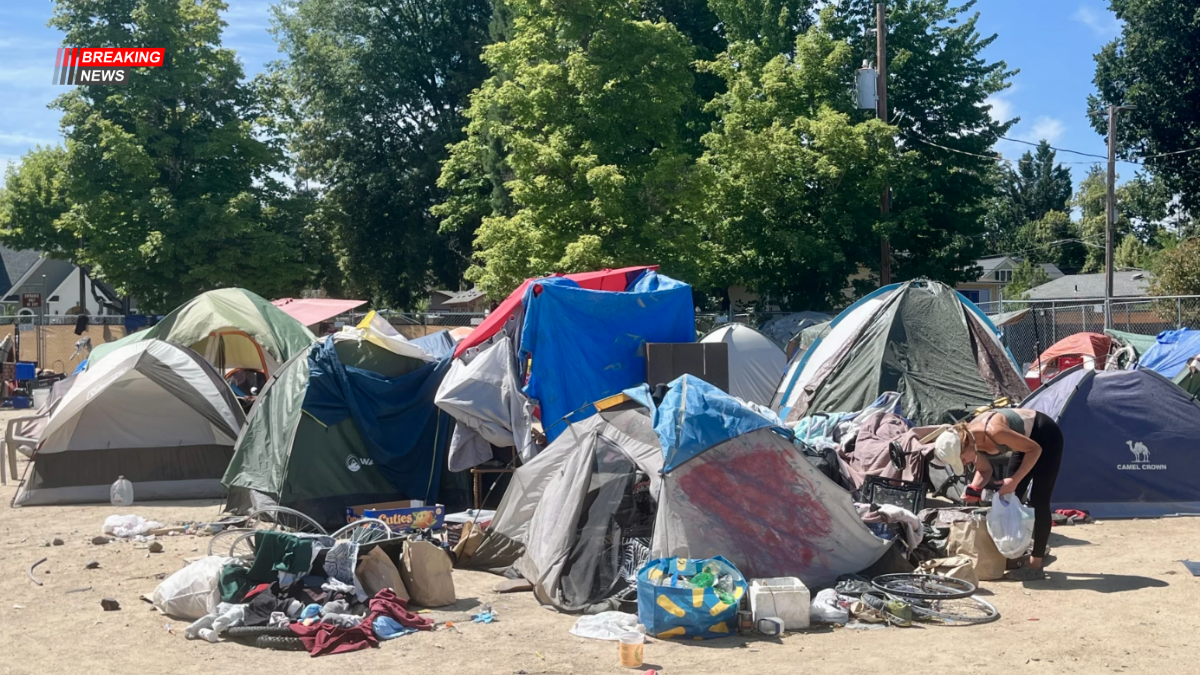
Oregon and Washington have won a federal lawsuit challenging restrictions placed on homeless assistance funding by the Trump administration, a decision that state officials say will protect housing stability for thousands of people. A U.S. district court ruled that conditions imposed on billions of dollars in federal housing grants were unlawful and could not be enforced.
Ruling
The U.S. District Court for the District of Rhode Island found that restrictions placed by the Department of Housing and Urban Development on Continuum of Care grants violated federal law. The ruling blocks HUD from implementing the contested conditions nationwide.
The lawsuit was brought by a coalition of attorneys general who argued that the federal government exceeded its authority by attaching policy-driven requirements to congressionally approved housing funds.
Funding
Continuum of Care, or CoC, grants are administered by HUD and support housing and services for people experiencing homelessness. Congress created the program in 1987 with a housing-first approach, which prioritizes placing individuals into stable housing without prerequisites such as sobriety or employment.
In addition to housing, CoC funds support mental health counseling, job training, childcare, transportation, and other services. According to state officials, approximately $3 billion in federal funding was affected by the challenged restrictions.
Dispute
The Trump administration criticized the housing-first model and sought to impose new conditions on grant recipients. These included work requirements, limits on funding for permanent supportive housing, and bans on using grant money for activities related to diversity, equity, and inclusion, abortion-related services, or what the administration described as gender ideology.
The attorneys general argued that these conditions contradicted the purpose of the program established by Congress and were imposed without proper legal authority.
Impact
Washington Attorney General Nick Brown cited estimates from the National Alliance to End Homelessness indicating that about 5,500 people in Washington were at risk of losing housing under the new HUD rules. Brown’s office said Washington receives roughly $120 million in CoC grants annually, with most funds directed to King, Pierce, Snohomish, Spokane, and Clark counties.
In Oregon, more than 3,200 people were estimated to be at risk of losing housing if the restrictions had taken effect, according to the alliance.
| State | Annual CoC Funding | Estimated At Risk |
|---|---|---|
| Washington | About $120 million | 5,500 people |
| Oregon | Tens of millions | 3,200 people |
State officials said the court’s ruling preserves funding critical to addressing housing shortages and homelessness in high-need areas.
Statements
Oregon Attorney General Dan Rayfield said the decision reaffirmed state priorities and congressional authority over spending. He said the conditions would have severely reduced funding for communities supporting veterans, people with disabilities, and others relying on housing assistance.
Brown described the federal approach as destabilizing and said the ruling restores certainty for organizations providing housing and services across Washington.
Coalition
The lawsuit included attorneys general from 18 states, along with the governors of Kentucky and Pennsylvania. Among the states joining Oregon and Washington were Arizona, California, Minnesota, Michigan, Wisconsin, and Colorado.
The coalition argued that HUD’s actions violated the Administrative Procedure Act and infringed on Congress’ constitutional power to control federal spending.
Context
The ruling follows HUD’s issuance of the grant conditions in November, which threatened funding for community organizations nationwide. Attorneys general said one proposed cap on permanent supportive housing would have eliminated about two-thirds of funding for that category and put an estimated 170,000 people at risk of losing housing.
HUD also barred funding for organizations that acknowledge transgender or nonbinary individuals or provide services for mental disabilities, according to the lawsuit.
HUD did not immediately respond to requests for comment following the ruling.
FAQs
What did the court rule?
HUD’s restrictions on homeless grants were unlawful.
What funds were affected?
Continuum of Care homeless assistance grants.
How much money was involved?

About $3 billion in federal housing funds.
How many people were at risk in Washington?
An estimated 5,500 people.
Who joined the lawsuit?
Attorneys general from 20 states and two governors.