A confrontation between a driver and a police officer outside a homeowner’s property has gained attention online after the driver claimed he was already home before the officer attempted to conduct a traffic stop.
The interaction, recorded on video and shared widely on social media, shows the driver questioning why the officer was trying to stop him after he had parked his vehicle and stepped into his front yard. The officer appeared to have a different understanding of when the attempted stop began, creating a disagreement over the timeline of events.
The video has led to discussion about traffic stop procedures, private property rights, and what happens when a driver reaches home before an officer makes contact.
Encounter
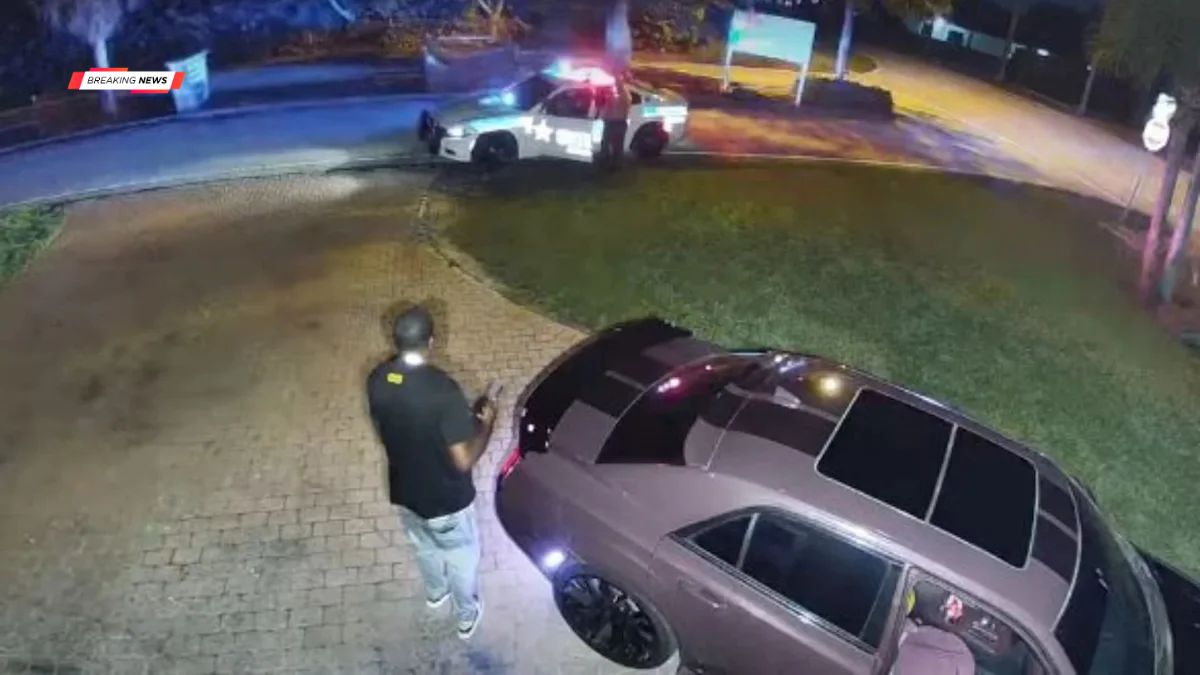
The video begins with the driver standing beside his vehicle in his front yard while speaking with the police officer.
The driver repeatedly says that he was already home and argues that the officer did not activate emergency lights or attempt to stop him while he was still driving.
“I’m home,” the driver says during the exchange, while also telling the officer that he is on private property.
The driver points to security cameras around the home and says they recorded the entire interaction. He tells the officer that the footage would show when the emergency lights were activated.
The officer appears to disagree with the driver’s account, though the video does not show what happened before the confrontation began.
Dispute
A central issue in the conversation is the timing of the attempted traffic stop.
The driver claims he had already parked and exited his vehicle before the officer initiated the stop. Based on that version of events, he argues that the officer was attempting to stop him after he had already arrived home.
The officer appears to maintain a different perspective, suggesting that the circumstances leading up to the encounter were not the same as the driver described.
Because the available footage begins after the driver is already outside his vehicle, viewers cannot independently confirm what happened before the recording started.
Video
The driver’s mention of multiple cameras became a major focus of the online discussion.
Some viewers believed the presence of recorded evidence influenced the officer’s decision to leave without issuing a citation. Others argued that the video only captured part of the situation and did not provide enough information to determine whether the officer acted properly.
The encounter ended without further escalation. The officer eventually returned to the patrol vehicle and left the area.
No citation or additional action was shown in the video.
Debate
After the clip spread online, viewers offered different interpretations of the encounter.
Some commenters supported the driver, arguing that security footage could provide important evidence and that the officer chose not to continue once cameras were mentioned.
Others said reaching home does not automatically prevent a traffic stop or citation if an officer had already observed a violation and attempted to initiate contact before the driver parked.
The disagreement highlighted a broader question about whether a driver can avoid a traffic stop by reaching private property before an officer makes contact.
Law
Traffic stop situations involving private property can involve several legal factors. A driver does not automatically avoid responsibility for a traffic violation by pulling into a driveway or parking at home.
If an officer observes a violation and legally begins a stop before the driver reaches the property, the location where the conversation takes place may not prevent enforcement action.
However, continuing onto private property or entering a residence involves separate legal considerations.
The U.S. Supreme Court addressed related issues in Lange v. California in 2021. The court ruled that police do not automatically have authority to enter a home without a warrant simply because they are following someone suspected of a misdemeanor. Instead, courts consider the specific circumstances, including whether urgent conditions require immediate action.
Questions
The viral video does not provide all the information needed to determine exactly what happened before the recorded exchange.
Important details, including whether the officer activated lights before the driver arrived home or whether the officer first approached after the driver was already parked, remain unclear.
Without additional footage or an official statement from authorities, the situation remains open to interpretation.
The discussion surrounding the video reflects a larger public interest in understanding the balance between individual rights, police authority, and the role of video evidence during encounters with law enforcement.