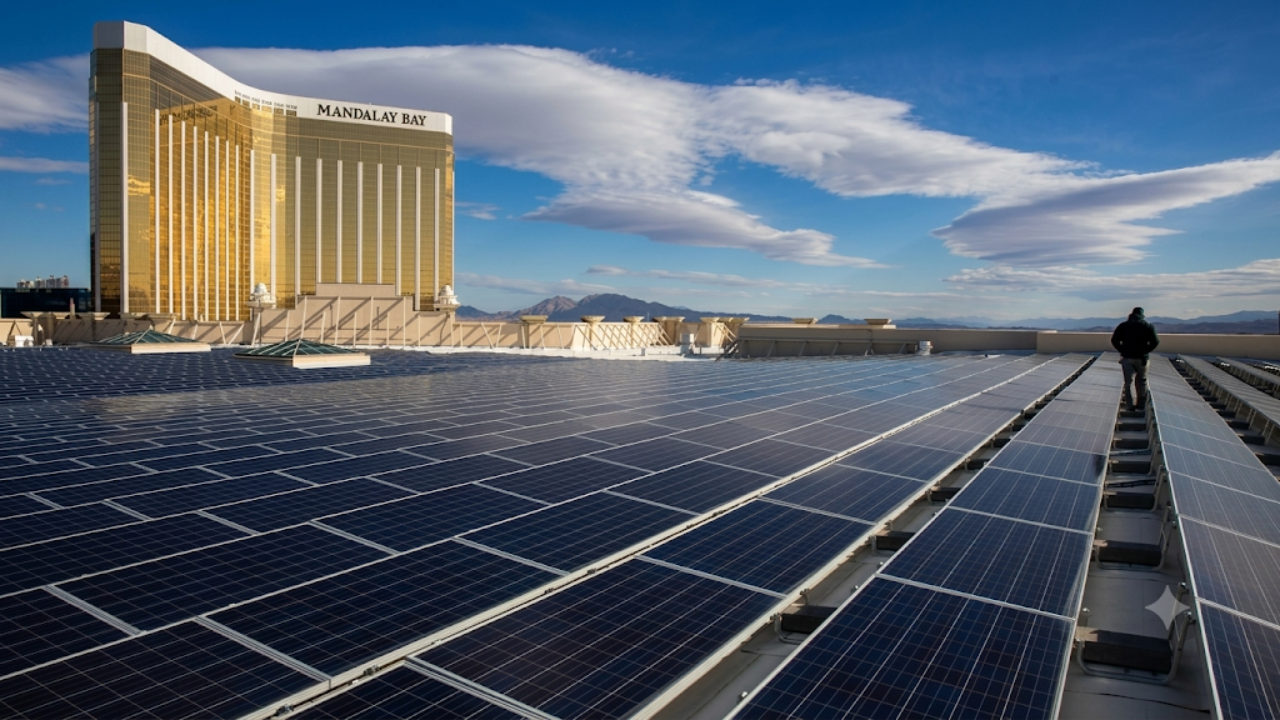
NEVADA, United States — One of Nevada’s largest planned solar energy projects has reached a major regulatory milestone, moving forward into a 30-day protest period as it continues through the federal land-use approval process. The development marks another step in the state’s rapidly expanding clean energy pipeline, which has positioned Nevada as a key hub for large-scale renewable energy infrastructure in the western United States.
The solar farm project, which is expected to span thousands of acres of public land in southern Nevada, has been reviewed under federal environmental and land management frameworks. With the latest advancement, stakeholders now have a limited window to formally challenge or raise objections to the approval process before final authorization is granted.
Officials involved in the review process note that this stage is a standard part of large federal renewable energy approvals and is designed to ensure transparency and public participation before construction begins. If no successful protests are filed within the 30-day period, the project can proceed to the next phase, which includes final permitting and construction planning.
Project Location and Scale of Development
The proposed solar farm is located in southern Nevada on federal land managed by the Bureau of Land Management (BLM), an area widely used for utility-scale renewable energy projects due to its high solar irradiance and open desert terrain. While the exact parcel details are tied to ongoing environmental documentation, the project is considered one of the largest of its kind in the state based on planned capacity and land use footprint.
The development is expected to generate a significant amount of renewable electricity, potentially powering hundreds of thousands of homes once fully operational. Large-scale solar installations like this typically include photovoltaic panels, inverter stations, transmission infrastructure, and access roads, all carefully designed to minimize environmental disruption while maximizing energy output.
Nevada has become a national leader in solar energy production due to its favorable climate conditions and strong policy support for renewable energy expansion. Projects of this scale are increasingly common as utilities and private developers respond to rising electricity demand and decarbonization targets.
What the 30-Day Protest Period Means for the Project
The 30-day protest period is a formal administrative step in the federal land approval process that allows individuals, organizations, and stakeholders to challenge the proposed decision. During this time, parties may submit objections related to environmental concerns, land use conflicts, cultural or archaeological impacts, or procedural issues.
If protests are filed, federal authorities review the claims before issuing a final decision. Depending on the outcome, the project could proceed unchanged, be modified, or in rare cases, be delayed or sent back for additional review.
In many renewable energy developments on federal land, the protest period is viewed as a standard procedural hurdle rather than a significant obstacle. Developers typically continue preparing engineering, procurement, and construction plans during this time to avoid delays once final approval is granted.
For this Nevada solar project, the initiation of the protest period signals that the environmental and technical review process is nearing completion, placing it one step closer to full authorization.
Nevada’s Expanding Role in Clean Energy Development
Nevada has emerged as one of the most active states in the United States for large-scale renewable energy development, particularly solar power. The state’s vast desert regions, high solar exposure, and proximity to growing energy markets in California and the Southwest make it an ideal location for utility-scale projects.
In recent years, federal and state agencies have streamlined approval processes to accelerate clean energy deployment on public lands. This has led to a growing pipeline of solar and wind projects aimed at supporting national climate goals and reducing reliance on fossil fuels.
However, the expansion has also sparked ongoing debates about land use, wildlife protection, and the long-term environmental impact of large desert installations. Conservation groups sometimes raise concerns during protest periods, while developers emphasize the importance of renewable energy in addressing climate change and energy security.
The balance between environmental protection and energy development continues to shape Nevada’s energy policy landscape.
Solar Farm Project Overview
| Category | Details |
|---|---|
| Project Type | Utility-scale solar farm |
| Location | Southern Nevada, United States |
| Land Manager | Bureau of Land Management (BLM) |
| Status | Entered 30-day protest period |
| Purpose | Renewable electricity generation |
| Energy Type | Solar photovoltaic |
| Scale | One of Nevada’s largest planned solar projects |
| Stage | Federal land-use approval process |
| Next Step | Final authorization or protest review |
| Significance | Major addition to Nevada clean energy pipeline |
The advancement of one of Nevada’s largest solar farm projects into a 30-day protest period represents a key milestone in the state’s ongoing transition toward renewable energy. While still subject to final administrative review, the project is now significantly closer to approval, reflecting strong momentum behind large-scale solar development on federal land.
As Nevada continues to expand its clean energy infrastructure, projects like this highlight both the opportunities and challenges associated with balancing environmental concerns, land management policies, and growing energy demand. The outcome of the protest period will determine whether the project proceeds smoothly into construction or faces additional regulatory scrutiny.
Regardless of the outcome, the development underscores Nevada’s increasingly central role in the United States’ renewable energy future.
FAQ’s:
What stage is the Nevada solar project currently in?
It has entered a 30-day protest period as part of the federal approval process.
Where is the solar farm located?
It is planned for southern Nevada on federal land managed by the Bureau of Land Management.
What happens during the protest period?
Stakeholders can formally object to the project before final approval is granted.
Why is Nevada important for solar energy?
Nevada has abundant sunlight and large areas of available land, making it ideal for solar power development.
What is the next step after the protest period?
If no major issues arise, the project moves toward final approval and construction planning.