
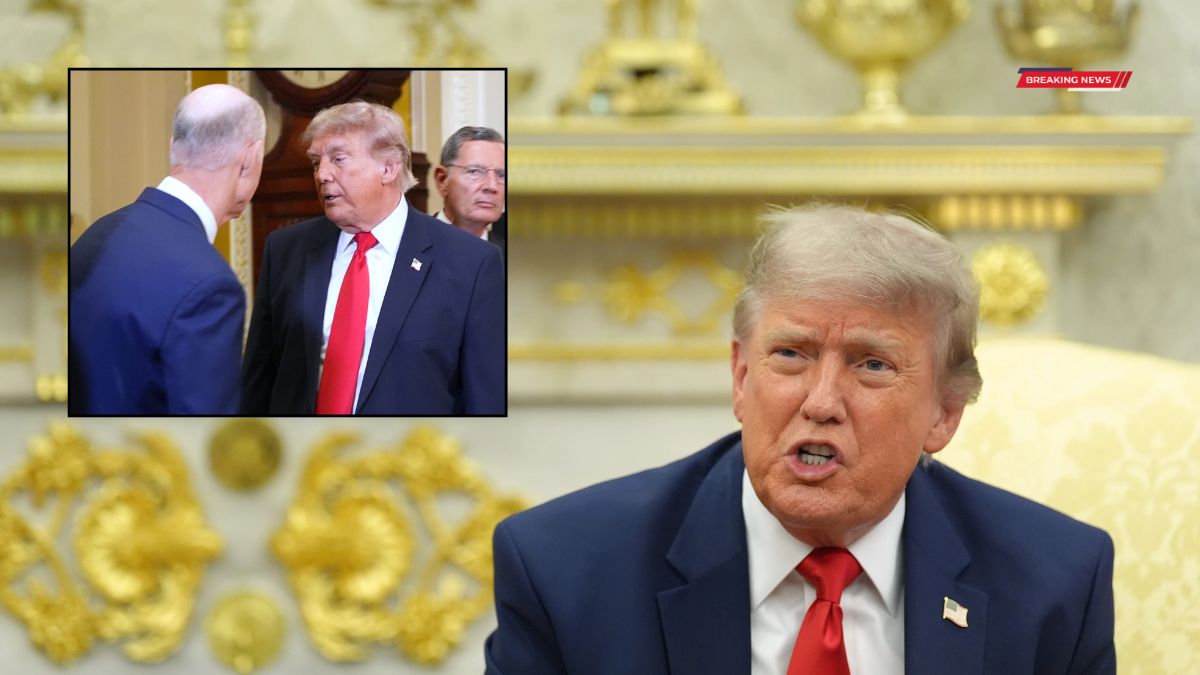
The White House on Wednesday formally asked Congress to approve $87.6 billion in supplemental spending to fund the ongoing war with Iran and a range of unrelated domestic and international programs, a request that immediately drew criticism from congressional Democrats.
The funding proposal was submitted in a letter from White House Office of Management and Budget Director Russell Vought to House Speaker Mike Johnson. Congress must approve and appropriate the money before it can be spent.
Request
In his letter, Vought urged lawmakers to act quickly on what he described as urgent priorities.
“I urge the Congress to take action on these important and urgent requests as soon as possible,” Vought wrote.
The largest portion of the request is tied to defense spending related to the war with Iran, which began Feb. 28. The proposal includes $21 billion for the Department of Defense to support military capabilities, purchase munitions, and strengthen the U.S. industrial base.
Defense Secretary Pete Hegseth said in March that the Pentagon could ultimately seek as much as $200 billion to fund the conflict.
Breakdown
Beyond military funding, the supplemental request includes billions for other programs:
| Category | Amount |
|---|---|
| Defense Department | $21 billion |
| Farmer assistance | $10 billion |
| Ebola response in Africa | $1.4 billion |
| Energy Department (nuclear and energy security) | $768 million |
| Washington construction and restoration | $500 million |
| New York Penn Station renovation | $1 billion |
The White House said the farm aid is intended to support producers who have struggled over the past year and a half, in part due to the effects of trade policies.
Reaction
Democrats sharply criticized the request, arguing that the administration launched the Iran war without congressional authorization and is now asking taxpayers to cover the costs.
“President Trump launched a reckless and costly war with Iran, without authorization from Congress or the support of the American people,” said Sen. Patty Murray, D-Wash., the top Democrat on the Senate Appropriations Committee.
Murray also pointed to what she described as unspent Pentagon funds, saying the Defense Department already has a historically large budget and more than $100 billion in unused funding provided in the 2025 GOP tax and spending package, often referred to as the One Big Beautiful Bill.
Politics
The funding request could put politically vulnerable Republicans in a difficult position ahead of the 2026 midterm elections, particularly if they are forced to vote in favor of additional spending for a war that has proven unpopular with many voters.
Republican leaders on the House Appropriations Committee defended the request, emphasizing national security concerns.
“Congress has a constitutional obligation to provide for the common defense,” said House Appropriations Committee Chair Tom Cole, R-Okla., and Defense Appropriations Subcommittee Chair Ken Calvert, R-Calif., in a joint statement.
They said sustaining the military with adequate tools and resources is essential to defending the country against emerging threats.
Next
Congress will now decide whether to take up the supplemental request and how to structure any funding package. Lawmakers could approve the request in full, modify it, or reject portions of the proposal as negotiations move forward.
FAQs
How much supplemental funding did the White House request?
The White House requested $87.6 billion in supplemental spending.
What is the money primarily for?
Most funding is tied to the Iran war and defense needs.
Does Congress have to approve the funds?

Yes, Congress must appropriate the money before it can be spent.
Is farm aid included in the request?
Yes, $10 billion is requested to support U.S. farmers.
Why are Democrats opposing the request?
They cite the war’s cost, lack of authorization, and existing Pentagon funds.














Ariana Grande Plans Break From Public Spotlight After Tour Amid Ongoing Scrutiny