
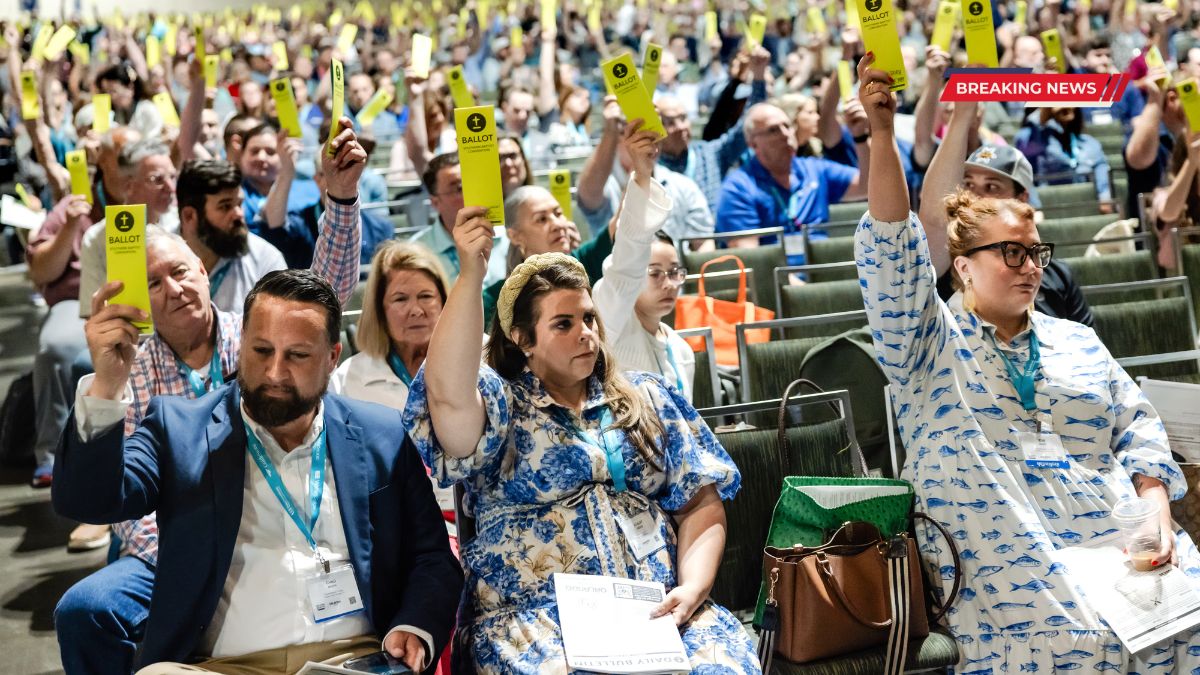
The Southern Baptist Convention has voted to advance a constitutional amendment that would formally bar member churches from having women serve as pastors, marking a significant step in an ongoing internal debate within the United States’ largest Protestant denomination.
The measure passed during the group’s annual meeting in Orlando, Florida, where more than 11,000 delegates, known as messengers, gathered for the two-day conference.
Vote
The amendment passed by a margin of 6,028 to 2,026, easily surpassing the two-thirds majority required to advance.
However, the proposal is not yet final. It must be approved again by a two-thirds vote at next year’s annual meeting before it can be added to the Southern Baptist Convention constitution.
If adopted, it would formalize restrictions already reflected in the denomination’s doctrinal statement.
Amendment
The proposed language would bar churches from affiliation if they “affirm, appoint, or endorse a woman serving in the office or function of a pastor/elder/overseer,” including those who preach to congregations.
Supporters say the amendment is intended to provide clarity and consistency across the denomination, particularly in how churches are evaluated for cooperation status.
Debate
The discussion at the meeting was brief, and no speakers defended the idea of women serving as pastors during formal debate.
Opposition came primarily from South Carolina pastor Doug Mize, who argued the amendment was unnecessary because the denomination already has mechanisms to remove churches with women in senior pastoral roles.
He said existing policy has already been used in previous cases.
Supporters
Albert Mohler, president of the Southern Baptist Theological Seminary and a key sponsor of the amendment, said the measure reflects what he described as a defining theological issue for the denomination.
He said the vote represented a moment of “truth” and “unity” for Southern Baptists and argued that differences over women pastors reflect broader divisions within global evangelical Christianity.
Mohler also pointed to the denomination’s 2000 Baptist Faith and Message statement, which affirms male-only pastoral leadership.
Context
Southern Baptist leaders emphasize that individual churches are self-governing and that the convention cannot directly control hiring decisions.
However, the SBC can determine whether a church is in “friendly cooperation,” which affects membership status and participation in the denomination.
In recent years, several churches have been removed from the SBC over leadership structures that included women in senior pastoral roles.
Practice
While the denomination has long stated opposition to women serving as senior pastors, debate has continued over other leadership roles such as teaching and assistant pastor positions.
Some churches have been expelled under existing doctrinal interpretations, including high-profile cases such as Saddleback Church in California.
Broader Views
The decision highlights ongoing differences among Christian denominations in the United States and globally regarding women’s ordination.
Many mainline Protestant groups ordain women and allow them to serve in senior leadership roles, while more conservative traditions, including Roman Catholic and Eastern Orthodox churches, restrict ordination to men.
Within evangelical Christianity, views vary widely depending on theological interpretation.
Response
Baptist Women in Ministry, an organization supporting female ministers, criticized the vote, saying it harms women called to ministry and reflects restrictive theological interpretations.
The group said the decision undermines opportunities for women to serve in pastoral roles within SBC-affiliated churches.
Additional Resolutions
Beyond the amendment vote, delegates also passed resolutions addressing immigration, political violence, and antisemitism.
One resolution called for humane treatment of immigrants while supporting law enforcement efforts related to immigration policy.
Another condemned antisemitic violence and conspiracy theories, while reaffirming the denomination’s mission to evangelize all people, including Jewish communities.
Leadership Vote
Delegates also elected Florida pastor Willy Rice as the convention’s new president.
Rice won with 58% of the vote over South Carolina pastor Josh Powell and has expressed support for the amendment on women pastors.
Outlook
The amendment will return for another vote at next year’s annual meeting. If it again reaches the required two-thirds threshold, it will become part of the SBC constitution, formalizing restrictions that are currently enforced through doctrinal interpretation and church cooperation status.
The vote represents a significant step in a long-running theological and organizational debate within the Southern Baptist Convention. While supporters describe it as doctrinal clarity, critics view it as a narrowing of leadership roles within the denomination. The final outcome will depend on next year’s vote.
FAQs
What did the Southern Baptists vote on?
They voted to advance a ban on churches with women pastors.
Is the ban final?
No, it must pass another vote next year.
How large was the vote margin?

It passed 6,028 to 2,026.
Can the SBC control individual churches?
No, but it can remove them from the convention.
Where was the meeting held?
In Orlando, Florida.

















Ariana Grande Plans Break From Public Spotlight After Tour Amid Ongoing Scrutiny