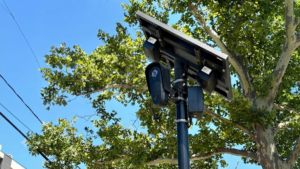

The Los Angeles Police Department (LAPD) has suspended its use of Flock Safety surveillance cameras after concerns emerged about privacy protections and compliance with departmental policies. The decision temporarily pauses access to a network of automated license plate recognition (ALPR) cameras that had been used to assist investigations involving stolen vehicles, violent crimes, and missing persons. Officials said the suspension will remain in effect while the department reviews how the technology is managed and whether it fully complies with privacy requirements.
The move has renewed debate over the balance between public safety and individual privacy. Supporters argue that automated license plate recognition systems can help investigators solve crimes more efficiently, while privacy advocates have raised concerns about how vehicle data is collected, stored, accessed, and protected. The LAPD’s decision reflects the growing scrutiny surrounding surveillance technology used by law enforcement agencies across the United States.
Why the LAPD Suspended the Camera System
The suspension follows questions regarding whether the department’s use of the Flock Safety camera network fully complied with internal policies governing surveillance technologies and data privacy. Automated license plate recognition systems capture images of passing vehicles, record license plate numbers, and document the time and location of each detection. The information can then be searched by authorized investigators during criminal investigations.
LAPD officials stated that pausing the system allows the department to conduct a comprehensive review of its policies, oversight procedures, and agreements governing the technology. Department leaders emphasized that the suspension is intended to ensure accountability and maintain public confidence while any identified concerns are evaluated and addressed.
How Flock Cameras Are Used in Criminal Investigations
Flock Safety cameras are installed in various public locations and automatically capture images of vehicles traveling through monitored areas. Rather than recording continuous video, the cameras focus primarily on license plates and certain identifying vehicle characteristics, such as color, make, and model. Law enforcement agencies use this information to locate stolen vehicles, identify suspect vehicles, investigate violent crimes, and assist in locating missing or endangered individuals.
Supporters of the technology argue that automated license plate recognition systems can provide valuable investigative leads that might otherwise be unavailable. By comparing vehicle sightings across multiple locations, investigators can establish travel patterns, identify potential suspects, and verify timelines. However, critics contend that widespread data collection may also affect individuals who are not connected to any criminal investigation.
Privacy Concerns and Public Debate
Civil liberties organizations have long expressed concerns about surveillance technologies capable of collecting large volumes of location-related information. Privacy advocates argue that storing vehicle movement data raises important questions regarding how long information is retained, who can access it, and whether adequate safeguards exist to prevent misuse. These concerns have led several jurisdictions to adopt stricter oversight policies governing automated surveillance systems.
The LAPD’s decision to suspend use of the cameras illustrates the broader national discussion over balancing investigative effectiveness with constitutional privacy protections. Experts note that while surveillance technology can significantly assist criminal investigations, transparency, independent oversight, clear access controls, and well-defined retention policies are essential to maintaining public trust.
What Happens Next?
Department officials are expected to review existing agreements, internal policies, data access procedures, and compliance requirements before determining whether and under what conditions the camera system may be reactivated. The review could result in updated operational guidelines, additional oversight measures, enhanced officer training, or changes to how data is stored and accessed.
The outcome of the review may also influence future discussions about surveillance technology within Los Angeles and other law enforcement agencies nationwide. As technology continues to evolve, police departments increasingly face the challenge of adopting investigative tools while ensuring that privacy rights and legal standards remain protected.
Overview of the Suspension
| Detail | Information |
|---|---|
| Agency | Los Angeles Police Department (LAPD) |
| Location | Los Angeles, California |
| Technology | Flock Safety automated license plate recognition (ALPR) cameras |
| Action Taken | Temporary suspension of camera system use |
| Reason | Privacy concerns and policy compliance review |
| Primary Purpose of Cameras | Vehicle identification during criminal investigations |
| Common Uses | Stolen vehicles, violent crimes, missing persons investigations |
| Current Status | Suspended pending departmental review |
| Key Issue | Balancing investigative benefits with privacy protections |
| Next Step | Review of policies, oversight, and compliance procedures |
The LAPD’s decision to suspend its use of Flock Safety surveillance cameras represents a significant development in the ongoing national debate surrounding law enforcement technology and privacy rights. While automated license plate recognition systems have become valuable investigative tools in solving crimes and locating missing persons, questions regarding data collection, oversight, and transparency remain central to public discussions.
As the department conducts its internal review, officials aim to determine whether additional safeguards or policy changes are necessary before the technology is used again. The outcome could shape future surveillance practices not only within Los Angeles but also among other police agencies evaluating how to balance technological innovation with individual privacy protections.
FAQ’s:
Why did the LAPD suspend the Flock camera system?
The department paused its use of the system while reviewing privacy concerns and compliance with internal surveillance policies.
Where is the suspension taking place?
The suspension applies to the Los Angeles Police Department in Los Angeles, California.
What do Flock Safety cameras do?
They automatically capture license plate numbers and certain vehicle characteristics to assist law enforcement investigations.
Why are privacy advocates concerned?
Critics question how vehicle data is collected, stored, accessed, retained, and protected from misuse.
Will the cameras be used again?
The department will decide after completing its policy and compliance review, which may include updated safeguards and operational procedures.