
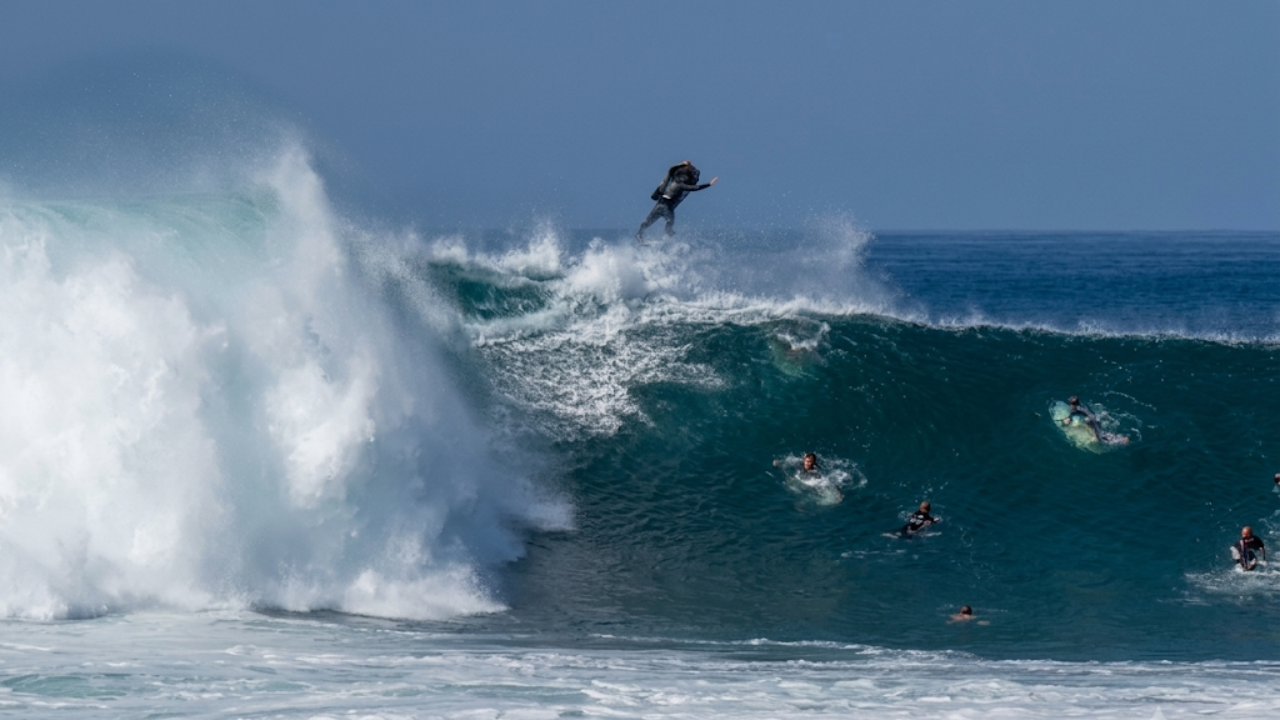
Southern California is preparing for another round of powerful surf as forecasters warn that a fresh, long-period south swell will bring large and potentially dangerous waves to coastal areas this week. The incoming swell follows a recent burst of historic surf that already produced towering sets along Orange County beaches, including the world-famous Wedge in Newport Beach, where waves have been observed reaching over 20 feet during peak conditions . Meteorologists say the next pulse is expected to continue delivering strong surf across south-facing beaches, raising concerns for inexperienced beachgoers.
While surfers are expected to welcome the return of big-wave conditions, authorities are cautioning the public to stay alert. The combination of strong swell energy, long wave periods, and shifting coastal winds could create unpredictable surf zones. Officials are urging caution as beaches across Southern California once again experience elevated wave activity similar to earlier this week’s powerful ocean event.
Massive South Swell Builds Across the Pacific
The latest surf event is being driven by a powerful south swell system that has traveled thousands of miles across the Pacific Ocean, sending long-period wave energy toward the California coastline. Forecast models indicate that the swell has been steadily building offshore, with wave heights increasing as it approaches Southern California waters. Some marine forecasts suggest open ocean seas have reached significant heights, feeding into the energetic surf conditions now hitting the coast .
As the swell moves closer, south-facing beaches in Orange County, Los Angeles County, and San Diego are expected to feel the strongest impact. These regions are particularly exposed to south swell direction, meaning beaches that normally see moderate surf can suddenly experience powerful wave surges. This setup often creates a mix of rideable surf for experienced surfers while simultaneously producing hazardous conditions for swimmers and casual beach visitors.
The Wedge and Hotspots Expected to See Extreme Waves
One of the most closely watched locations during this swell is The Wedge in Newport Beach, a surf break known for its explosive and unpredictable wave formations. When large south swells align with the area’s unique jetty structure, waves can reflect and merge, producing dramatically amplified peaks near the shoreline. Forecasters say this setup can lead to some of the biggest surf of the season, with sets reaching double-digit heights and occasional extreme spikes.
Recent forecasts indicate that many coastal areas could see waves in the 5-to-8-foot range, while exposed breaks may experience even larger sets depending on local geography and swell direction . At peak moments, The Wedge can produce waves that rise far beyond typical surf conditions, drawing experienced surfers and spectators while also creating dangerous shorebreak conditions. Officials warn that even strong swimmers can be caught off guard by the force of incoming sets and powerful backwash.
Safety Concerns and Coastal Warnings Issued
With another round of heavy surf approaching, lifeguards and coastal authorities are reminding the public to exercise extreme caution near the ocean. Large swells often create powerful rip currents, unpredictable wave breaks, and strong shore pound that can quickly overwhelm even experienced water users. Officials stress that conditions can change rapidly within minutes, especially during peak swell energy.
Beach safety teams are expected to increase monitoring at popular hotspots, particularly in Orange County where previous swell events have drawn large crowds of surfers and spectators. Authorities are advising visitors to stay behind warning lines, avoid entering the water during high surf advisories, and always follow lifeguard instructions. The combination of powerful surf and increased beach traffic raises the risk of accidents, especially at well-known viewing areas.
Regional Surf Conditions Expected Across Southern California
Beyond Orange County, the incoming swell is expected to impact a wide stretch of coastline across Southern California. Los Angeles County beaches such as Malibu, Manhattan Beach, and Venice are likely to see rising surf through the swell window, while San Diego’s south-facing beaches may also experience increased wave energy. The swell’s long period means waves can arrive in powerful sets separated by calm intervals, creating a misleading sense of safety between surges.
Meteorologists note that swell direction and local wind conditions will play a key role in determining how each beach is affected. Some breaks may see clean, organized surf in the morning before winds shift and create choppier conditions later in the day. Surfers are expected to take advantage of early windows, while officials continue to caution casual beachgoers about the unpredictability of high-energy ocean conditions.
Another significant swell event is set to impact Southern California, bringing renewed periods of large surf and strong coastal energy to beaches across the region. Following recent historic wave activity, including massive sets at The Wedge, forecasters are again warning of powerful surf conditions that could create both opportunity and danger along the coastline .
While experienced surfers may find favorable conditions, authorities emphasize the importance of caution as ocean conditions become increasingly volatile. With strong swells continuing to arrive from the Pacific, coastal communities are preparing for another round of heightened surf activity that will demand respect for the ocean’s power.
FAQ’s:
What is causing the big surf in Southern California?
A powerful long-period south swell traveling across the Pacific Ocean is generating large waves along the coast.
Which areas will be most affected?
South-facing beaches in Orange County, Los Angeles County, and San Diego are expected to see the strongest impact.
How big could the waves get?

Some areas may see 5-to-8-foot surf, while exposed breaks like The Wedge could see much larger sets.
Is it safe to go swimming during this swell?
Authorities strongly advise against swimming during high surf conditions due to strong rip currents and shorebreak hazards.
Why is The Wedge especially dangerous?
Its jetty structure reflects incoming waves, causing them to amplify and break with extreme force near shore.

















Ariana Grande Plans Break From Public Spotlight After Tour Amid Ongoing Scrutiny