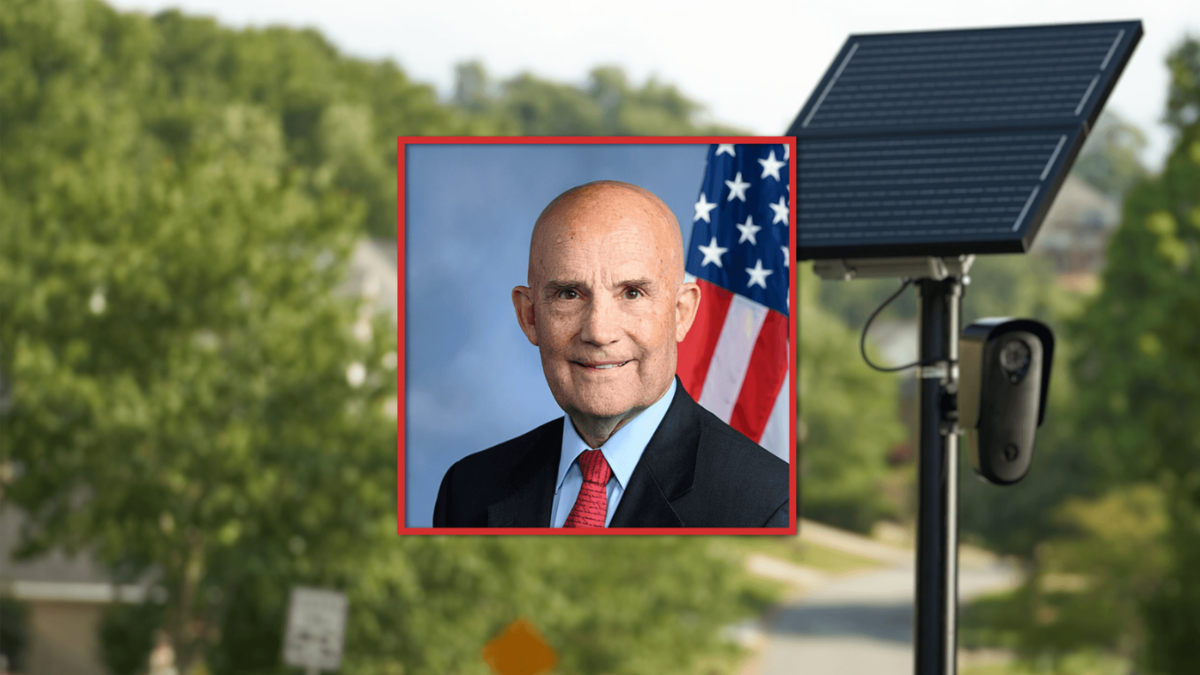
A Florida Republican lawmaker has introduced legislation that would create a new federal crime targeting birth tourism, proposing prison sentences of up to 25 years for certain noncitizens and others involved in arranging such travel.
Rep. Randy Fine announced the proposal on July 22, saying the measure would target people who enter the United States primarily to give birth and obtain citizenship for their children.
The proposal comes after a recent Supreme Court decision that blocked an attempt to limit birthright citizenship. The bill would not change the citizenship status of children born in the United States but would create possible criminal and immigration penalties for parents and facilitators.
Proposal
The legislation would make it a federal crime for certain noncitizens who are not lawful permanent residents to travel to the United States for the primary purpose of giving birth.
Under the proposal, people convicted under the law could face prison sentences ranging from 10 to 25 years.
The measure would also apply to individuals who knowingly help organize birth tourism arrangements or provide false information about the purpose of travel.
Fine said the goal is to prevent people from using temporary visits to obtain U.S. citizenship for children born during those trips.
Penalties
The proposed law would include both criminal and immigration consequences.
A federal judge would be required to issue a deportation order for a convicted parent under the proposal. After serving a prison sentence, that person could face removal from the United States.
The bill would not remove citizenship from children born in the country. Those children would continue to have the rights of U.S. citizens.
However, deportation of parents could create difficult choices for families, including whether a child remains in the United States with another guardian or leaves the country with parents.
| Proposed Measure | Effect |
|---|---|
| Prison sentence | 10 to 25 years for qualifying offenses |
| Deportation order | Required after conviction |
| Child citizenship | Remains unchanged |
| Targeted groups | Certain noncitizens and facilitators |
Citizenship
The proposal follows a major Supreme Court ruling involving birthright citizenship.
On June 30, the Supreme Court ruled 6-3 that President Donald Trump’s executive order attempting to restrict birthright citizenship could not take effect.
The order would have denied citizenship to some children born in the United States when neither parent was a citizen or lawful permanent resident.
The court’s decision relied on the 14th Amendment, which grants citizenship to people born or naturalized in the United States and subject to its jurisdiction.
The ruling also referenced the 1898 Supreme Court case United States v. Wong Kim Ark, which recognized citizenship for a person born in the United States to Chinese immigrant parents.
Court
Chief Justice John Roberts wrote the main opinion on the constitutional issue, supported by four other justices.
Justice Brett Kavanaugh agreed with the result but based his reasoning on federal law rather than the constitutional question.
Justices Clarence Thomas, Samuel Alito, and Neil Gorsuch dissented.
Following the ruling, President Trump said he planned to ask the Supreme Court to reconsider the case. Requests for reconsideration after a final decision are uncommon.
Visas
Current immigration policy already restricts birth tourism.
The State Department updated visitor visa rules in January 2020 to allow consular officers to deny certain applications when they believe the main purpose of travel is giving birth to obtain U.S. citizenship.
However, the policy does not automatically prevent pregnant travelers from entering the country.
People traveling for legitimate medical reasons may still apply for visitor visas. Officials can request medical information, treatment details, and proof that the traveler can cover expenses.
Existing laws also allow prosecution for immigration fraud, false statements, and financial crimes related to birth tourism arrangements.
Evidence
If the proposed law advances, prosecutors would likely need to prove that obtaining citizenship through childbirth was the primary purpose of the travel.
Evidence could include visa applications, travel plans, medical arrangements, communications with organizers, and financial records.
The burden would remain on prosecutors to prove the required elements of the offense beyond a reasonable doubt.
Defining those requirements would likely become a major part of congressional debate over the legislation.
Cases
Federal authorities have previously prosecuted people involved in birth tourism operations, though those cases generally focused on fraud-related offenses.
In 2024, federal prosecutors secured convictions against two Southern California residents connected to a business that allegedly helped foreign clients arrange travel, housing, and other services.
According to Justice Department records, prosecutors said some clients misrepresented their travel plans and financial arrangements.
Those convictions involved charges such as conspiracy and money laundering rather than a specific birth tourism crime.
Debate
The proposal enters a larger national discussion about immigration and citizenship policy.
A June Reuters-Ipsos survey found that 55% of respondents opposed ending birthright citizenship, while 41% supported ending it. The survey did not specifically ask about criminal penalties for birth tourism.
Supporters of stricter rules argue that stronger enforcement is needed to prevent misuse of the citizenship system.
Opponents have raised concerns about the legal and practical effects of changing policies connected to children born in the United States.
Future
Fine’s proposal has not yet received a bill number, committee assignment, or hearing date.
Like other legislation, it would need to move through the House committee process before reaching a possible vote.
Lawmakers would likely debate several issues, including sentencing limits, proof requirements, deportation rules, and how the law would apply to complicated family or medical situations.
The proposal adds another layer to the ongoing national debate over immigration enforcement and the future of birthright citizenship.
FAQs
Who proposed the birth tourism bill?
Rep. Randy Fine of Florida introduced the proposal.
What penalties does the bill propose?
It proposes prison terms of 10 to 25 years.
Would children lose citizenship?

No, children would keep U.S. citizenship.
What is birth tourism?
It refers to travel aimed at giving birth in the U.S.
Is birth tourism already restricted?
Yes, visa rules already address some cases.