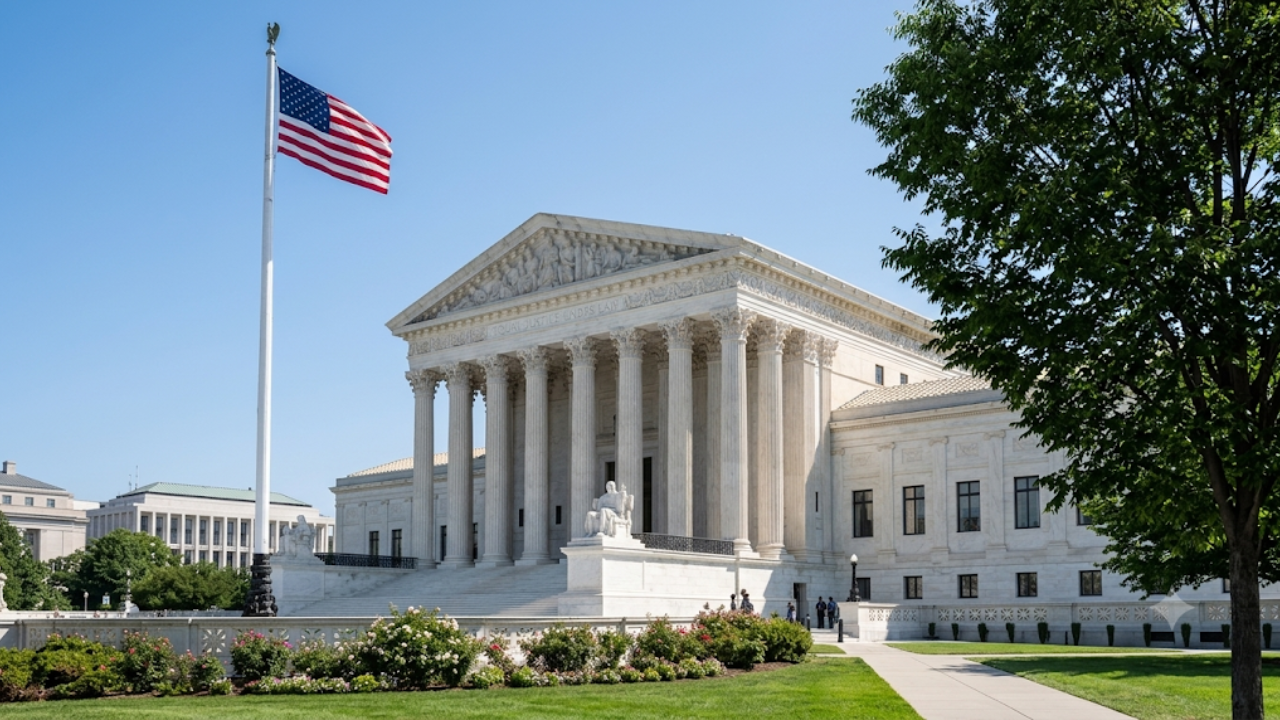
Washington, D.C., United States: The U.S. Supreme Court has issued a major ruling that is expected to significantly reshape American asylum policy, siding with former President Donald Trump’s administration in a 6–3 decision that allows immigration officials to block asylum seekers from physically entering the United States under a contested “metering” policy. The decision marks one of the most consequential legal shifts in recent immigration enforcement and is expected to affect how asylum claims are processed at the U.S.–Mexico border.
The ruling hinges on a strict interpretation of immigration law, particularly the meaning of when an individual is considered to have “arrived” in the United States. The Court’s conservative majority concluded that migrants waiting in Mexico are not legally considered to be inside U.S. territory and therefore may be turned away without access to standard asylum procedures. Liberal justices strongly dissented, warning that the decision undermines humanitarian protections and international obligations toward refugees.
Supreme Court ruling reshapes asylum access rules
The Supreme Court’s 6–3 ruling upheld the legality of the Trump administration’s “metering” policy, which allows border officials to limit or deny entry to asylum seekers arriving at ports of entry when capacity is deemed overwhelmed. In Washington, D.C., United States, the Court ruled that immigration authorities may prevent individuals from physically stepping into U.S. territory to initiate asylum claims, effectively restoring a policy previously discontinued under the Biden administration.
Justice Samuel Alito, writing for the majority, argued that statutory language does not extend asylum protections to individuals who have not physically entered the United States. The ruling reverses lower court decisions that had previously blocked the policy. The Court’s interpretation is expected to give federal agencies broader discretion in managing border intake and processing procedures, particularly during periods of high migration pressure.
Legal and political divide over immigration interpretation
The decision exposed deep ideological divisions within the Court, with the three liberal justices issuing a strong dissent. Justice Sonia Sotomayor warned that the ruling could have severe humanitarian consequences, arguing that it effectively allows authorities to deny vulnerable individuals the chance to request asylum, even when fleeing violence or persecution. Critics of the ruling say it weakens long-standing protections embedded in U.S. asylum law and international refugee agreements.
Supporters of the decision, however, argue that it restores executive authority over border enforcement and helps manage overwhelming asylum claims more efficiently. The ruling is also being viewed in the broader context of ongoing political debates over immigration policy, border security, and executive power. Legal analysts say the decision could influence future cases involving immigration enforcement and presidential authority.
Broader impact on U.S. immigration and asylum system
The ruling is expected to have immediate and long-term consequences for the U.S. immigration system. By allowing border agents to block entry at the threshold, the decision effectively shifts asylum processing outside U.S. territory, potentially placing migrants in prolonged waiting conditions in Mexico. Advocacy groups have warned that this could increase humanitarian risks, including exposure to violence, lack of shelter, and limited access to legal support.
In addition to restoring the metering policy, the Court also ruled in related cases affecting immigration enforcement powers, including decisions on Temporary Protected Status for certain migrant groups. Together, these rulings signal a broader judicial trend toward granting federal authorities greater discretion in immigration enforcement while narrowing judicial protections for migrants at the border.
Policy and enforcement changes expected ahead
Following the ruling, immigration authorities are expected to adjust operational procedures at ports of entry along the U.S.–Mexico border. Federal agencies may reinstate or expand waiting protocols for asylum seekers, requiring them to remain outside U.S. territory until processing capacity becomes available. Officials are also expected to review enforcement guidelines to align with the Court’s interpretation of immigration law.
The Biden-era reversal of metering policies is likely to be rolled back, and border operations may shift toward stricter entry control mechanisms. Policy experts suggest that the ruling could also influence future legislative debates in Congress regarding asylum eligibility standards and border management frameworks.
Case Overview
| Detail | Information |
|---|---|
| Case Type | Supreme Court ruling affecting asylum policy |
| Location | Washington, D.C., United States |
| Court Decision | 6–3 ruling in favor of Trump administration policy |
| Policy Involved | “Metering” asylum restriction policy |
| Key Issue | Whether migrants outside U.S. territory can access asylum processing |
| Majority Opinion | Migrants not physically in U.S. are not considered “arrived” |
| Dissent | Strong objections citing humanitarian and legal concerns |
| Affected Area | U.S.–Mexico border processing system |
| Impact | Restricts asylum access and expands border enforcement discretion |
The Supreme Court’s ruling marks a major turning point in U.S. asylum policy, effectively endorsing a stricter interpretation of immigration law that allows border officials to block asylum seekers who have not physically entered the United States. While supporters argue the decision strengthens border control and clarifies legal authority, critics warn it significantly weakens protections for vulnerable migrants fleeing persecution.
As the policy shifts toward implementation, federal agencies are expected to adjust border procedures, potentially leading to increased waiting periods for asylum seekers outside U.S. territory. The ruling is likely to remain a focal point in ongoing national debates over immigration, executive power, and humanitarian obligations, with far-reaching implications for the future of the U.S. asylum system.
Frequently Asked Questions:
What did the Supreme Court decide?
The Court ruled 6–3 to allow the Trump-era “metering” policy, permitting border officials to block asylum seekers who have not entered U.S. territory.
What is the “metering” policy?
It is a border enforcement policy that limits the number of asylum seekers allowed to enter the U.S. at ports of entry when capacity is deemed full.
Where was the decision issued?
The ruling was issued by the U.S. Supreme Court in Washington, D.C.
Why is the ruling controversial?
Critics argue it denies vulnerable migrants the right to seek asylum and undermines international humanitarian protections.
What happens next?
U.S. border agencies are expected to adjust enforcement procedures, potentially reinstating waiting systems for asylum seekers outside the United States.