
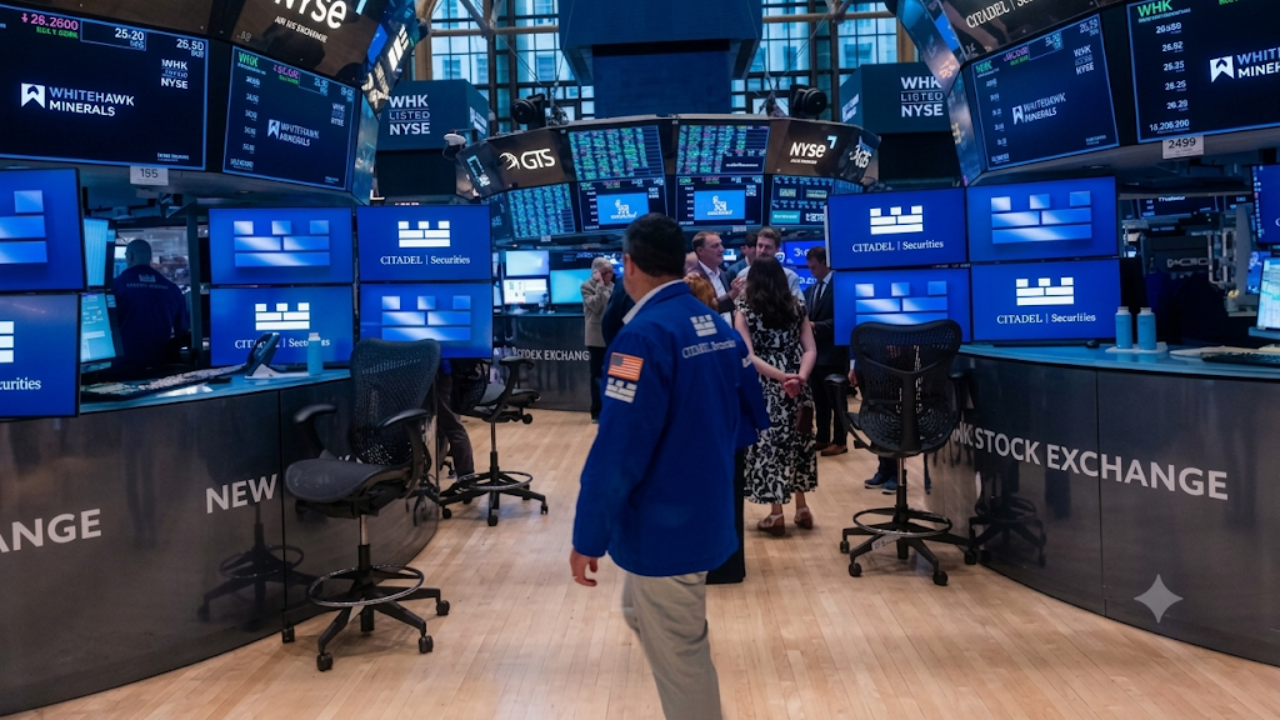
New York, United States: U.S. stock markets declined as investor concerns over the sustainability of artificial intelligence-driven valuations outweighed relief from falling fuel prices. The session reflected a mixed macroeconomic environment in which easing energy costs typically support market sentiment, but growing skepticism around high-growth AI stocks triggered broader caution across equity indices.
Market participants pointed to increased volatility in technology shares, particularly those tied to artificial intelligence infrastructure and semiconductor demand. While lower fuel prices are generally seen as a positive input for corporate margins and consumer spending, they were not enough to counterbalance the uncertainty surrounding whether AI-related stocks have been overvalued following a prolonged rally.
Market Decline Driven by AI Sector Concerns
Stocks across major U.S. indices came under pressure as investors reassessed the rapid rise in artificial intelligence-linked companies. In New York, United States, trading activity showed notable weakness in technology-heavy benchmarks, with investors reducing exposure to firms that have benefited most from AI enthusiasm over recent quarters.
Analysts noted that concerns are emerging about whether current valuations in the AI sector accurately reflect long-term earnings potential. Some market participants have begun to question the pace at which AI infrastructure spending can translate into sustainable profits. This shift in sentiment contributed to profit-taking behavior, especially among high-valuation tech stocks that had previously driven broader market gains.
Fuel-Price Decline Provides Limited Market Support
At the same time, declining fuel prices offered some relief to investors, as lower energy costs typically support both corporate earnings and consumer purchasing power. Transportation, logistics, and manufacturing sectors were expected to benefit from reduced input costs, which generally helps stabilize broader economic activity.
However, the positive impact of cheaper fuel was overshadowed by weakness in the technology sector. While energy-sensitive industries showed signs of resilience, they lacked sufficient weight to offset losses in larger-cap tech companies. Market observers noted that the imbalance between energy-driven optimism and tech-driven uncertainty played a central role in the day’s overall decline.
Investor Sentiment Reflects Broader Market Uncertainty
Investor sentiment has become increasingly cautious as markets continue to balance optimism about technological innovation with concerns about valuation sustainability. The rapid expansion of AI-related investments has fueled strong gains in recent years, but also raised questions about whether growth expectations are too aggressive.
In addition to AI-specific concerns, broader macroeconomic factors continue to influence trading behavior, including interest rate expectations, inflation trends, and corporate earnings outlooks. Traders are closely monitoring signals from central banks and economic data releases to gauge whether current market conditions can support continued equity growth or whether further corrections may emerge.
Sector Rotation and Market Rebalancing Trends
The trading session also reflected ongoing sector rotation, with investors shifting capital away from high-growth technology stocks toward more defensive or value-oriented sectors. Energy, utilities, and consumer staples showed relative stability compared to technology-heavy segments, highlighting a rebalancing of risk appetite in the market.
This rotation suggests that investors are becoming more selective, focusing on companies with stable earnings rather than speculative growth narratives. Market strategists indicate that such behavior is common during periods of uncertainty, particularly when high-growth sectors experience rapid valuation expansion followed by reassessment phases.
Case Overview
| Detail | Information |
|---|---|
| Event | U.S. stock market decline |
| Location | United States (Wall Street, New York financial markets) |
| Main Cause | AI valuation concerns offsetting fuel-price relief |
| Supporting Factor | Decline in fuel prices (positive influence) |
| Negative Driver | Weakness in AI and technology stocks |
| Market Behavior | Sector rotation and profit-taking |
| Affected Sectors | Technology, AI-related equities, semiconductors |
| Relatively Stable Sectors | Energy, utilities, consumer staples |
| Overall Sentiment | Cautious and volatile |
U.S. stock markets ended lower as concerns over artificial intelligence valuations outweighed the positive impact of declining fuel prices. While cheaper energy costs typically support economic activity and corporate profitability, investor anxiety surrounding the sustainability of AI-driven stock gains led to a broader pullback in equities, particularly in the technology sector.
The trading session highlighted the growing tension between innovation-driven market optimism and valuation-driven caution. As investors continue to reassess risk across high-growth sectors, market volatility is expected to remain elevated. Future market direction will likely depend on upcoming economic data, corporate earnings reports, and continued clarity around the long-term profitability of AI investments.
Frequently Asked Questions:
Why did U.S. stocks fall?
U.S. stocks fell mainly due to concerns over AI stock valuations outweighing positive signals from lower fuel prices.
What role did fuel prices play in the market?
Lower fuel prices provided some support by reducing costs for businesses and consumers, but this was not enough to lift overall markets.
Which sector caused most of the decline?

The technology and AI-related sectors were the primary contributors to the market decline.
What is investor sentiment currently like?
Investor sentiment is cautious, with increased focus on valuation risks and market sustainability.
Is this trend expected to continue?
Market direction depends on upcoming economic data, earnings reports, and further developments in AI sector valuations.