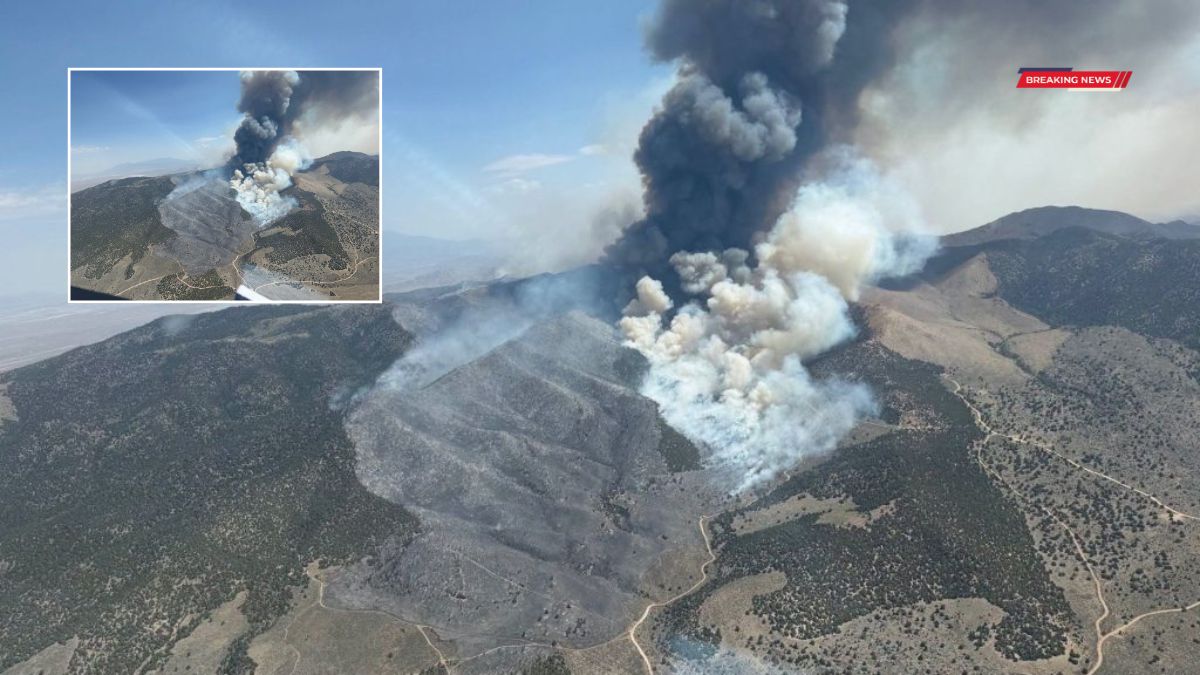
Hazy skies across much of Colorado are the result of wildfire smoke drifting in from neighboring states, prompting state and federal officials to warn residents in dozens of counties to limit outdoor activity and, in some cases, remain indoors due to unhealthy air quality.
The Colorado Department of Public Health and Environment said smoke from large wildfires burning in Utah and Nevada is moving into the state and degrading air quality, particularly in mountain and western regions. Smaller in-state fires, including the Dry Creek Fire in Garfield County, could further worsen conditions.
Air Quality Alerts
The National Weather Service issued an Air Quality Health Advisory covering more than two dozen Colorado counties. The advisory is in effect through at least 9 a.m. Friday, June 26.
Officials warned that smoke levels may fluctuate quickly because of unstable atmospheric conditions.
“If smoke is thick or becomes thick in your neighborhood, you may want to remain indoors,” the advisory stated. “This is especially true for people with heart disease, respiratory illness, older adults, and young children.”
Counties Affected
The air quality health advisory includes the following counties:
Moffat, Routt, Grand, Rio Blanco, Eagle, Summit, Garfield, Pitkin, Mesa, Delta, Gunnison, Montrose, Jackson, Lake, Park, Teller, Chaffee, Custer, Huerfano, Rio Grande, Alamosa, Las Animas, Costilla, Conejos, Saguache, and Fremont.
Officials said smoke may also affect nearby cities and towns, including Steamboat Springs, Vail, Breckenridge, Glenwood Springs, Aspen, Grand Junction, Gunnison, Leadville, Salida, Trinidad, and Canon City.
Health Concerns
According to the Centers for Disease Control and Prevention, wildfire smoke contains fine particulate matter that can penetrate deep into the lungs. Exposure can cause coughing, difficulty breathing, wheezing, chest pain, and asthma attacks.
Residents were advised to limit outdoor activity during periods of moderate to heavy smoke. If smoke enters homes and causes illness, officials suggested temporarily relocating if possible. Visibility of less than five miles due to smoke is considered unhealthy.
Broader Conditions
Colorado’s wildfire risk has been heightened by prolonged dry conditions. Earlier this year, reports indicated the state experienced its worst snowpack season on record, leaving many mountain areas with little to no snow by spring.
Combined with ongoing drought and above average temperatures, the conditions have increased both fire risk and the likelihood of persistent smoke events.
Monitoring
State officials urged residents to regularly check local air quality conditions using the CDPHE daily air quality summary. The department said shifting weather patterns, including thunderstorms, could quickly change smoke concentrations across the state.
Officials emphasized that residents should remain prepared for sudden increases in smoke levels as conditions evolve.
FAQs
Why is Colorado experiencing smoky air?
Smoke from wildfires in Utah and Nevada is drifting into the state.
Which areas are under air quality alerts?
More than 25 Colorado counties, mainly western and mountain regions.
Who should stay indoors during smoke events?

People with heart or lung disease, children, and older adults.
What health issues can wildfire smoke cause?
Breathing problems, coughing, chest pain, and asthma attacks.
How can residents check air quality levels?
Through the CDPHE daily air quality summary online.