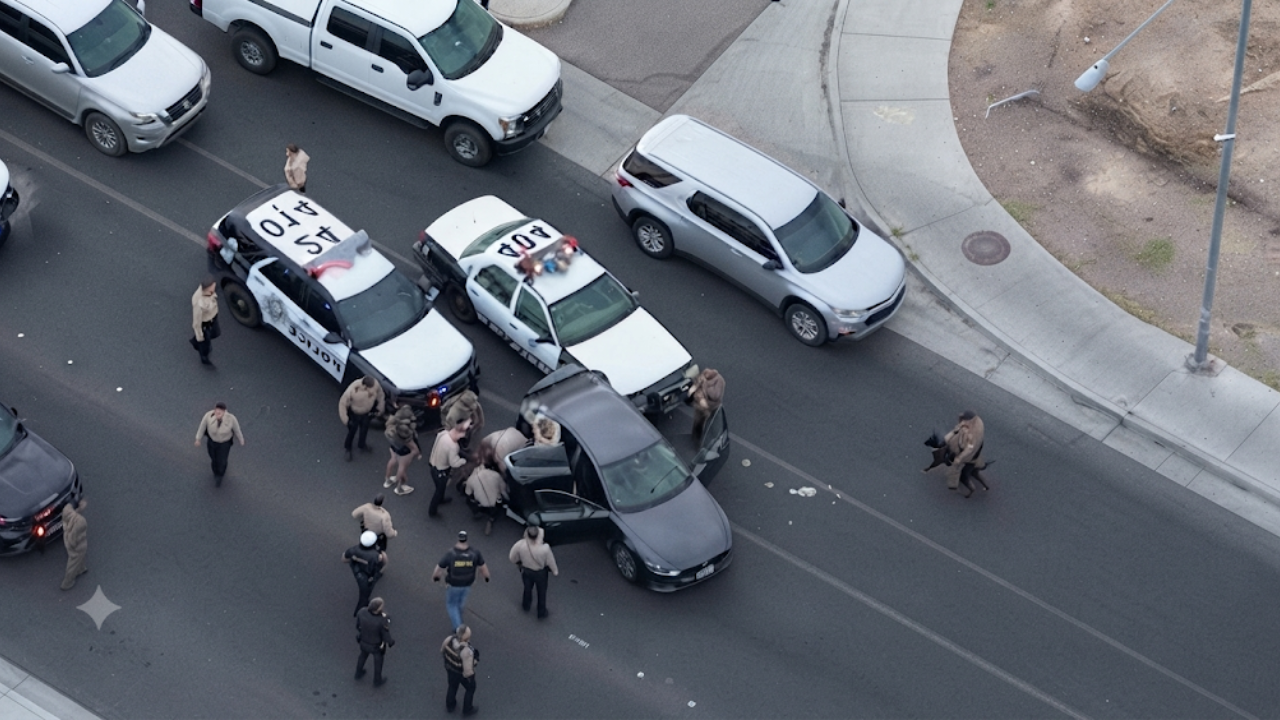
A review of police pursuit data has highlighted the dangers associated with high-speed chases conducted by the Las Vegas Metropolitan Police Department (LVMPD). According to the analysis, officers were involved in 60 vehicle pursuits during the past year, with four pursuits reaching speeds of approximately 125 miles per hour, underscoring the risks faced by officers, fleeing suspects, passengers, and innocent motorists sharing the road.
The findings have renewed discussion about when police pursuits are justified, how departments balance public safety with the need to apprehend suspects, and the policies governing high-speed chases. While law enforcement officials stress that pursuits are initiated only under specific circumstances, traffic safety experts continue to warn that high-speed incidents can quickly become dangerous, particularly on busy urban roadways.
High-Speed Pursuits Raise Public Safety Concerns
According to the reviewed data, the 60 pursuits occurred across Las Vegas and Clark County, Nevada, involving suspects accused of a variety of offenses ranging from stolen vehicles to violent crimes and felony investigations. Although many pursuits ended without serious injuries, several reached extremely high speeds, with four incidents reportedly climbing to 125 mph, significantly increasing the potential for catastrophic crashes.
Traffic safety specialists note that vehicles traveling at such speeds require far greater stopping distances and leave drivers with less time to react to changing road conditions. In densely populated areas, pursuits at triple-digit speeds may place uninvolved motorists, pedestrians, cyclists, and nearby communities at greater risk, even when officers follow established pursuit procedures.
LVMPD Pursuit Policies and Decision-Making
The Las Vegas Metropolitan Police Department maintains pursuit policies designed to reduce unnecessary risks while allowing officers to respond when suspects pose an immediate threat to public safety. Supervisors monitor many pursuits in real time and may order officers to terminate a chase if the dangers to the public outweigh the benefits of continuing the pursuit.
Factors considered before and during a pursuit include the seriousness of the suspected offense, traffic density, weather conditions, road design, visibility, and the behavior of the fleeing driver. Modern policing strategies also increasingly rely on alternatives such as aviation units, GPS tracking technology, surveillance cameras, and coordinated patrol efforts to reduce the need for prolonged high-speed pursuits.
Balancing Crime Enforcement With Road Safety
The pursuit statistics have prompted broader conversations about balancing effective law enforcement with protecting innocent road users. Supporters of police pursuits argue that allowing dangerous suspects to escape without intervention may expose the public to future crimes, while critics contend that high-speed chases themselves can create unacceptable risks for people who are not involved in criminal activity.
Transportation safety experts emphasize that pursuit policies continue evolving as technology and policing practices improve. Many agencies across the United States regularly review pursuit outcomes, analyze collision data, and update operational guidelines to reduce injuries while preserving officers’ ability to apprehend suspects who present significant threats to public safety.
| Pursuit Data Overview | Details |
|---|---|
| Location | Las Vegas and Clark County, Nevada, USA |
| Law Enforcement Agency | Las Vegas Metropolitan Police Department (LVMPD) |
| Police Pursuits Reviewed | 60 during the past year |
| Highest Reported Speed | Approximately 125 mph |
| Number of Pursuits Reaching 125 mph | Four |
| Primary Concern | Public safety risks during high-speed pursuits |
| Factors Considered | Traffic, weather, seriousness of offense, road conditions |
| Alternative Enforcement Methods | Air support, GPS technology, surveillance, coordinated patrols |
| Policy Goal | Balance suspect apprehension with public safety |
| Current Focus | Ongoing evaluation of pursuit practices |
The review of 60 police pursuits conducted by the Las Vegas Metropolitan Police Department illustrates the difficult balance between apprehending suspects and protecting the public from the dangers associated with high-speed chases. While only a small number of pursuits reportedly reached speeds of 125 mph, the data highlights how rapidly pursuit situations can become hazardous for everyone on the roadway.
As police agencies continue refining pursuit policies and incorporating new technology, public safety remains a central consideration in every decision to initiate, continue, or terminate a chase. The latest statistics contribute to ongoing discussions about how law enforcement can effectively respond to serious crimes while minimizing risks to officers and the communities they serve.
FAQ’s:
How many police pursuits were reviewed?
The analysis examined 60 police pursuits involving the Las Vegas Metropolitan Police Department during the past year.
What was the highest speed reported?
According to the review, four pursuits reached approximately 125 miles per hour.
Where did these pursuits occur?
The pursuits took place in Las Vegas and Clark County, Nevada.
Why are high-speed pursuits controversial?
They can help police apprehend dangerous suspects, but they also increase the risk of crashes involving officers, suspects, passengers, and uninvolved motorists.
How do police reduce pursuit risks?
LVMPD uses pursuit policies that consider factors such as the seriousness of the offense, traffic conditions, weather, and public safety, while also employing alternatives such as aviation support, surveillance technology, and coordinated patrol operations when appropriate.