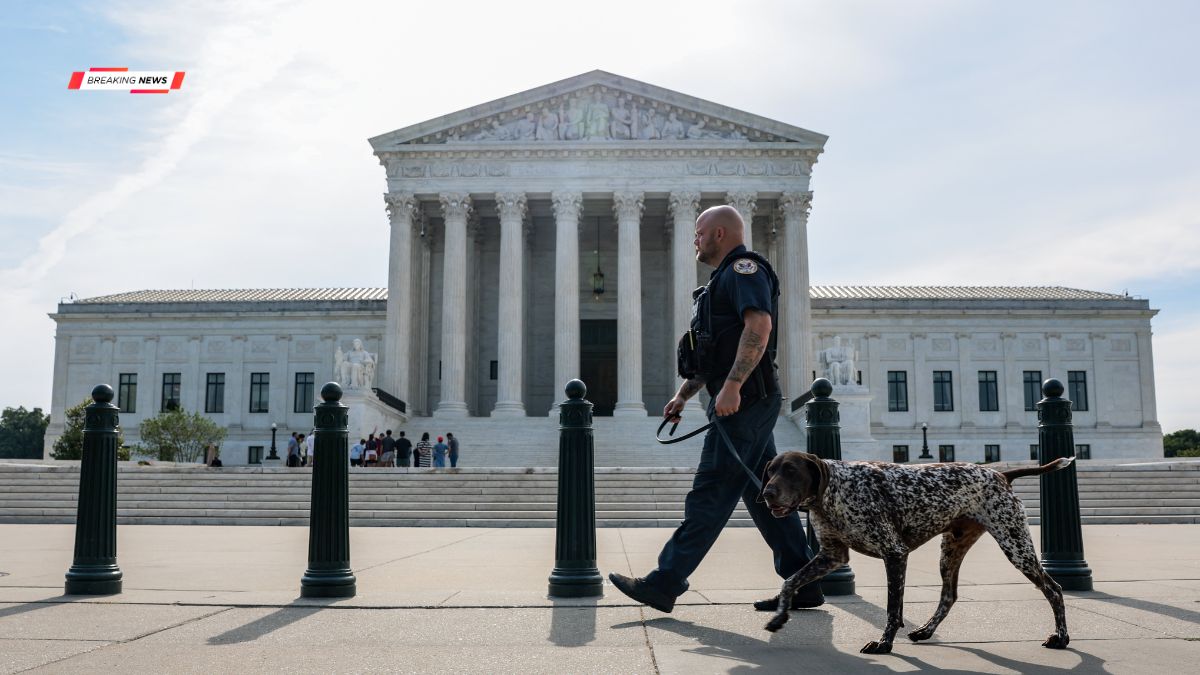
The Supreme Court on Tuesday struck down long-standing federal limits on how much money political parties can spend in coordination with individual candidates, a decision expected to significantly reshape campaign financing ahead of the midterm elections.
In a 6-3 ruling, the court found that the restrictions, first enacted in the wake of the Watergate scandal, violate the First Amendment by limiting political speech.
Court Ruling
Writing for the majority, Justice Brett Kavanaugh said the coordinated spending caps placed unconstitutional limits on the ability of political parties to support their candidates.
“In short, constitutional text, history, and precedent establish that the political-party coordinated-expenditure limits violate the First Amendment,” Kavanaugh wrote.
The ruling invalidates provisions of federal law that capped how much national party committees could spend directly in coordination with candidates for Congress. Under the rules in effect for the 2026 election cycle, coordinated spending limits ranged from about $130,600 to $4 million for Senate races depending on state size, and from roughly $65,300 to $130,600 for House races.
Background of the Case
Congress first imposed limits on coordinated party spending in 1974 as part of a broader effort to curb corruption and restore public trust after Watergate. The Supreme Court had previously upheld those limits as a safeguard against bribery and undue influence.
The current challenge was brought in 2022 by two Republican Party campaign committees, along with then-Sen. JD Vance of Ohio and former Rep. Steve Chabot. By the time the case reached the high court, the Trump administration’s Justice Department had declined to defend the law, and the Democratic National Committee and a court-appointed attorney stepped in to argue in favor of keeping the restrictions.
Reaction From Republicans
Republicans welcomed the decision, describing it as a major victory for free speech. President Donald Trump praised the ruling in a social media post, calling it “a big win for Republicans and the First Amendment.”
Republican campaign committees said the limits unfairly restricted political parties from supporting their own candidates and limited the flow of information to voters.
Dissent and Concerns About Corruption
The court’s three liberal justices dissented. Justice Elena Kagan, joined by Justices Sonia Sotomayor and Ketanji Brown Jackson, warned that the ruling could reopen the door to quid pro quo corruption.
“The Court ushers back in the same opportunities for quid pro quo corruption that the contribution limits were meant to check,” Kagan wrote, adding that political parties could effectively become “an alternative checking account for a campaign.”
Advocacy groups that supported the limits argued that coordinated spending rules prevented wealthy donors from using parties to bypass individual contribution caps.
Broader Campaign Finance Impact
The decision continues a trend of the Supreme Court narrowing campaign finance regulations on free speech grounds, following rulings such as the 2010 Citizens United decision, which lifted caps on corporate political spending.
The majority opinion said existing safeguards, including disclosure requirements and earmarking rules, are sufficient to address corruption concerns without restricting coordinated party spending.
Experts say the ruling is likely to lead to a surge in party spending and political advertising before the midterms. According to the Federal Election Commission, Senate candidates have already spent more than $490 million this cycle, while House candidates have spent nearly $1 billion.
Democratic Response
Democratic Party leaders and campaign committees criticized the decision, arguing it favors wealthy donors and special interests. In a joint statement, Democratic groups said the ruling risks increasing corruption but maintained confidence in their prospects in the upcoming elections.
The full effects of the decision are expected to become clear as parties and candidates adjust their strategies under the new rules.
FAQs
What did the Supreme Court decide?
It struck down limits on party spending coordinated with candidates.
Why were the limits originally created?
They were enacted after Watergate to prevent corruption.
Who brought the lawsuit?

Republican committees and then-Sen. JD Vance.
What was the vote split?
The ruling was decided 6-3.
What could change for elections?
Political parties may spend significantly more supporting candidates.