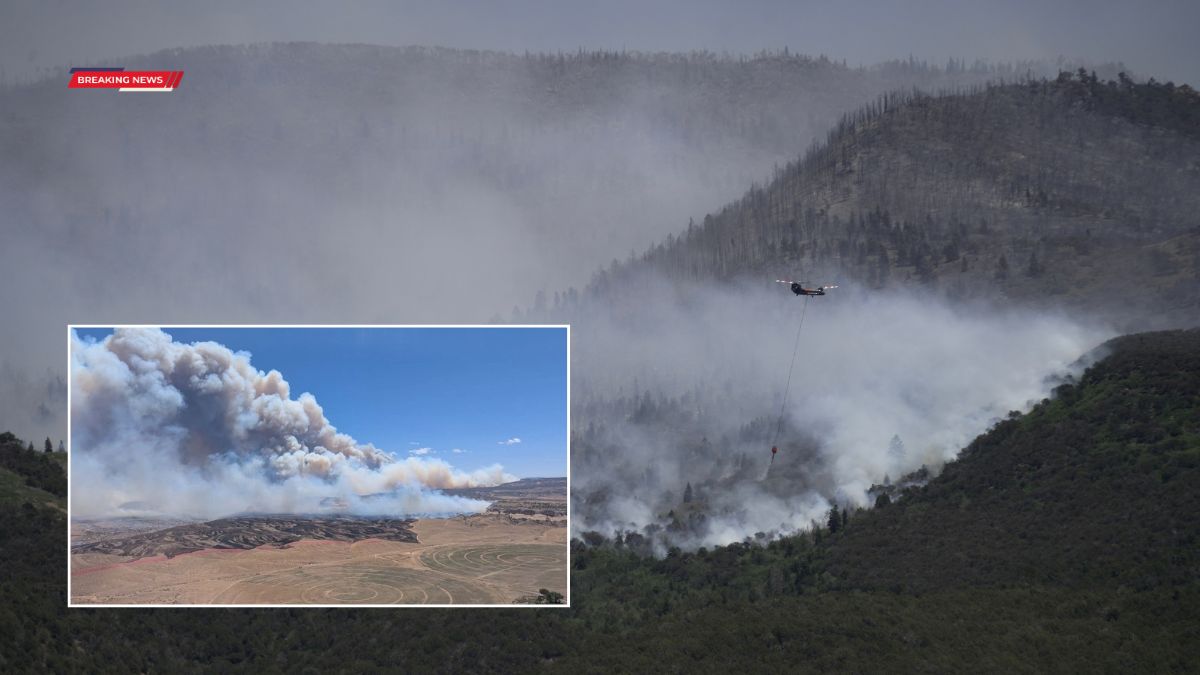
Three firefighters were killed and two others were injured while responding to fast-moving wildfires along the Colorado-Utah border, according to officials. The incident occurred on Saturday during an active federal firefighting operation targeting multiple blazes in rugged terrain.
Authorities said the firefighters were part of a coordinated response team assigned to the Knowles and Gore fires when conditions changed rapidly and they were overtaken by flames. The event has prompted renewed attention to the risks faced by wildfire crews operating in extreme and unpredictable environments.
Incident
The firefighters were deployed as part of a federal wildfire response involving multiple agencies, including the US Wildland Fire Service and the US Forest Service. Officials said the crew encountered a sudden escalation in fire behavior while working in the field.
According to the Department of the Interior, the firefighters were overwhelmed by fast-moving flames and attempted to take shelter. Two surviving firefighters sustained burn injuries and were transported to hospital for treatment.
The names of those killed have not yet been released, as authorities continue to notify family members.
Burnover
Officials described the event as a “burnover incident,” a term used when wildfire spreads so quickly that it overtakes personnel or equipment and blocks escape routes.
In such situations, firefighters may deploy emergency fire shelters, designed as a last resort to protect against radiant heat and flames. Despite these measures, burnover events remain among the most dangerous scenarios in wildfire response work.
The US Wildland Fire Service said crews faced rapidly changing fire conditions that left little time to reposition or retreat safely.
Fires
The Knowles and Gore fires have since merged with other nearby blazes to form the Snyder Mesa fire complex. As of Saturday, officials estimated the fire had burned approximately 28,000 acres.
In Utah, officials reported even larger fire activity, including the Cottonwood Fire, which has burned more than 93,000 acres and remains at 0% containment, according to the US Forest Service.
Multiple fires are currently active across the region, stretching firefighting resources and complicating containment efforts across state lines.
Response
Colorado Governor Jared Polis declared a state of emergency on Saturday in response to the escalating wildfire situation. The declaration authorizes the deployment of the National Guard to assist with firefighting and support operations.
In a public statement, the governor expressed condolences to the families of the firefighters and acknowledged the ongoing efforts of crews still working in hazardous conditions.
Utah officials have also issued emergency measures, including a statewide ban on fireworks ahead of the Fourth of July holiday, due to elevated fire risk.
Conditions
Fire officials and meteorologists have pointed to a combination of hot temperatures, dry vegetation, and strong winds as key factors driving wildfire expansion across the region.
Much of the affected land is sparsely populated, but officials noted that fires have threatened cabins, recreational areas, and resort regions, increasing the urgency of containment efforts.
Recent seasons have seen more frequent periods of elevated fire risk in the western United States, particularly during extended dry and windy conditions.
Context
Scientists have linked rising wildfire risk in the western US to a combination of long-term climate patterns and land management conditions. Warmer winters, earlier snowmelt, and prolonged drought periods can leave vegetation drier and more flammable for longer stretches of the year.
While individual fires are influenced by immediate weather conditions, experts say broader environmental trends are contributing to longer fire seasons and more intense fire behavior.
Outlook
Fire crews continue to work across multiple active incidents in Colorado and Utah as containment remains limited in several areas. Officials say conditions remain dynamic, with wind shifts and dry air continuing to challenge suppression efforts.
The loss of the firefighters has underscored the operational risks involved in wildfire response, particularly during rapidly evolving fire events where escape routes can close in minutes.