The man accused of starting the deadly Palisades Fire will face a new federal trial this fall after jurors failed to reach a unanimous verdict, with most siding against conviction.
Jonathan Rinderknecht, 29, was ordered held in custody until an Oct. 19 retrial after Judge Anne Hwang declared a mistrial Friday. Ten of the 12 jurors said they believed he was not guilty.
Mistrial
Rinderknecht has pleaded not guilty to federal arson charges tied to one of the most destructive wildfires in California history. His defense attorney, Steve Haney, said the jury’s split shows the government failed to prove its case.
Haney said his client was encouraged that the majority of jurors found the evidence insufficient. Prosecutors disagreed, saying they plan to seek a conviction at the retrial.
First Assistant U.S. Attorney Bill Essayli said the government believes its evidence is strong and that a new jury will reach a guilty verdict.
Fire
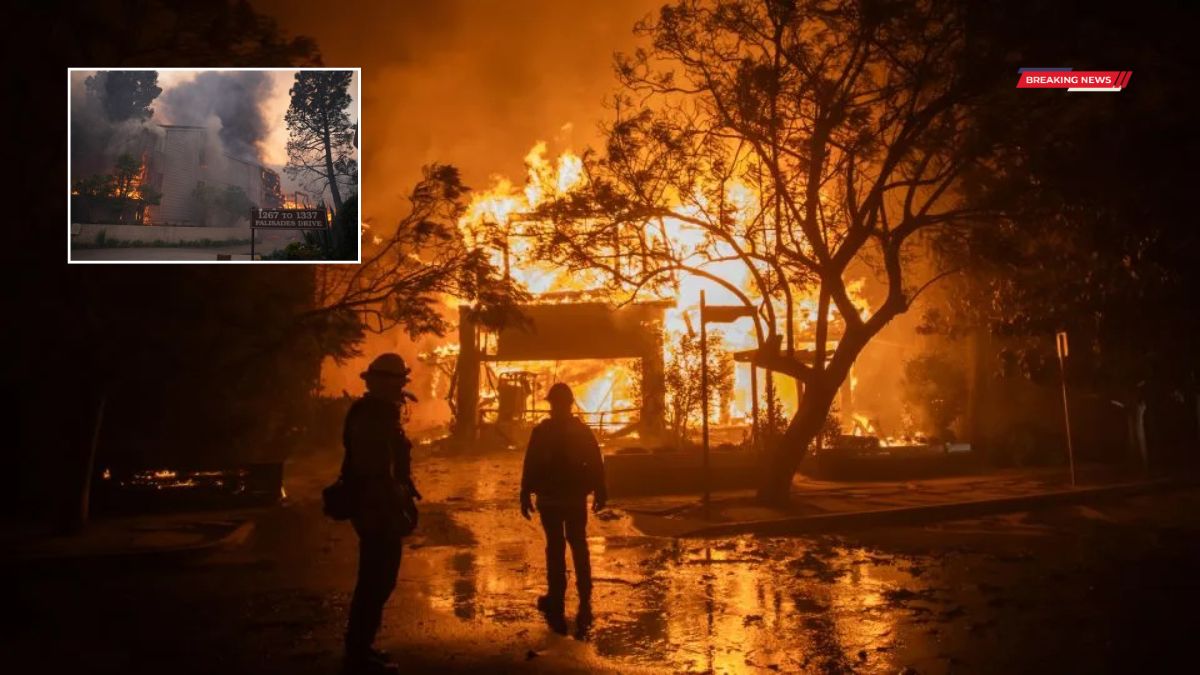
Prosecutors allege Rinderknecht used a barbecue lighter on Jan. 1, 2025, to start a small blaze in Pacific Palisades that burned underground in tree root systems. That fire later flared back up on Jan. 7 during Santa Ana winds, killing 12 people and destroying entire neighborhoods in Los Angeles and Malibu.
Only 17 rebuilt homes in Pacific Palisades have since been certified for occupancy.
The prosecution did not present direct evidence showing Rinderknecht ignited the initial fire. Instead, they relied on circumstantial evidence placing him near the ignition point and digital records suggesting motive.
Defense
Rinderknecht’s defense argued the fire was more likely caused by fireworks, which are common on New Year’s Eve. Witnesses testified they heard fireworks or saw flashes of light near the trail around midnight. Some also reported seeing teenagers running from the area.
Defense attorneys said investigators focused too quickly on Rinderknecht and ignored alternative explanations. They also questioned the integrity of the fire scene, noting it was not secured until nearly two weeks after the first blaze.
Former fire investigator Ed Nordskog testified that fireworks routinely cause fires on New Year’s Eve and accused investigators of confirmation bias.
Evidence
The trial featured eight days of testimony and extensive digital evidence. Prosecutors showed phone data placing Rinderknecht near the suspected origin site and highlighted his multiple 911 calls reporting the fire.
Jurors reviewed records from his phone, Uber account, email, social media, and OpenAI interactions. Prosecutors pointed to thousands of online posts and ChatGPT conversations as evidence of anger, resentment, and possible motive.
Rinderknecht expressed frustration about wealth inequality, searched violent phrases online, and asked ChatGPT questions about responsibility for accidental fires. Prosecutors argued he recorded videos and screen captures in an effort to mislead investigators.
Interview
Weeks after the fire, Rinderknecht spoke for roughly eight hours with an ATF agent. During a site visit, he gave an account of his movements that conflicted with the timing and location of his 911 calls, according to testimony.
An arson behavior expert testified that Rinderknecht’s actions were consistent with a “societal revenge motivated” arsonist.
Jury
One juror, who identified herself only as Syrena, said there was not enough proof to convict. She also questioned whether Rinderknecht should be held responsible for the full scale of destruction, citing possible negligence by other parties.
She said his use of ChatGPT did not sway her, calling it normal behavior and criticizing prosecutors for attacking his character.
Context
The retrial will unfold as Los Angeles voters weigh whether to re-elect Mayor Karen Bass, whose leadership has been criticized over wildfire preparedness and response. Thousands of displaced residents are still pursuing insurance claims and legal action.
Civil attorney Alexander Robertson said government agencies may be shifting blame away from their own failures.
As the case moves toward an October retrial, the Palisades Fire remains a symbol of both devastating loss and unresolved accountability.
FAQs
Why was there a mistrial?
Jurors could not reach a unanimous verdict.
How many jurors voted not guilty?
Ten of the 12 jurors favored acquittal.
When is the retrial scheduled?
The new trial is set for Oct. 19.
What caused the Palisades Fire?
Prosecutors say arson, defense says fireworks.
Is the defendant still in custody?
Yes, he was ordered jailed until retrial.