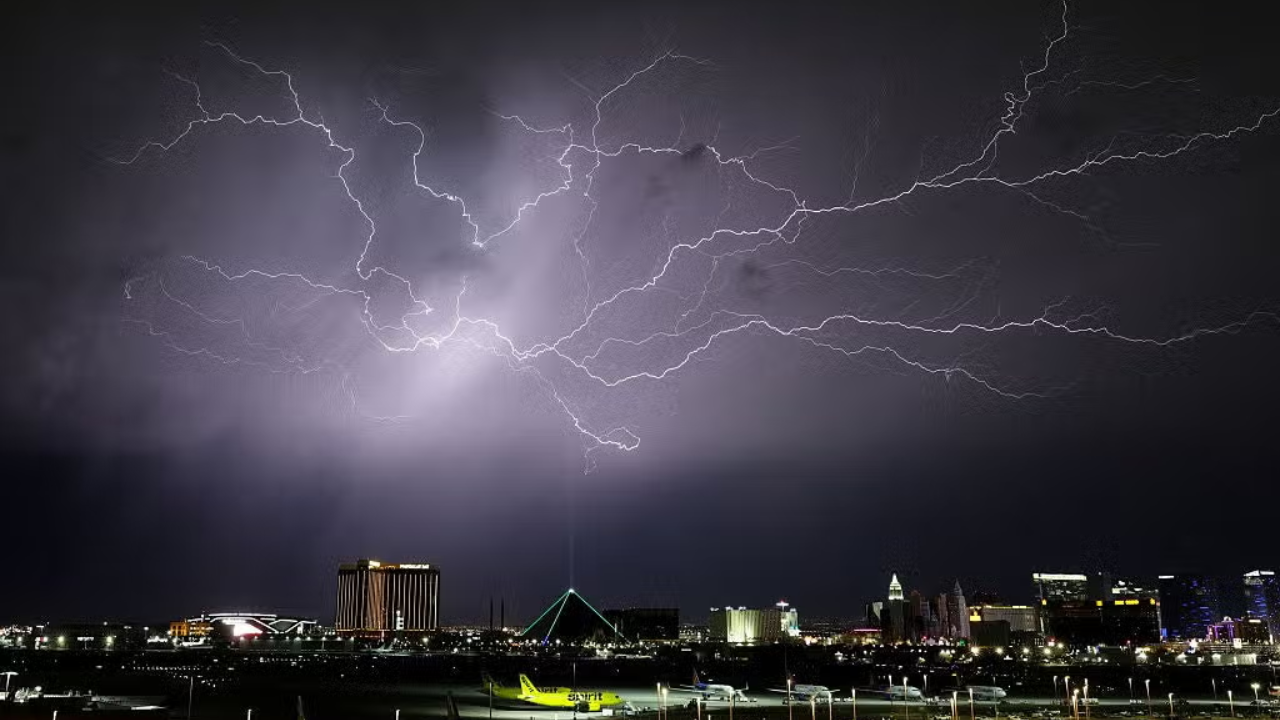
Las Vegas, Nevada: Local officials are urging residents to prepare for the arrival of the 2026 monsoon season, warning that heavy rainfall could trigger dangerous flash flooding across the Las Vegas Valley despite the region’s typically dry climate. Emergency management agencies and weather officials say even a short period of intense rainfall can quickly overwhelm roads, drainage systems, and low-lying areas, creating life-threatening conditions for motorists and pedestrians.
The annual monsoon season officially began in mid-June and will continue through the end of September. During this period, warmer temperatures combined with increased atmospheric moisture can produce sudden thunderstorms capable of generating heavy rain, lightning, strong winds, dust storms, and localized flooding. Officials are encouraging residents to remain weather-aware and take precautions before storms develop rather than waiting until dangerous conditions are already underway.
Why Monsoon Season Creates Serious Flash Flood Risks
Although Las Vegas is located in the Mojave Desert, the area is particularly vulnerable to flash flooding because the dry, compact ground absorbs water slowly. During heavy downpours, rainwater rapidly flows across streets, parking lots, washes, and drainage channels, causing water levels to rise within minutes. Areas that appear dry can quickly become hazardous as floodwaters move downstream from storms occurring several miles away.
Emergency officials warn that floodwaters are often deeper and faster than they appear. Just a small amount of moving water can sweep away pedestrians, while vehicles can lose traction or be carried off roadways when drivers attempt to cross flooded intersections. Authorities continue reminding the public to follow the national safety message, “Turn Around, Don’t Drown,” and never drive through water covering a roadway because its depth and condition may be impossible to judge.
Officials Urge Residents to Stay Prepared Throughout the Season
Local emergency management agencies are encouraging residents to monitor daily weather forecasts, sign up for emergency alerts, and prepare for rapidly changing weather conditions. Families are advised to develop emergency plans, identify safer travel routes, and keep emergency supplies available in case storms disrupt transportation or temporarily affect utilities. Officials also recommend securing outdoor furniture and loose objects that could become hazardous during strong winds associated with monsoon thunderstorms.
Residents are also encouraged to avoid recreational activities in flood-prone washes, drainage channels, and low-water crossings whenever storms are forecast. Authorities emphasize that rainfall occurring miles away can send fast-moving water into normally dry channels with little warning. Drivers should slow down during storms, increase following distance, and avoid unnecessary travel whenever severe weather warnings have been issued for the Las Vegas Valley.
Agencies Continue Monitoring Weather and Emergency Response
Officials across Clark County continue coordinating with the National Weather Service and emergency response agencies throughout the monsoon season to monitor changing weather conditions and respond quickly when storms develop. Public works departments regularly inspect drainage infrastructure, flood control channels, and stormwater systems to help reduce the impact of heavy rainfall whenever possible. Emergency crews remain prepared to respond to flooding, stranded motorists, downed power lines, traffic incidents, and storm-related emergencies.
Authorities stress that while forecasting has improved significantly, thunderstorms can still develop rapidly and produce highly localized rainfall. One neighborhood may receive only light rain while another experiences flooding within a short distance. Because of these changing conditions, residents are encouraged to pay close attention to weather alerts issued throughout the day and follow instructions from emergency officials whenever watches or warnings are announced.
Monsoon Safety Overview
| Detail | Information |
|---|---|
| Event | Beginning of the 2026 Monsoon Season |
| Location | Las Vegas Valley, Clark County, Nevada |
| Main Hazard | Flash flooding from heavy rainfall |
| Additional Weather Threats | Lightning, strong winds, dust storms, localized flooding |
| Highest Risk Areas | Low-lying roads, washes, flood channels, underpasses, poor-drainage areas |
| Safety Message | Turn Around, Don’t Drown |
| Recommended Actions | Monitor forecasts, avoid flooded roads, prepare emergency supplies, follow official alerts |
| Emergency Response | Local agencies monitoring storms and coordinating response efforts |
| Season Duration | Mid-June through September |
As the 2026 monsoon season gets underway, officials across Las Vegas and Clark County are reminding residents that desert communities remain highly vulnerable to sudden flash flooding despite receiving relatively little annual rainfall. Even brief thunderstorms can create dangerous travel conditions, overwhelm drainage systems, and produce fast-moving floodwaters capable of threatening lives and property. Public awareness and early preparation remain essential to reducing weather-related emergencies throughout the summer.
Emergency management officials encourage everyone to stay informed by monitoring weather forecasts, responding promptly to flood warnings, and avoiding unnecessary travel during severe storms. By following official safety guidance, preparing emergency plans in advance, and never attempting to drive through flooded roadways, residents can significantly reduce their risk during one of Southern Nevada’s most active weather seasons.
Frequently Asked Questions:
When does the Las Vegas monsoon season occur?
The monsoon season generally begins in mid-June and continues through the end of September.
Why is flash flooding a concern in Las Vegas?
The desert’s hard, dry ground absorbs water slowly, allowing heavy rainfall to quickly create dangerous flash floods.
What weather hazards accompany the monsoon season?
Heavy rain, lightning, strong winds, dust storms, and localized flooding are among the primary hazards.
What should drivers do during flash flooding?
Drivers should avoid flooded roads, never drive through standing water, and follow the “Turn Around, Don’t Drown” safety message.
How are local agencies preparing for the season?
Emergency officials are monitoring weather conditions, maintaining flood-control infrastructure, coordinating emergency responses, and issuing public safety alerts throughout the monsoon season.