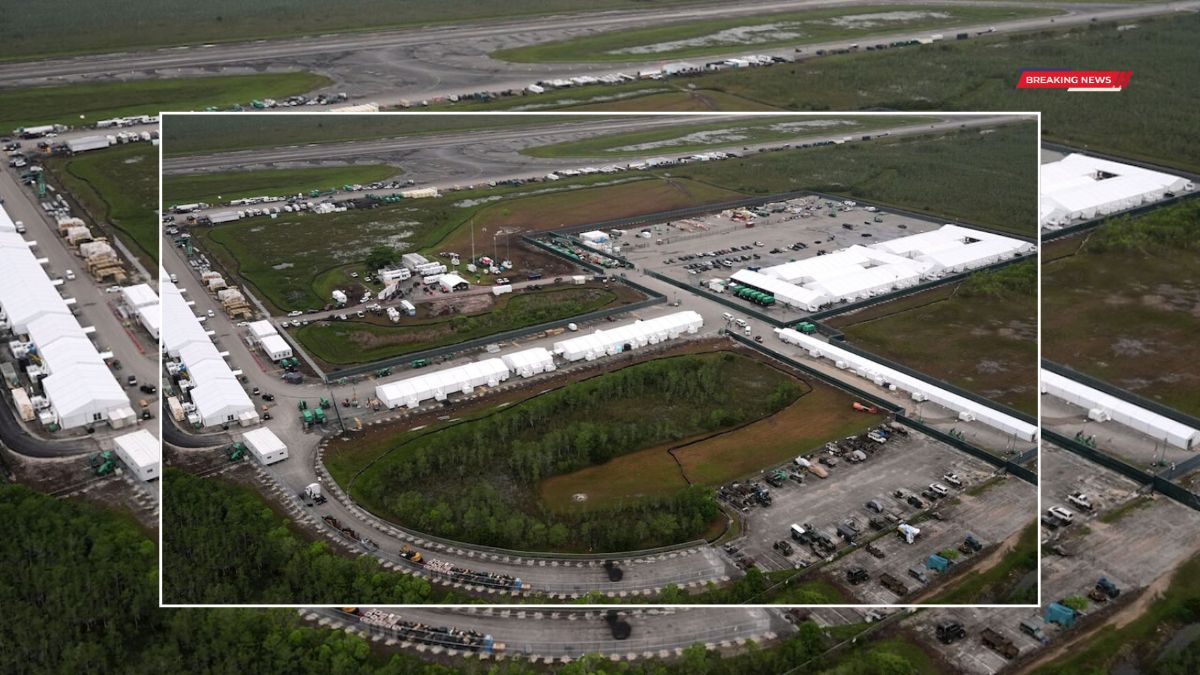
Florida Gov. Ron DeSantis announced Thursday that the Everglades-based immigration detention center nicknamed “Alligator Alcatraz” has officially closed, saying the temporary facility has fulfilled its purpose.
The makeshift detention site, which opened in July 2025, was promoted by the Trump administration as a key tool in speeding up deportations but sharply criticized by civil rights and environmental groups as unsafe and inhumane.
“We stepped up because there was a gap, but my hope is that they’ll be able to handle that,” DeSantis said during a news conference at the site, adding that federal authorities now have sufficient permanent detention capacity.
Temporary Facility, Permanent Controversy
State officials had already announced a temporary closure earlier this month, transferring all detainees to other facilities because hurricane season made conditions in the Everglades unsafe. DeSantis said the center was always intended to be short-term while other detention infrastructure was secured.
Immigration advocates argue the tents and trailers were never appropriate for detaining people. Former detainees reported serious issues, including:
- Limited access to attorneys
- Unsanitary conditions such as flooded floors and non-functioning toilets
- Worms in food and infestations of mosquitoes and insects
- Air conditioning failures in extreme heat
- Long delays in showers and access to prescription medications
The facility consisted of large white tents with rows of bunk beds enclosed by chain-link fencing.
Impact on Detainees and Families
Advocates say the closure does little to address the broader harm caused by prolonged immigration detention. The Florida Immigrant Coalition said corporations and contractors were the primary beneficiaries, profiting millions from what it called a manufactured immigration emergency.
Attorneys representing detainees said their clients were abruptly transferred earlier this month to facilities across Florida, California, Arizona, Louisiana, and Texas, sometimes disappearing for days before families and lawyers were informed of their whereabouts.
State and Federal Response
DeSantis defended the facility’s role, saying about 21,000 people were deported through the site and arguing it made Florida safer. White House border czar Tom Homan praised the governor’s cooperation and said Florida will continue to play a major role in immigration enforcement even without the Everglades center.
“This isn’t the end of the relationship,” Homan said. “This is a continuation.”
The airstrip around which the detention center was built will remain in use, according to DeSantis.
Environmental Lawsuits Continue
Environmental groups sued the state over the facility, arguing it was built without proper permits or environmental reviews in a sensitive Everglades ecosystem. Even though the site is now closed, those lawsuits are moving forward.
“The administration believes it can quietly walk away and leave its mess for others to clean up,” said Paul J. Schwiep, an attorney for Friends of the Everglades and the Center for Biological Diversity. “The law will not allow them to escape accountability.”
FAQs
What was ‘Alligator Alcatraz’?
A temporary immigration detention center built in the Florida Everglades using tents and trailers.
Why did Florida close the detention center?
Gov. Ron DeSantis said it was always meant to be temporary and federal authorities now have permanent capacity.
Why was the facility controversial?

Advocates cited unsafe and inhumane conditions, while environmental groups said it lacked proper permits.
What happened to detainees held there?
They were transferred to other detention centers in Florida and several other states.
Are lawsuits still ongoing?
Yes. Environmental groups say the state must still be held accountable for alleged damage to the Everglades.