
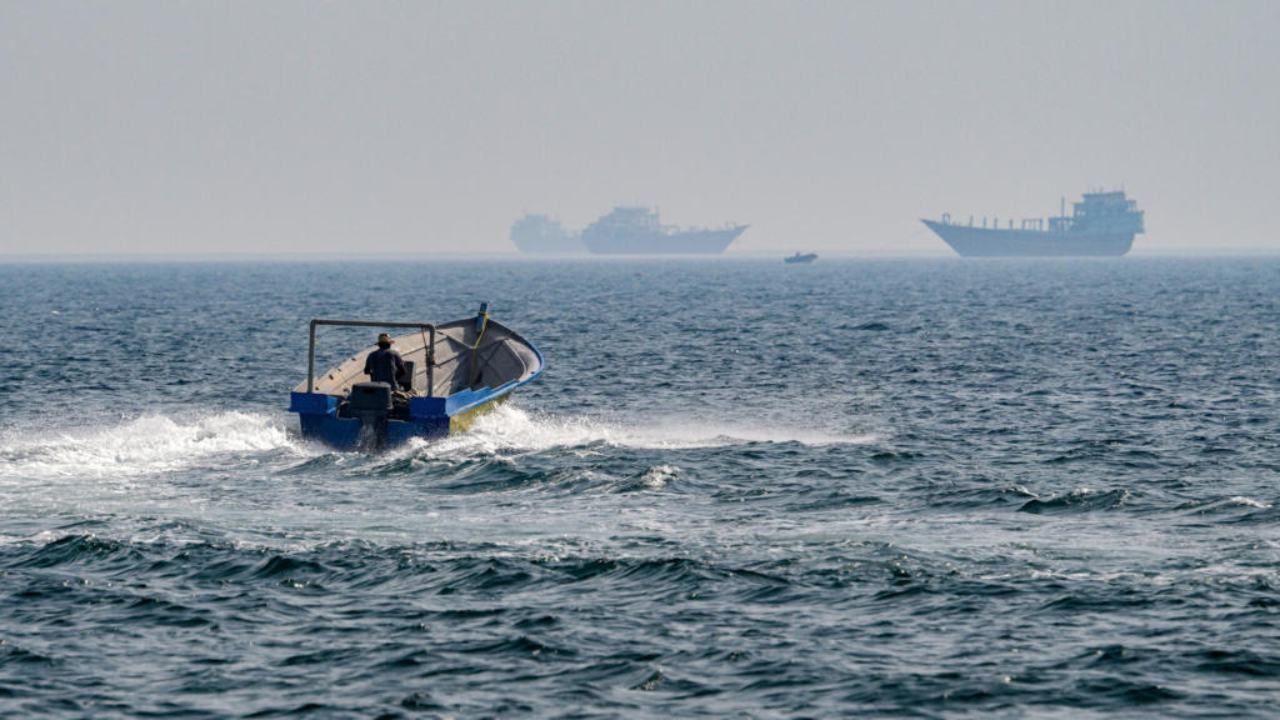
Maritime traffic through the Strait of Hormuz remains significantly restricted even after a two-week ceasefire agreement between Tehran and Washington, highlighting continued instability in one of the world’s most critical energy transit corridors. Despite diplomatic efforts aimed at reducing tensions, shipping operations in the region continue to face disruptions, delays, and heightened security concerns.
The Strait of Hormuz, which connects the Persian Gulf with the Gulf of Oman and the Arabian Sea, is a vital passage for global oil and liquefied natural gas shipments. Any disruption in this narrow waterway has immediate implications for international trade, energy prices, and maritime security operations across multiple regions.
Continued Disruptions in a Strategic Waterway
Despite the ceasefire announcement, maritime monitoring agencies and shipping operators report that vessel movement through the Strait of Hormuz remains partially constrained. Commercial shipping lanes are operating under heightened security advisories, with some vessels rerouting or delaying passage due to uncertainty in the region.
Shipping firms have reportedly adopted cautious navigation protocols, including reduced convoy speeds, altered routing schedules, and increased reliance on naval escorts. These measures reflect ongoing concerns about potential escalation or renewed hostilities, even during the declared ceasefire period.
The restrictions have not fully closed the Strait, but they have reduced the efficiency and predictability of maritime traffic, creating logistical challenges for global supply chains dependent on Gulf energy exports.
Ceasefire Between Tehran and Washington
The ceasefire between Iran (Tehran) and the United States (Washington) was intended to temporarily de-escalate tensions following a period of heightened regional friction. While the agreement reduced direct military confrontation, it has not fully restored confidence among commercial shipping operators or regional maritime authorities.
Officials from both sides have emphasized the temporary nature of the truce, and underlying geopolitical disagreements remain unresolved. As a result, shipping companies and insurance providers continue to classify the region as high-risk, contributing to elevated operational costs and cautious navigation decisions.
Maritime analysts note that ceasefires in politically sensitive regions often take time to translate into full operational normalization, particularly in strategic chokepoints like the Strait of Hormuz.
Strategic Importance of the Strait of Hormuz
The Strait of Hormuz is one of the most important maritime chokepoints in the world, with a significant percentage of global petroleum exports passing through it daily. Countries across Asia, Europe, and North America depend heavily on uninterrupted flows of oil and gas through this route.
Because of its narrow geography and high traffic density, even minor disruptions can create ripple effects in global energy markets. Insurance premiums for vessels operating in the region typically rise during periods of tension, and shipping companies may opt for alternative routes despite increased costs and longer transit times.
The continued restriction of traffic underscores the vulnerability of global supply chains to regional geopolitical instability, especially in areas where strategic waterways intersect with international political conflicts.
Maritime Situation Overview Table
| Category | Details |
|---|---|
| Location | Strait of Hormuz |
| Region | Persian Gulf / Gulf of Oman |
| Current Status | Partially restricted maritime traffic |
| Ceasefire Parties | Tehran (Iran) & Washington (United States) |
| Duration of Ceasefire | Two weeks (reported) |
| Impacted Sector | Global oil and gas shipping |
| Key Issue | Ongoing security and navigation concerns |
| Shipping Response | Rerouting, delays, convoy navigation |
| Risk Level | Elevated / High-risk classification |
| Economic Impact | Increased shipping and insurance costs |
Global Economic and Energy Impact
The continued disruption of maritime traffic through the Strait of Hormuz has implications far beyond the immediate region. Global oil markets are particularly sensitive to any instability in the Gulf, and even temporary restrictions can influence price volatility.
Energy-importing nations are closely monitoring the situation, as prolonged disruptions could lead to supply shortages or increased fuel costs. Shipping companies are also factoring geopolitical risk into long-term planning, potentially reshaping trade routes and logistics strategies if instability persists.
Analysts warn that sustained uncertainty in the region could lead to long-term adjustments in global energy transportation strategies, including diversification of supply routes and increased investment in alternative infrastructure.
Security Measures and Naval Presence
In response to ongoing risks, naval forces from multiple countries continue to maintain a presence in and around the Strait of Hormuz. These operations aim to ensure the safe passage of commercial vessels and deter potential threats to maritime security.
Escort operations, surveillance monitoring, and coordinated patrols are commonly deployed to reduce the likelihood of incidents involving commercial shipping. However, the effectiveness of these measures depends heavily on sustained diplomatic stability and cooperation between regional actors.
Despite the ceasefire, the continued deployment of security resources highlights the fragile nature of the current situation.
Outlook for Maritime Stability
While the ceasefire between Tehran and Washington represents a temporary step toward de-escalation, experts caution that full normalization of maritime traffic through the Strait of Hormuz may take longer. Confidence among shipping operators typically requires sustained periods of stability, clear communication channels, and reduced geopolitical uncertainty.
For now, maritime traffic is expected to remain partially restricted, with gradual improvements depending on diplomatic progress and regional security developments. Shipping stakeholders continue to monitor the situation closely, adjusting operations as conditions evolve.
The Strait of Hormuz remains a critical yet fragile maritime corridor, where even temporary geopolitical agreements do not immediately translate into operational normalcy. Despite a reported two-week ceasefire between Tehran and Washington, shipping activity continues to face restrictions driven by security concerns and lingering uncertainty.
As global markets depend heavily on uninterrupted flows through this waterway, the situation underscores the broader risks associated with geopolitical tensions in key maritime chokepoints. Until sustained stability is achieved, maritime traffic through the Strait of Hormuz is likely to remain cautious and constrained.
FAQ’s:
What is happening in the Strait of Hormuz?
Maritime traffic remains partially restricted despite a reported ceasefire between Iran and the United States.
Why is the Strait of Hormuz important?
It is a key global shipping route for oil and gas exports from the Persian Gulf.
Has the ceasefire restored normal shipping?

No, shipping remains cautious due to ongoing security and geopolitical concerns.
How are ships responding to the situation?
Vessels are rerouting, moving in convoys, or delaying passage through the region.
What is the global impact?
The disruption contributes to higher shipping costs and potential volatility in global energy markets.













Ariana Grande Plans Break From Public Spotlight After Tour Amid Ongoing Scrutiny