
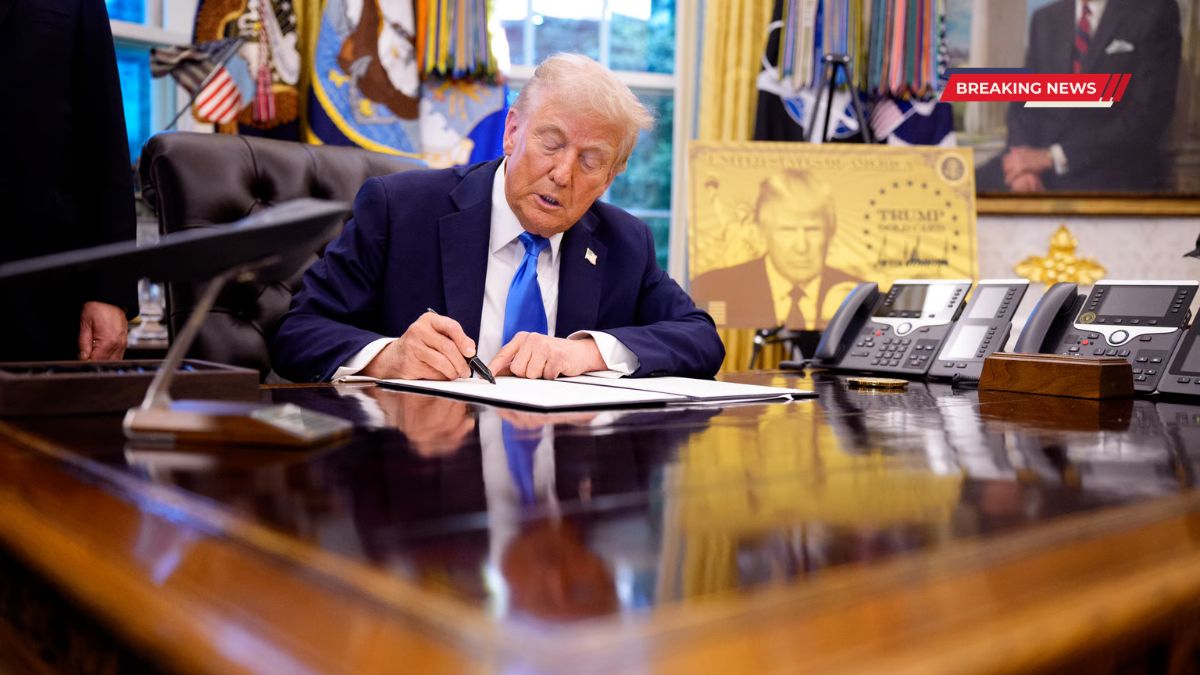
A federal judge has struck down a Trump-era policy that imposed a $100,000 annual fee on H-1B visa applications, ruling that the charge was an unlawful tax that exceeded presidential authority under federal law and the U.S. Constitution. The decision represents a significant setback for a policy that had sharply increased costs for employers hiring skilled foreign workers.
Ruling
U.S. District Judge Leo Sorokin in Boston issued a 42-page ruling in a case brought by 20 Democratic state attorneys general. The lawsuit challenged the legality of the fee, which had been introduced through a presidential proclamation in September.
The judge ruled that the fee functioned as a tax rather than a regulatory fee, and therefore could not be imposed by the executive branch without congressional authorization. Under the Constitution, the power to levy taxes rests with Congress.
As a result, the court vacated the policy, effectively blocking enforcement of the $100,000 charge. The Trump administration is widely expected to appeal the decision.
Legal Reasoning
In his opinion, Sorokin concluded that the administration lacked statutory authority under the Immigration and Nationality Act to impose such a financial burden. The ruling emphasized that while the executive branch can regulate immigration programs, it cannot independently create tax measures.
The decision also referenced prior Supreme Court litigation, including Learning Resources v Trump, which limited the administration’s ability to impose broad financial measures through executive action.
Policy
The contested policy had raised the cost of H-1B visa applications dramatically, increasing fees by an estimated 20 to 50 times compared to previous levels. The administration had justified the increase as a measure to reduce reliance on foreign labor and encourage companies to hire and train American workers.
Commerce Secretary Howard Lutnick previously stated that major technology firms supported efforts to shift hiring toward domestic workers, although the policy itself faced strong opposition from business groups and immigration advocates.
| Category | Details |
|---|---|
| Policy | $100,000 annual H-1B fee |
| Court | U.S. District Court, Boston |
| Judge | Leo Sorokin |
| Outcome | Fee vacated (ruled unlawful) |
| Plaintiffs | 20 state attorneys general |
| Status | Expected appeal |
Impact
The ruling provides immediate relief to major technology companies and other industries that rely heavily on the H-1B visa program to hire skilled foreign workers.
Companies such as Amazon, Microsoft, and Meta are among the largest users of the program. Amazon alone reportedly had more than 10,000 H-1B approvals in early 2025, while Microsoft and Meta each received several thousand.
Industry groups had warned that the proposed fee would significantly increase hiring costs and reduce access to specialized talent in fields such as engineering, software development, and data science.
Program Context
The H-1B visa program was created in 1990 to allow U.S. employers to hire foreign workers in specialized occupations for up to six years. The program issues 65,000 visas annually, with an additional 20,000 reserved for applicants with advanced degrees from U.S. institutions.
Roughly two-thirds of H-1B roles are in computer-related fields, making the program especially important to the technology sector.
Political Background
The fee had been introduced as part of a broader effort to reshape U.S. immigration policy, with the administration arguing that the program was being used to replace American workers in certain industries.
The policy quickly became a point of legal and political contention, with opponents arguing it exceeded executive authority and placed undue burden on employers.
Outlook
With the ruling now vacating the fee, the future of the policy will depend on the outcome of the expected appeal. If upheld, the decision could reaffirm limits on executive authority in immigration-related financial regulations.
For now, employers participating in the H-1B program return to the previous fee structure while legal proceedings continue.
The court’s decision to block the $100,000 H-1B visa fee marks a significant legal setback for a high-profile immigration policy and reinforces limits on presidential authority to impose taxes without congressional approval. The ruling restores uncertainty around the future of proposed changes to the visa system as the case moves toward appeal.
FAQs
What did the court rule on the H-1B fee?
The judge struck down the $100,000 fee as unlawful.
Why was the fee blocked?
It was ruled to be an unauthorized tax imposed without Congress.
Who challenged the policy?

Twenty state attorneys general filed the lawsuit.
What is the H-1B visa program?
A U.S. program for hiring skilled foreign workers in specialty jobs.
Will the ruling be appealed?
Yes, the Trump administration is expected to appeal.








Ariana Grande Plans Break From Public Spotlight After Tour Amid Ongoing Scrutiny