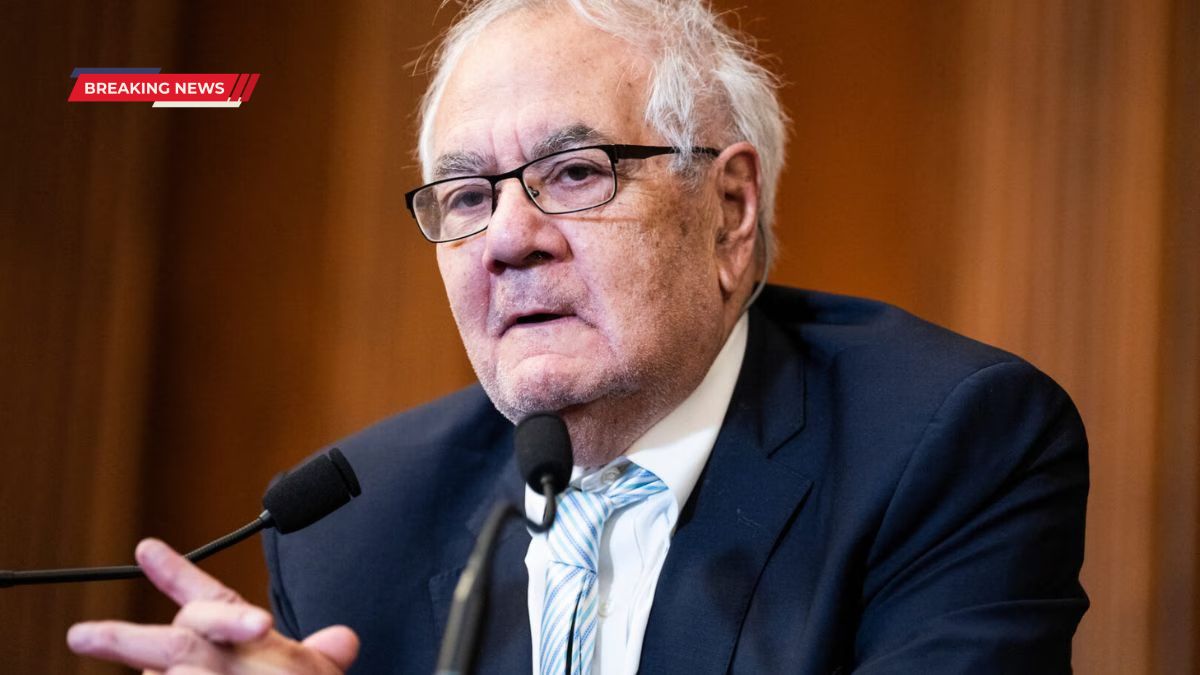
Former U.S. Congressman Barney Frank, a longtime Massachusetts Democrat known for his role in financial reform and LGBTQ+ rights advocacy, has died at the age of 86.
Frank died on May 19 after entering hospice care at his home in Maine earlier this year, according to media reports. His sister confirmed the news to NBC Boston.
Over a political career spanning more than three decades in Congress, Frank became one of the country’s most recognizable lawmakers. He played a central role during the 2008 financial crisis and later helped craft the Dodd-Frank Wall Street Reform and Consumer Protection Act, one of the most significant banking reform laws in modern U.S. history.
Career
Frank represented Massachusetts in the U.S. House of Representatives from 1981 until 2013.
During his tenure, he gained influence on economic policy and financial regulation, eventually serving as chairman of the House Financial Services Committee between 2007 and 2011.
His leadership became especially prominent during the financial collapse of 2008, when lawmakers and regulators faced pressure to stabilize the banking system and housing market.
| Political Role | Years |
|---|---|
| Massachusetts House of Representatives | 1973-1980 |
| U.S. House of Representatives | 1981-2013 |
| House Financial Services Chairman | 2007-2011 |
Frank was widely recognized for his direct speaking style, quick humor, and detailed understanding of financial policy.
Dodd-Frank
Frank’s name became permanently associated with the Dodd-Frank Act, passed in 2010 following the global financial crisis.
The legislation aimed to strengthen oversight of banks and financial institutions after the collapse of the housing market and failures across the financial sector.
Key goals of the law included:
| Dodd-Frank Focus | Purpose |
|---|---|
| Financial oversight | Reduce systemic risk |
| Consumer protection | Strengthen borrower safeguards |
| Banking regulation | Increase accountability |
| Crisis prevention | Avoid future financial collapses |
The law also created the Consumer Financial Protection Bureau (CFPB), an agency designed to monitor consumer financial products and practices.
Sen. Elizabeth Warren, who helped establish the CFPB, praised Frank’s role in advancing the legislation.
In a statement following his death, Warren described him as a determined advocate for working Americans during one of the country’s most difficult economic periods since the Great Depression.
LGBTQ+ Advocacy
Frank was also a pioneering figure in LGBTQ+ representation in American politics.
In 1987, he became one of the first members of Congress to publicly come out as gay. At a time when openly LGBTQ+ politicians were rare in national office, the decision carried significant political and personal risk.
Frank later explained that supporting gay rights was a matter of personal integrity.
In 2012, he became the first sitting or former member of Congress to enter a same-sex marriage when he married longtime partner Jim Ready.
Throughout his career, Frank supported policies involving:
- Anti-discrimination protections
- LGBTQ+ workplace rights
- Marriage equality
- Repeal of “Don’t Ask, Don’t Tell”
- HIV/AIDS awareness and action
Human Rights Campaign President Kelly Robinson described Frank as a trailblazer whose visibility helped expand LGBTQ+ representation in public life.
Political Voice
Even after leaving Congress, Frank remained active in political discussions and Democratic Party debates.
In his recently published book, “The Hard Path to Unity: Why We Must Reform the Left to Rescue Democracy,” Frank argued that Democrats had lost support among some voters on both economic and social issues.
He suggested the party should reconsider certain political strategies and focus more closely on broad voter concerns.
His comments reflected his long-standing reputation as a liberal policymaker who was also willing to criticize his own party.
Public Reaction
Political leaders across Massachusetts and beyond responded to Frank’s death with tributes highlighting both his legislative accomplishments and his influence on civil rights.
Massachusetts Senate President Karen Spilka called him a major voice for people who often lacked political representation.
Supporters frequently described Frank as highly intelligent, deeply informed on policy, and unusually accessible despite his national prominence.
His speaking style, often marked by sharp humor and blunt observations, made him a familiar figure in congressional hearings and television interviews for decades.
Controversies
Frank’s long public career also included periods of criticism and controversy.
In 1989, he faced scrutiny over a relationship with a male escort who reportedly operated an escort business from Frank’s apartment, which violated Massachusetts law at the time.
The controversy became a major political issue but did not end his congressional career.
Frank also faced criticism from some conservatives regarding his role during the years leading up to the 2008 housing crisis. Critics argued lawmakers and regulators failed to address growing risks in mortgage lending and financial markets before the collapse.
Supporters, however, pointed to his later leadership in passing financial reforms aimed at preventing similar crises in the future.
Legacy
Barney Frank leaves behind a political legacy that spans financial regulation, civil rights, and modern Democratic politics.
For many Americans, he became closely associated with the federal response to the 2008 economic collapse and the effort to reshape banking oversight afterward.
At the same time, his visibility as an openly gay lawmaker helped change perceptions of LGBTQ+ representation in national politics.
His career reflected both the policy debates and social changes that shaped American public life over the past several decades.
FAQs
Who was Barney Frank?
A longtime U.S. congressman from Massachusetts.
What was the Dodd-Frank Act?
A financial reform law passed after 2008.
When did Barney Frank die?

He died on May 19 at age 86.
Was Barney Frank openly gay?
Yes, he publicly came out in 1987.
What committee did Frank lead?
The House Financial Services Committee.