
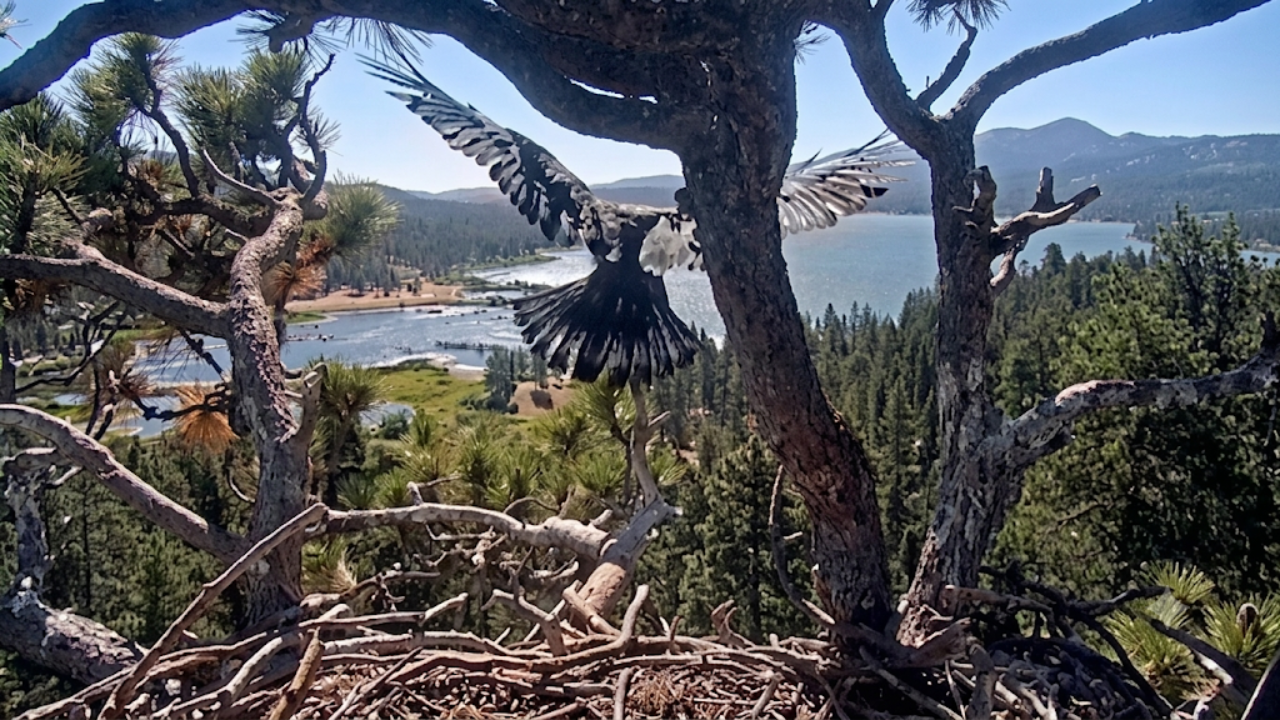
Big Bear Valley, San Bernardino County, California, USA — Wildlife enthusiasts around the world witnessed a remarkable milestone as a young bald eagle successfully took its first flight from a nest in Big Bear Valley, San Bernardino County, California. The unforgettable moment was captured live by a nest camera, allowing thousands of viewers to watch the eaglet leave its nest and soar into the surrounding forest for the first time.
The livestream, which has attracted a global audience throughout the nesting season, documented weeks of the eaglet’s development before the successful flight. Conservation groups monitoring the nest described the event as an important stage in the young eagle’s journey toward independence and another encouraging sign for the recovery of the bald eagle population in the United States.
The first flight marks a significant achievement in the bird’s life cycle and highlights the growing public interest in wildlife conservation through live-streaming technology.
Livestream Documents a Major Wildlife Milestone
The nest camera had been following the eagle family for months, providing uninterrupted views of nesting behavior, feeding, growth, and daily interactions between the eaglet and its parents. Viewers watched as the young bird gradually developed stronger feathers, increased its wing strength, and practiced short hops and wing exercises in preparation for flight.
When the eaglet finally launched from the nest, thousands of online viewers witnessed the historic moment in real time. After spreading its wings and gaining lift, the young eagle successfully glided away from the nest before landing safely nearby.
Wildlife experts explained that first flights often occur after weeks of physical development and repeated practice. Although the eaglet has now left the nest, it is expected to remain close to its parents while continuing to improve its flying and hunting skills.
The successful flight represents one of the most anticipated moments of every bald eagle nesting season.
Growing Public Interest in Bald Eagle Conservation
The popularity of wildlife livestreams has increased significantly in recent years, allowing people to observe natural animal behavior without disturbing sensitive habitats. Cameras positioned near eagle nests provide valuable educational opportunities while helping researchers monitor nesting success and bird health.
Throughout the nesting season, viewers followed the eaglet’s progress from hatching through rapid growth and feather development. Conservation organizations say this type of public engagement increases awareness about habitat protection, wildlife management, and the importance of preserving healthy ecosystems.
The bald eagle, once considered endangered across much of the United States due to habitat loss, hunting, and pesticide contamination, has made a remarkable recovery through decades of conservation efforts. Continued habitat protection and careful wildlife management have allowed populations to expand in many regions, including California.
The successful fledging of another young eagle contributes to the ongoing health of the species.
First Flight Is Only the Beginning
Although taking its first flight is a major accomplishment, wildlife biologists note that the young eagle’s development is far from complete. Newly fledged eagles continue learning essential survival skills over several weeks or months under the guidance of their parents.
During this period, adult eagles continue providing food while encouraging the young bird to strengthen its flying ability, improve landings, and eventually begin hunting independently. As confidence grows, the juvenile eagle gradually spends more time away from the nest while exploring surrounding habitat.
Researchers explain that not every first flight proceeds perfectly, and young birds often require multiple attempts before becoming skilled fliers. The availability of experienced parent birds significantly improves survival during this important learning stage.
The continued monitoring of the nest will help document the eaglet’s progress toward full independence.
Wildlife Cameras Continue Supporting Education and Research
Nest cameras have become valuable tools for wildlife conservation, scientific research, and environmental education. In addition to engaging the public, they allow researchers to monitor nesting behavior, breeding success, feeding patterns, and responses to environmental conditions without physically disturbing the birds.
Conservation organizations use observations gathered through livestreams to better understand eagle populations and identify factors influencing nesting success. Public interest generated by these broadcasts also helps encourage support for habitat conservation and wildlife protection initiatives.
The successful first flight of the Big Bear Valley eaglet demonstrates how modern technology can connect millions of people with nature while promoting appreciation for wildlife and ongoing conservation efforts.
As the young eagle continues learning to survive independently, viewers will likely remain engaged with the livestream to follow the next chapter of its development.
Event Overview
| Category | Details |
|---|---|
| Event | Young bald eagle’s first flight |
| Location | Big Bear Valley, San Bernardino County, California, USA |
| Species | Bald eagle |
| Event Type | First successful flight (fledging) |
| Monitoring Method | Live nest camera |
| Significance | Important developmental milestone |
| Conservation Value | Public education and wildlife awareness |
| Parent Role | Continue feeding and guiding juvenile |
| Public Interest | Thousands watched via livestream |
| Current Status | Young eagle continuing development |
The successful first flight of the young bald eagle in Big Bear Valley, San Bernardino County, California, represents both a memorable wildlife moment and an encouraging example of ongoing conservation success. Captured live by a nest camera, the event allowed viewers around the world to witness an important milestone in the bird’s life while gaining a greater appreciation for the natural world.
As the eaglet continues developing essential survival skills under the guidance of its parents, conservationists hope the story inspires continued public support for habitat protection and wildlife conservation. The livestream demonstrates how technology can bring people closer to nature while contributing to education, scientific research, and the long-term protection of iconic species such as the bald eagle.
FAQ’s:
Where did the bald eagle take its first flight?
The first flight occurred in Big Bear Valley, San Bernardino County, California, USA.
How was the event recorded?
The milestone was captured through a live wildlife nest camera that monitored the eagle family throughout the nesting season.
Why is the first flight important?

The first flight, known as fledging, marks a critical stage in a young eagle’s development toward becoming independent.
Will the young eagle leave its parents immediately?
No. Newly fledged eagles typically remain near their parents for several weeks while learning to fly confidently and hunt for food.
Why are wildlife livestreams valuable?
They help educate the public, support scientific research, encourage wildlife conservation, and allow people to observe natural animal behavior without disturbing sensitive habitats.