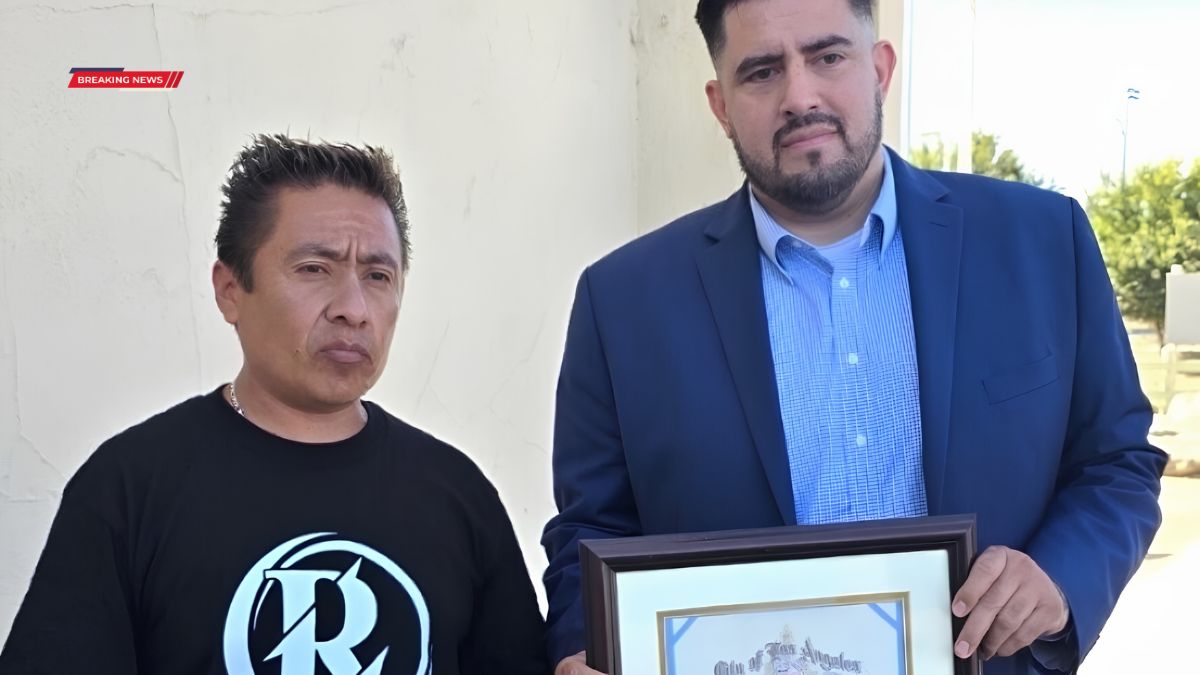
More than eight months after being shot during an immigration enforcement operation in Los Angeles, Richard “Carlitos” Parias remains in federal immigration detention. His family and attorneys say he continues to experience chronic pain and limited mobility, raising concerns about medical care and accountability inside the immigration detention system.
Parias’ case has drawn attention because it combines several issues under increased national scrutiny: the use of force by federal agents, mandatory immigration detention policies, and the limited oversight available to people injured by the same agency responsible for their custody.
Each Saturday, his 20-year-old son, Ulises Parias, drives roughly two hours to visit him at the Adelanto Detention Center in California. During regular phone calls, they talk about family matters, school and Parias’ ongoing health problems, including arm pain, headaches, fevers and blurred vision.
Background
Parias entered the United States from Mexico in 2002 and lived in the Los Angeles area for more than two decades. He has two U.S. citizen children and no prior criminal record, according to his attorneys.
In recent years, Parias built a large social media following by posting videos about community events in Los Angeles. As immigration enforcement activity increased in the city, he began documenting ICE operations and arrests, drawing attention from both followers and federal authorities.
His son said the increased visibility worried the family, particularly as enforcement activity intensified.
Encounter
In October, federal officers stopped Parias as he was leaving his home. Body camera footage later released by the Los Angeles Times shows several officers surrounding his vehicle. One officer can be heard threatening to break the car window, while others shouted commands in both English and Spanish.
As officers attempted to force entry into the vehicle, firearms were drawn. Moments later, shots were fired. Parias was struck near his left elbow. A U.S. marshal involved in the operation was also injured by the same bullet.
Parias was taken to a hospital, where he remained for nearly a week.
Criminal Case and Detention
Federal prosecutors charged Parias with assault on a federal officer. In December, U.S. District Judge Fernando Olguin dismissed the charges, citing concerns that Parias had not received constitutionally adequate access to legal counsel. The federal government has appealed that decision.
After his release from criminal custody, Parias was transferred to ICE detention under the Laken Riley Act, legislation passed with bipartisan support and signed into law earlier this year. The law expanded mandatory detention for undocumented immigrants charged with certain offenses, including assault on law enforcement officers.
Although the criminal case was dismissed, Parias remained in immigration custody.
Medical Care Concerns
Medical records from November through May show repeated complaints of pain and reduced mobility in Parias’ left arm and shoulder. A report from May describes pain radiating from his neck down his arm, decreased shoulder movement and visible distress during physical examination.
According to the records, Parias spent months in a sling and had not completed physical therapy during that time. His treatment included anti-inflammatory medication, nerve pain medication and topical creams.
In a statement to NPR, the Department of Homeland Security said Parias has been seen regularly by medical staff, provided with a brace and sling, instructed on exercises and referred to an orthopedic specialist and physical therapy. DHS said he was evaluated by an orthopedic surgeon and continues to receive care.
Attorneys representing Parias dispute that the treatment has been sufficient, saying his symptoms have persisted with little improvement.
Bond and Legal Limits
Immigration attorneys sought Parias’ release while his case proceeded, but those efforts have so far been unsuccessful. Under current law, many detainees are not eligible for bond hearings and must instead file habeas petitions in federal court.
A federal judge ordered an immigration judge to hold a bond hearing in Parias’ case. ICE argued that the immigration court lacked jurisdiction because of the Laken Riley Act. The immigration judge denied bond, citing the law and stating that Parias could be considered a flight risk due to his lack of legal status.
His attorneys say similar outcomes are increasingly common under expanded mandatory detention policies.
Oversight Challenges
Rep. Sydney Kamlager-Dove, D-Calif., visited Parias at the Adelanto Detention Center and has contacted DHS about his medical care. She said her office has received responses from the agency but that the level of treatment provided does not meet what she believes is necessary.
At the same time, Congress recently approved significant funding increases for immigration enforcement and detention capacity. Funding for internal oversight offices that investigate detention conditions and medical care complaints has not kept pace, according to lawmakers and advocates.
Family Impact
While Parias remains detained, his son has taken on additional responsibilities at home, including helping care for his younger sister and managing legal communications for the family.
Ulises is currently pursuing a mechanical engineering degree and continues to visit his father when possible. He said the prolonged detention has affected everyday family life, including shared routines and traditions.
Outlook
Parias’ attorneys have returned to federal court seeking his release, arguing that his ongoing detention and medical condition warrant reconsideration. That request has been pending for several months.
For now, Parias remains in ICE custody, continuing to report pain and limited mobility. His case highlights the legal and practical constraints facing detainees seeking medical care and release, particularly when injury, enforcement and detention intersect within the same federal system.
FAQs
Who is Richard Parias?
An ICE detainee injured during a Los Angeles enforcement arrest.
Why is he still in ICE custody?
Mandatory detention laws limit bond and release options.
What injuries did he suffer?
A gunshot wound causing ongoing arm and shoulder pain.
What is the Laken Riley Act?
A law expanding mandatory detention for some immigrants.
What concerns do attorneys raise?
They cite inadequate medical care and limited legal remedies.