
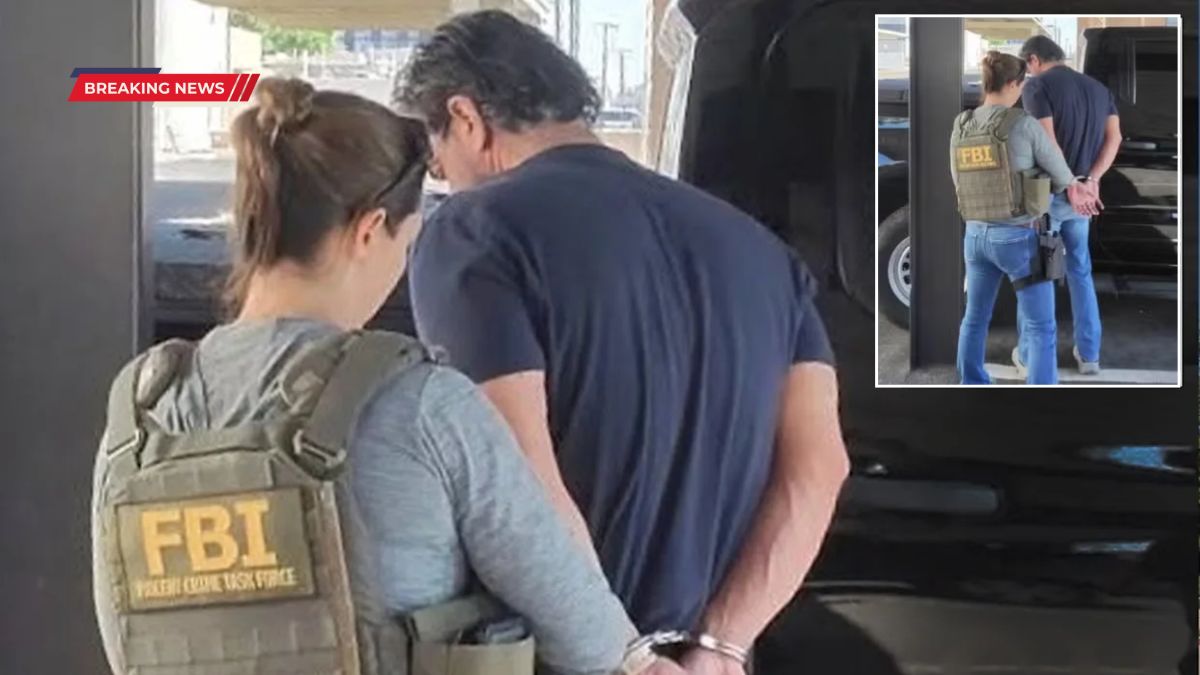
A convicted sex offender who had been wanted in California was arrested in Scottsdale after nearly 10 months on the run, according to law enforcement authorities. The arrest of Carl W. Cacconie followed a coordinated effort involving federal and local agencies working across multiple states.
The case drew attention due to the length of time he remained at large after failing to appear for sentencing, as well as the multi-agency operation required to locate him. Officials say the investigation included federal warrants, electronic monitoring data, and interstate tracking efforts that ultimately led authorities to Arizona.
This case also reflects broader operational challenges in fugitive investigations, including the cost of monitoring failures and the coordination required when a defendant crosses state lines while under court supervision.
Arrest
The arrest took place in Scottsdale around 9 a.m. on Saturday. It was carried out by the FBI Phoenix Desert Hawk Fugitive Task Force, which includes FBI agents, Maricopa County Sheriff’s Office deputies, and U.S. Border Patrol personnel.
Authorities located and detained Cacconie after tracking his movements across multiple states. He had previously been seen in parts of California before the trail went cold and later reappeared in Arizona.
Fugitive arrests of this type typically involve coordinated surveillance, intelligence sharing, and verification steps before a takedown is conducted to reduce risk and confirm identity.
Bail
Cacconie had been released on $1 million bail after being convicted in El Dorado County, California. As part of his release conditions, he surrendered his passport and was placed on an electronic monitoring device.
According to investigators, the monitoring device stopped transmitting on August 17, 2025. He was later reported missing and did not appear for his scheduled sentencing on August 25, 2025.
When a defendant is released on bail pending sentencing, the court generally weighs factors such as risk of flight and public safety. In this case, the failure of electronic monitoring and subsequent disappearance triggered additional enforcement actions, including a federal warrant.
Tracking
After Cacconie failed to appear, law enforcement agencies initiated a multi-state search. A federal arrest warrant for unlawful flight was issued on May 14, escalating the case into federal jurisdiction.
Investigators used a combination of electronic data, field intelligence, and inter-agency coordination to identify possible locations. He was last confirmed in Northern California before later being located in Arizona.
| Date | Event |
|---|---|
| July 17, 2025 | Conviction on six counts in California |
| August 2025 | Released on $1 million bail pending sentencing |
| August 17, 2025 | Monitoring device stopped transmitting |
| August 25, 2025 | Failed to appear for sentencing |
| May 14, 2026 | Federal arrest warrant issued |
| June 2026 | Arrest in Scottsdale |
Each stage of the tracking process required coordination between multiple agencies and the use of investigative resources that often extend beyond local jurisdiction.
Costs
Fugitive cases involving interstate movement often carry significant operational costs for law enforcement agencies. These costs include personnel deployment, travel expenses, surveillance tools, and administrative coordination between jurisdictions.
| Category | Cost Impact |
|---|---|
| Personnel hours | High due to multi-agency involvement |
| Travel and logistics | Moderate to high for interstate operations |
| Surveillance technology | Moderate, including monitoring and analysis tools |
| Legal processing | High due to federal and state coordination |
| Extradition procedures | Moderate |
When a monitoring system fails or is bypassed, agencies typically must expand resources to locate the individual. These efforts can extend over months, depending on available leads and jurisdictional complexity.
Impact
Cases like this highlight practical challenges in bail supervision and electronic monitoring systems. While such measures are intended to ensure compliance with court conditions, technical failures or intentional evasion can complicate enforcement.
The case also illustrates the administrative burden placed on law enforcement agencies when individuals fail to appear for sentencing. Coordination between county, state, and federal agencies becomes necessary, particularly when suspects cross state boundaries.
Beyond enforcement considerations, prolonged fugitive cases can delay final sentencing and extend case resolution timelines for courts and victims involved in the proceedings.
The arrest in Scottsdale concludes a multi-month search effort and shifts the case back into judicial proceedings for sentencing in California.
The arrest of Cacconie in Arizona after nearly 10 months on the run underscores how quickly a sentencing process can extend when court conditions are violated. It also highlights the reliance on interstate coordination and electronic monitoring in modern fugitive investigations.
Authorities have confirmed that he will be extradited to California to face sentencing following his arrest.
FAQs
Where was the suspect arrested?
He was arrested in Scottsdale, Arizona by a federal task force.
Why did he become a fugitive?
He failed to appear for sentencing after being released on bail.
What led to the investigation expanding?

A federal warrant was issued after he failed to appear in court.
Which agencies were involved in the arrest?
FBI, county sheriff deputies, and U.S. Border Patrol agents.
What happens after the arrest?
He will be extradited to California for sentencing.