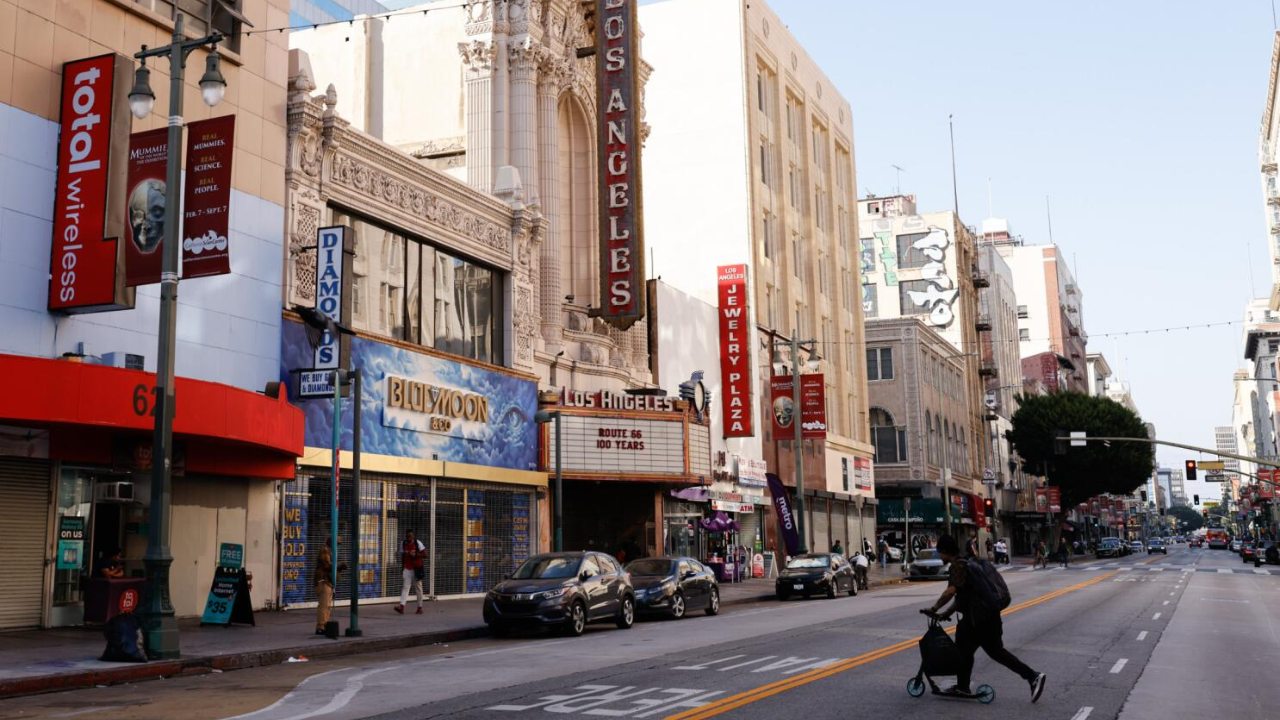
LOS ANGELES, California — Downtown Los Angeles has been ranked among the least active urban centers in the world according to a new international survey examining the health and vitality of major downtown districts. The findings have reignited concerns about the future of the city’s historic core as business leaders, property owners, and public officials continue searching for ways to reverse declining foot traffic and economic activity.
The survey compared downtown districts across major global cities, analyzing factors such as office occupancy, pedestrian activity, business openings and closures, public transit use, and overall economic recovery following the COVID-19 pandemic. While many downtown areas around the world have experienced significant rebounds, the report found that downtown Los Angeles continues to lag behind its international counterparts.
The ranking comes at a critical moment for Los Angeles as city leaders prepare for major international events, including the 2028 Olympic Games. Many local advocates argue that the condition of downtown will play a major role in shaping visitors’ perceptions of the city and its economic future.
Why Downtown Los Angeles Ranked So Poorly
According to the survey, one of the biggest challenges facing downtown Los Angeles is the slow return of office workers. Remote and hybrid work arrangements continue to keep many employees away from downtown office towers, reducing demand for restaurants, retail stores, and other businesses that traditionally relied on weekday commuter traffic.
Business organizations have repeatedly warned that the absence of office workers has created significant economic challenges for downtown merchants. Many companies have downsized office space, relocated operations, or adopted long-term remote work policies, leaving large portions of the downtown business district struggling to regain pre-pandemic activity levels. Recent reports have also highlighted concerns about crime, infrastructure issues, and declining customer traffic affecting the area’s economic recovery.
The survey also noted that downtown Los Angeles faces unique challenges because of the region’s sprawling development pattern. Unlike cities where downtown serves as the primary center of employment, culture, and entertainment, Los Angeles has multiple business districts spread throughout the metropolitan area, reducing dependence on a single urban core.
Businesses and Property Owners Sound the Alarm
Local business owners have increasingly voiced concerns about the future of downtown Los Angeles. Advocacy groups representing property owners and businesses argue that declining customer traffic, vacant storefronts, and persistent public safety concerns are discouraging investment and slowing economic recovery.
Recent data show that downtown neighborhoods have experienced some of the highest business closure rates in the city. Several major employers have reduced their downtown presence or relocated operations elsewhere, further weakening economic activity in the area. Business leaders contend that improving public safety, repairing infrastructure, increasing cleanliness, and encouraging workers to return to offices should be top priorities for city officials.
Despite these concerns, supporters of downtown emphasize that the area remains a major economic engine for Los Angeles. Downtown accounts for a significant share of the city’s tax revenue, business activity, entertainment venues, government offices, and cultural institutions. Advocates argue that targeted investments could help reverse current trends and restore confidence among residents, workers, and visitors.
Can Downtown Los Angeles Recover?
Urban planners and economic development experts say recovery remains possible, but it will require substantial effort and long-term planning. One encouraging sign is the continued growth of the residential population living in downtown Los Angeles. Over the past two decades, thousands of new housing units have been added, helping transform parts of downtown into a more residential neighborhood rather than solely a business district.
Studies show that downtown Los Angeles now has approximately 90,000 residents, and apartment occupancy rates have remained relatively strong despite broader economic challenges. Supporters believe a larger residential population can help create a more sustainable 24-hour downtown environment that is less dependent on office workers.
Experts also point to opportunities tied to future development projects, transit improvements, housing construction, and international events such as the Olympics. However, they caution that meaningful improvements will require addressing issues including public safety, homelessness, infrastructure maintenance, office vacancies, and business retention.
Key Findings From the Survey
| Category | Finding |
|---|---|
| Location Examined | Downtown Los Angeles, California |
| Survey Scope | Global comparison of major downtown districts |
| Main Concern | Low activity and slow post-pandemic recovery |
| Key Factors Measured | Foot traffic, office occupancy, business activity |
| Major Challenge | Remote and hybrid work trends |
| Business Impact | Store closures and reduced customer traffic |
| Economic Concern | Vacant office and retail space |
| Positive Indicator | Growing residential population |
| Future Opportunity | 2028 Olympic Games |
| Overall Assessment | One of the least active downtown districts among surveyed cities |
The new survey’s ranking of downtown Los Angeles among the world’s least active urban centers has intensified discussions about the future of the city’s historic core. While the area continues to serve as an important center for government, entertainment, culture, and business, it faces significant obstacles that have limited its recovery compared with many other major cities.
Business groups argue that immediate action is needed to improve safety, infrastructure, and economic conditions. Meanwhile, urban planners point to growing residential development and upcoming international events as reasons for optimism. Whether downtown Los Angeles can successfully reinvent itself in the coming years may ultimately determine how the city competes with other global urban centers.
The debate surrounding downtown’s future is likely to continue as officials, residents, and business leaders search for solutions. For now, the survey serves as a stark reminder that the recovery of one of America’s most recognizable downtown districts remains a work in progress.
FAQ’s:
Which area was examined in the survey?
The survey focused on Downtown Los Angeles in Los Angeles, California.
Why did downtown Los Angeles receive a poor ranking?
The report cited low office occupancy, reduced foot traffic, business closures, and slow post-pandemic recovery as major factors.
How has remote work affected downtown Los Angeles?

Remote and hybrid work arrangements have reduced the number of office workers commuting downtown, impacting restaurants, retailers, and service businesses.
Is downtown Los Angeles still growing in any way?
Yes. Downtown continues to attract residents, and its residential population has grown significantly over the past two decades.
What could help downtown Los Angeles recover?
Experts point to housing development, improved public safety, infrastructure investments, business support, and major events such as the 2028 Olympics as potential drivers of recovery.