Nearly a week after Seattle Mayor Katie Wilson announced a tougher response to open-air drug use and sales in Little Saigon, conditions at one of the neighborhood’s most troubled intersections appeared largely unchanged.
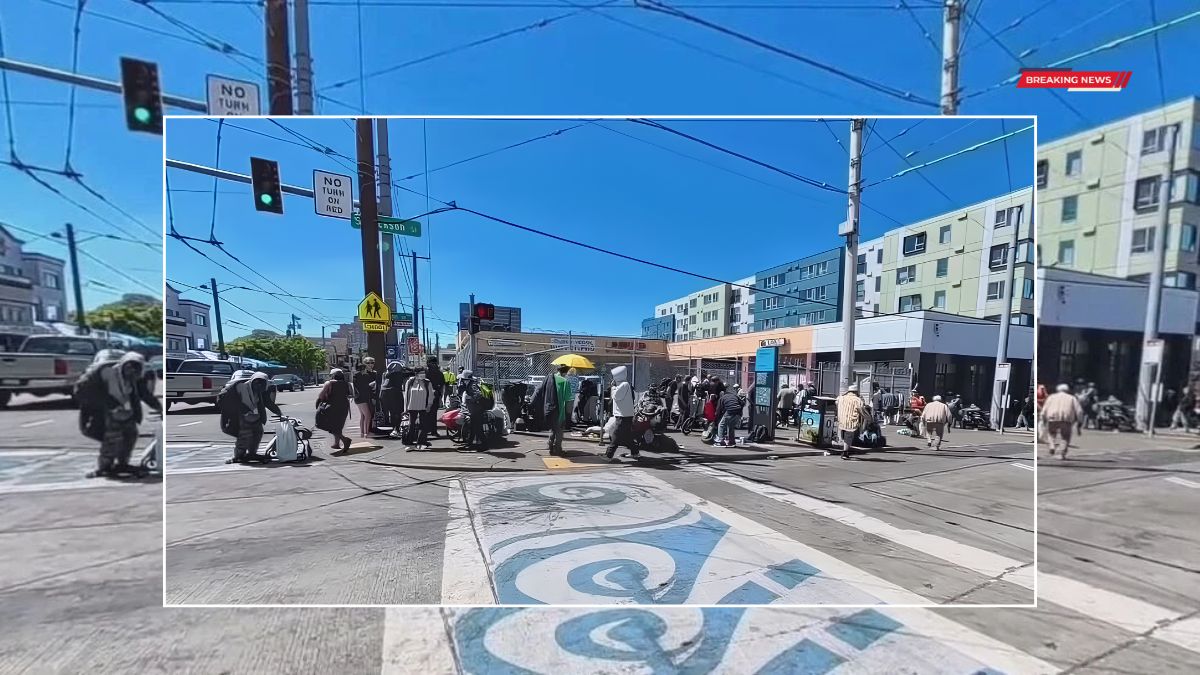
At the corner of 12th Avenue South and South Jackson Street, a location long associated with drug activity and public safety concerns, people continued to gather in large numbers despite the city’s newly announced crackdown.
Background
Mayor Wilson said last week that Seattle would no longer tolerate open-air drug use and sales at 12th and Jackson, calling the situation a failure of the city’s past approach. Her administration described the effort as a “new approach” that includes arrests, increased police presence, and expanded outreach services.
The city has said individuals who continue engaging in illegal activity may be booked into jail or directed into diversion programs aimed at treatment and recovery.
Conditions
In the days following the announcement, residents and workers in the area said they have seen few lasting changes.
Winni Messa, who lives in Little Saigon and regularly waits for the bus at 12th and Jackson, described the environment as unsettling.
“It makes me actually sad to see people,” Messa said. “I know they are people struggling, but it can be intimidating and scary to see a group of people doing drug activity.”
During a visit last week, three corners of the intersection were lined with people. Nearly a week later, a similar scene was visible, with roughly 50 people spread across the area, most clustered on one corner.
Observations
Many individuals appeared disoriented or slumped over on the sidewalk. Some sat with their heads in their hands or laps, while others appeared unconscious. Small groups gathered with their backs turned to pedestrians, and several people were seen inhaling vapor from heated foil.
At one point, a man shouted profanities while recording people with his phone. Nearby, another man was seen negotiating the sale of clothing from a suitcase with an elderly individual.
Messa said the atmosphere has made her more cautious while waiting for public transit.
“I’ll be a little more hyper vigilant because a fight might break out,” she said. “You don’t know what can happen.”
Enforcement
Messa said seeing police patrols does provide some reassurance, though only to a limited extent.
“Yeah, a little,” she said when asked if police presence makes her feel safer.
Security guard Marcus Armstrong, who works near the intersection, said he has noticed an increase in police patrols since the mayor’s announcement. Armstrong works 12-hour shifts outside an apartment building near 12th and Jackson and said he is familiar with daily activity at the corner.
He described many of the people who gather there as generally non-confrontational, though he said his job has involved serious risks.
“I’ve had a gun and a knife pulled on me multiple times,” Armstrong said, usually when asking people to move away from the building entrance.
Pattern
Armstrong said enforcement efforts so far appear temporary.
“Only difference I have seen is cops come, they all disappear, and once the cop leaves, they all come right back,” he said.
A KOMO News camera crew observed a similar pattern. When police arrived, sidewalks that had been crowded were briefly cleared. Later, city workers were seen washing down the sidewalks, and people gradually returned.
Response
Armstrong said he believes the corner could improve, but only if enforcement is paired with meaningful support.
“They’re going to have to help them with housing or assistance to get them off the corner,” he said.
Mayor Wilson has acknowledged that enforcement alone is not a solution. The city has committed $1.1 million in one-time funding for Little Saigon and North Beacon Hill to support outreach workers, mobile overdose prevention and treatment teams, and assistance for nearby residents and businesses.
As the city’s new strategy continues, residents and workers in Little Saigon say they are watching closely to see whether the changes lead to lasting improvements.
FAQs
What is happening at 12th and Jackson?
The city is increasing enforcement against open-air drug activity.
Has the situation improved so far?
Residents say conditions appear largely unchanged.
What does the new approach include?

Arrests, diversion programs, outreach, and increased police presence.
How much funding is being allocated?
The city committed $1.1 million in one-time funding.
Will police enforcement continue?
City officials say enforcement is only one part of the plan.