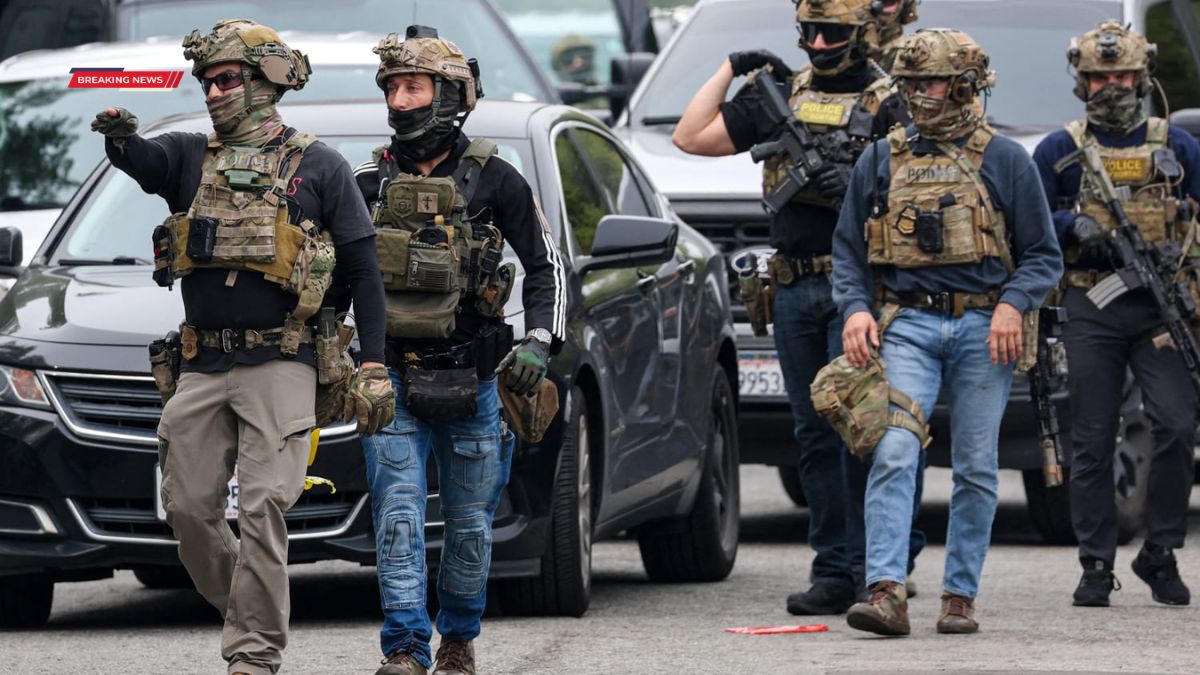
A federal appeals court has temporarily blocked enforcement of a California law that would have required clearer identification from certain law enforcement personnel operating within the state. The decision places the measure on hold while legal challenges continue, keeping the broader question of how federal agents must identify themselves in public encounters unresolved for now.
The ruling adds another layer to an ongoing debate over transparency, jurisdiction, and operational safety, particularly when state policies intersect with federal enforcement practices.
Origins
The California measure was introduced by state lawmakers in response to concerns raised by residents and advocacy groups about difficulties identifying officers during enforcement actions. Supporters of the law argued that clearer identification could improve public trust and reduce confusion during interactions involving law enforcement personnel.
The policy was designed to apply broadly across agencies operating within the state, including some federal entities working alongside or within local jurisdictions. Proponents framed the rule as a way to standardize visibility and improve accountability in public-facing operations.
Ruling
A federal appeals court issued a stay on the law, effectively preventing it from taking effect while litigation continues. The panel’s decision focused on questions of legal authority, specifically whether California had overstepped its power by imposing identification requirements on federal personnel.
Judges noted potential conflicts between state-level regulations and established federal standards governing law enforcement operations. The court did not issue a final ruling on the merits of the law but indicated that further review was necessary to resolve the jurisdictional issues raised in the case.
Arguments
Federal law enforcement representatives have argued that the pause is necessary to maintain operational security and protect personnel involved in sensitive investigations. They contend that certain identification requirements could increase risks in field operations, particularly in cases involving undercover work or coordinated enforcement activities.
On the other side, civil liberties organizations have supported the intent behind the California measure, emphasizing the importance of transparency during law enforcement encounters. These groups argue that clear identification helps residents understand who is exercising authority, especially in high-pressure or fast-moving situations.
Both sides have acknowledged the complexity of balancing safety concerns with public accountability, though they remain divided on how those priorities should be addressed in practice.
Impact
The court’s decision means the law will not be implemented while proceedings continue, leaving current identification practices unchanged for now. Agencies operating in California will continue following existing federal and departmental guidelines.
Legal analysts note that the ruling may also prompt agencies to reassess internal training and communication procedures, particularly in joint operations involving multiple jurisdictions. However, no immediate operational changes have been mandated as a result of the stay.
For now, the situation remains in a holding pattern, with enforcement policies dependent on the outcome of ongoing court proceedings.
Context
Disputes involving state regulations and federal enforcement practices are not new. Courts have previously been asked to weigh in on similar conflicts where local laws attempt to set standards for federal agents operating within state boundaries.
In many of those cases, outcomes have depended on how courts interpret the balance between state interests in public safety and federal authority over its own personnel and procedures. The current case fits within that broader legal framework, where jurisdictional limits are often tested in real-world policy settings.
Public discussion around identification in law enforcement encounters has also grown in recent years, particularly in urban areas where interactions with multiple agencies are more common. These conversations often reflect broader concerns about accountability and transparency in public institutions.
Outlook
The case will now proceed to further review, with additional filings and arguments expected in the coming months. Both sides are preparing detailed legal briefs addressing constitutional authority, operational safety, and public interest considerations.
A final ruling could clarify whether California, or any state, can impose identification standards on federal agents working within its borders. Until then, the paused law remains a focal point in discussions about how overlapping layers of government manage law enforcement visibility.
The outcome may also influence how other states approach similar proposals, particularly those considering reforms aimed at increasing transparency during official operations.
FAQs
What did the court decide about the California law?
A federal appeals court paused enforcement of the law pending further review.
What was the law intended to do?
It aimed to require clearer identification for certain law enforcement personnel.
Why was the law blocked?

Judges cited potential conflicts between state authority and federal operations.
Does the ruling end the case?
No, the case will continue through further legal proceedings.
Could the decision affect other states?
Yes, it may influence similar policies under consideration elsewhere.