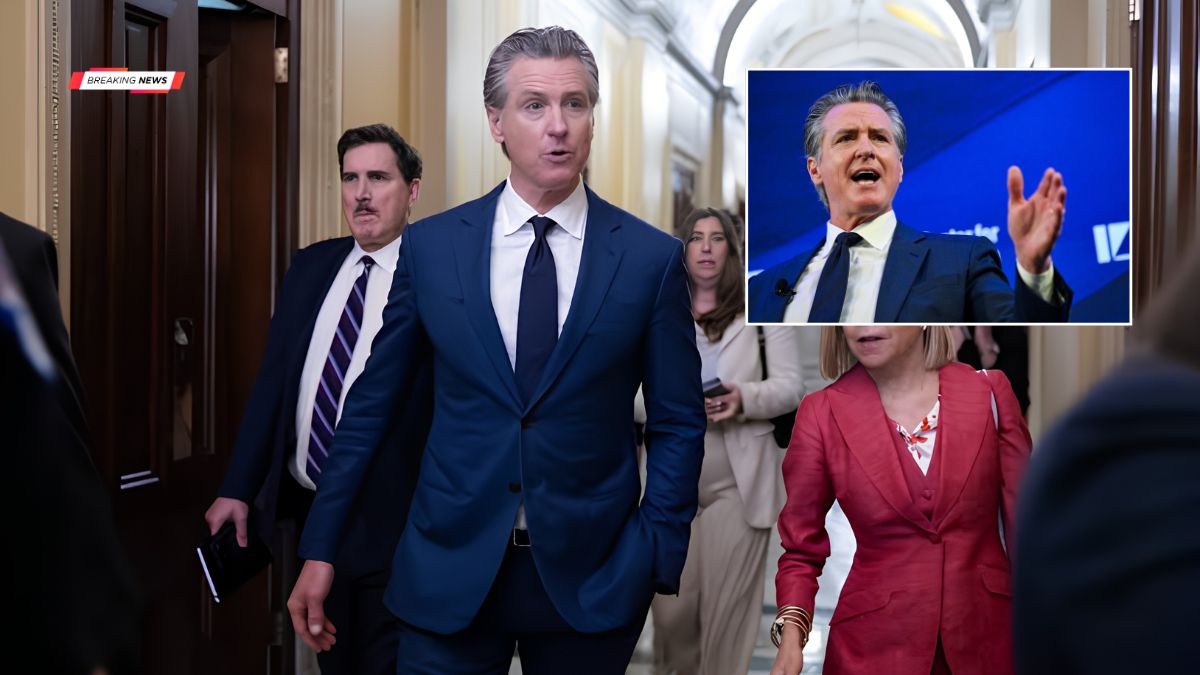
Gov. Gavin Newsom has signed legislation authorizing California to impose a 100 percent state tax on any money residents might receive from a proposed $1.8 billion settlement fund backed by former President Donald Trump, a move that would effectively prevent Californians from keeping those payments.
The law targets funds tied to what Trump and his allies have described as compensation for alleged political persecution by the Biden administration. The settlement plan has not taken effect and remains tied up in federal court.
Background
Newsom first proposed the tax in May after the U.S. Department of Justice under Trump announced plans to create an “anti-weaponization” fund. The fund was framed as compensation for Trump allies who say they were subjected to politically motivated investigations and prosecutions.
The proposal immediately drew criticism from lawmakers across the political spectrum. Senate Republican leader Mitch McConnell of Kentucky publicly described the fund as a “slush fund,” raising concerns it could be used to benefit individuals involved in the Jan. 6 Capitol attack who later received pardons.
Legal Status
The settlement fund has not been implemented. Earlier this month, a federal judge in Virginia extended a court-ordered block on the plan, leaving its future uncertain. Critics have argued that if allowed to proceed, the fund could be used to distribute public money to individuals convicted or accused of crimes related to efforts to overturn the 2020 election.
Despite the legal uncertainty, California lawmakers moved forward with legislation designed to address any potential payments to state residents.
New Law
The tax was enacted as part of Senate Bill 122 and fast-tracked through the Legislature. Under the bill, California will impose a tax at a rate of 100 percent on any payments made from the federal Anti-Weaponization Fund or any similar future settlement or agreement.
The law applies to tax years from 2026 through 2030. Newsom signed the bill Tuesday.
In a statement, the governor’s office said the goal is to ensure Californians do not receive what it described as favorable state tax treatment if the federal fund ultimately moves forward.
Governor’s Statement
“We believe democracy is worth defending, the rule of law matters, and public dollars should support victims, not those who attacked the very institutions that protect our freedoms,” Newsom said.
State officials emphasized that the law does not block the federal government from making payments, but instead ensures that any such funds paid to Californians would be fully taxed at the state level.
Legal Analysis
University of Southern California law professor Ariel Jurow Kleiman said the measure represents an unusual but likely permissible use of state tax authority.
She noted that states generally have broad discretion to define taxable income and set tax rates, provided they do not violate constitutional limits.
According to Jurow Kleiman, any legal challenge would require a plaintiff who actually received money from the settlement fund and then paid the tax. Since the fund is still blocked and has not distributed any payments, such a challenge may not be possible unless the plan is revived.
Broader Context
While proposals for extremely high tax rates have surfaced before, they are rare in practice. In 2023, Sen. Bernie Sanders of Vermont publicly supported a 100 percent tax on income above $1 billion, but no government has enacted such a policy across the board.
Jurow Kleiman said she is not aware of any existing tax system that applies a 100 percent rate to a specific category of income in the way California’s new law does.
For now, the tax remains a preventive measure tied to a federal settlement plan that has yet to materialize. Its real-world impact depends on whether Trump’s proposed fund survives court challenges and distributes money in the coming years.
FAQs
What did Gov. Newsom sign into law?
A law taxing Trump-related settlement payments at 100 percent.
What fund does the tax target?
Trump’s proposed $1.8 billion anti-weaponization settlement fund.
Is the settlement fund active?

No, it is currently blocked by a federal court.
When would the tax apply?
For tax years between 2026 and 2030.
Can the tax be challenged in court?
Only if someone receives a payment and pays the tax.