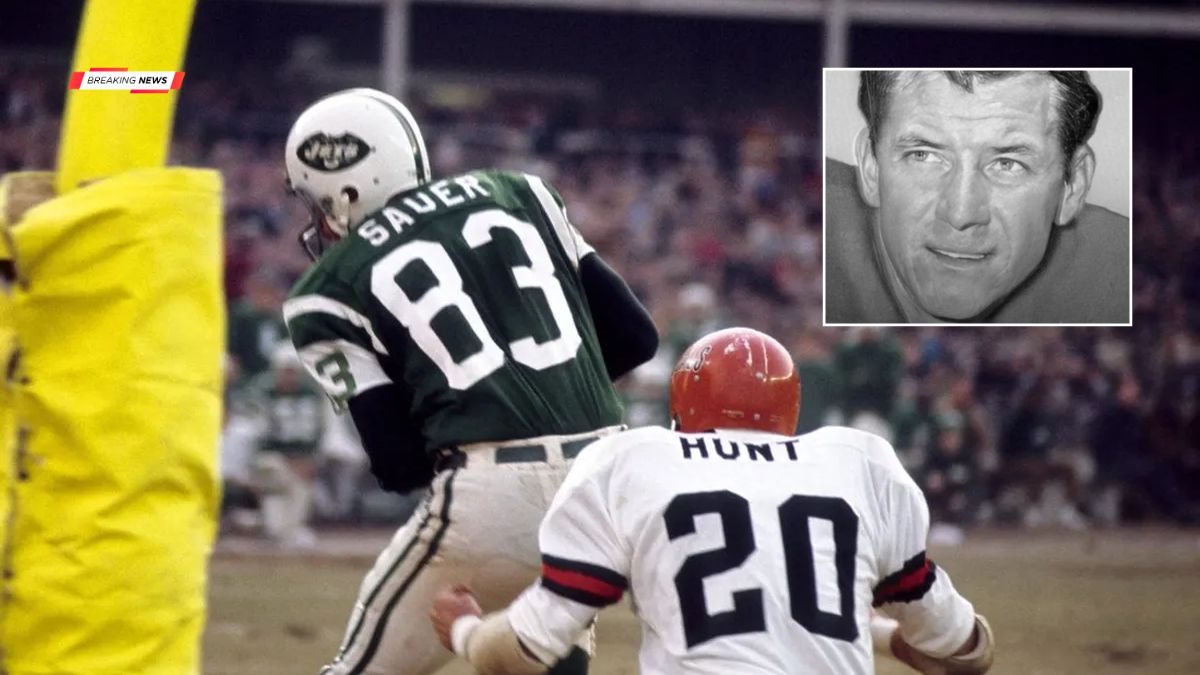
Former NFL standout Bobby Hunt, one of the players who appeared in the first-ever Super Bowl, has died at the age of 85. The news was announced by the Alabama Sports Hall of Fame & Museum, which remembered Hunt as a respected athlete and a member of its 2015 Hall of Fame class.
Hunt’s football career connected him to several important moments in the sport’s history. He played for the Kansas City Chiefs franchise during its early years, earned All-Pro recognition, and became part of the first Super Bowl era when the championship game helped shape the future of professional football.
Passing
The Alabama Sports Hall of Fame & Museum confirmed Hunt’s death through a social media tribute on Wednesday. The organization honored him as a 2015 inductee and shared condolences with his family and friends.
A cause of death has not been publicly confirmed.
The announcement marked the loss of a player remembered for his versatility, defensive ability, and contribution to one of the most significant periods in NFL history.
Career
Before reaching the NFL, Hunt established himself as a talented two-way player at Auburn University. From 1959 to 1961, he played both quarterback and defensive back for the Tigers, showing his ability on offense and defense.
His performances at Auburn helped him attract professional attention, and he was selected in the 11th round of the 1962 NFL Draft by the Dallas Texans.
That same year, Hunt helped the team capture a championship and earned First-Team All-Pro recognition for his outstanding play. His arrival came during a transitional period for the franchise as it moved toward becoming one of the NFL’s most recognizable teams.
Chiefs
The Dallas Texans franchise was later relocated and renamed the Kansas City Chiefs. Hunt remained with the team through the 1967 season, becoming part of the organization’s early foundation.
During his time with the franchise, Hunt contributed as a defensive back and became known for his ability to create turnovers. His consistency and football intelligence made him an important part of the team’s early success.
The Chiefs would later become one of the NFL’s most successful organizations, but players like Hunt helped establish the team’s identity during its formative years.
Record
One of Hunt’s most memorable achievements came in 1964 when he recorded four interceptions in a single game. That performance placed him among an exclusive group of NFL players, as he remains tied for the league record for the most interceptions in one game.
The accomplishment remains one of the highlights of his professional career and reflects his instincts and awareness as a defensive player.
Hunt’s ability to impact games through turnovers made him one of the standout defenders of his era.
Super Bowl
Hunt also holds a place in NFL history as a participant in the first-ever Super Bowl. The game, originally known as the AFL-NFL World Championship Game, took place in January 1967 and featured the Kansas City Chiefs against the Green Bay Packers.
Although the Chiefs did not win that matchup, appearing in the historic game secured Hunt’s place among the players who helped introduce a new era of professional football.
The Super Bowl would eventually become one of the biggest sporting events in the world, making appearances in its first edition especially significant.
Legacy
Hunt’s career represents an important chapter in the development of the American Football League and its eventual merger with the NFL. He played during a time when professional football was rapidly expanding and helped bring recognition to the Chiefs franchise.
His achievements at Auburn, his All-Pro season, his record-setting defensive performance, and his Super Bowl appearance remain key parts of his football legacy.
The Alabama Sports Hall of Fame recognized Hunt not only for his statistics but also for his impact on the sport and his connection to football history.
Hunt leaves behind a legacy as one of the early stars of professional football. His career included championship success, individual honors, and a place in the story of the first Super Bowl, ensuring his contributions will remain part of NFL history.