
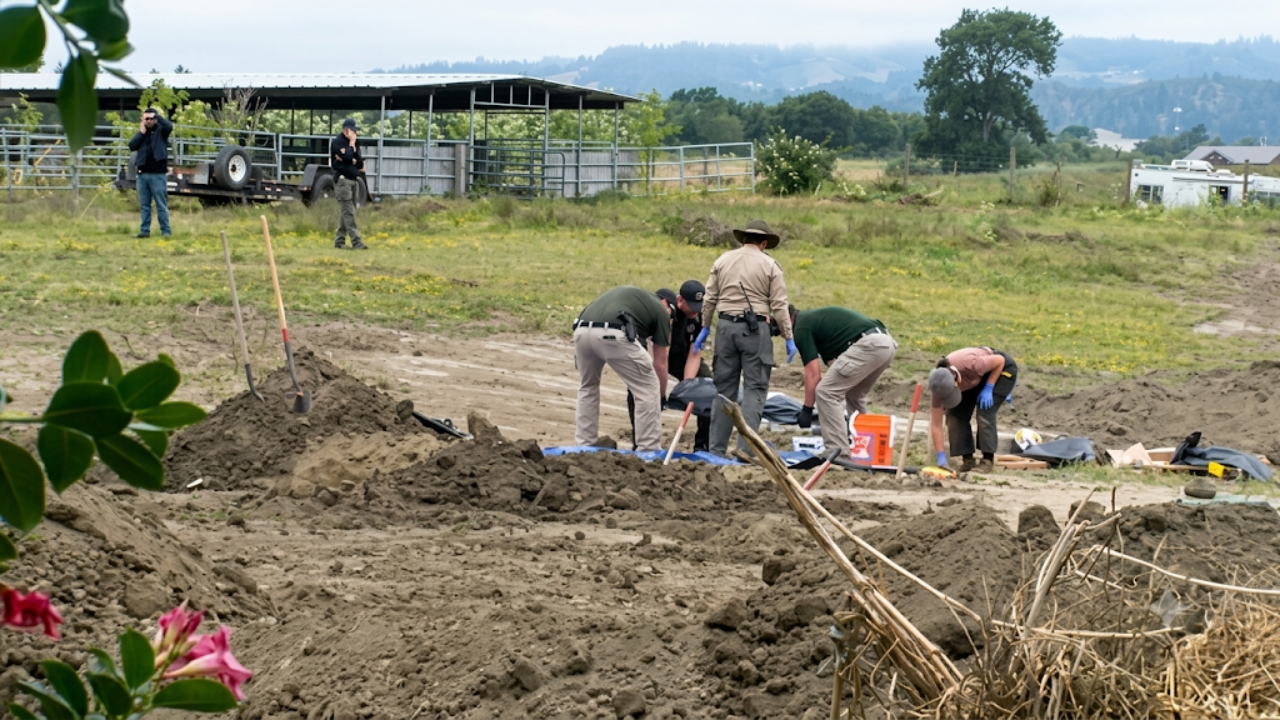
Vallejo, California: California authorities have uncovered the remains of 117 dogs at a self-described “no-kill” animal rescue, with forensic examinations revealing that many of the animals contained bullet fragments. The grim discovery was made during an extensive excavation at the shelter property as investigators continued to examine allegations involving missing animals, questionable rescue practices, and possible animal cruelty. The findings have shocked the local community and intensified a criminal investigation into the organization’s operations.
The excavation is part of a broader inquiry into the rescue facility after concerns were raised by former volunteers, adopters, and animal welfare advocates about the fate of hundreds of dogs that had reportedly passed through the organization. Investigators are now working to determine how the animals died, whether their deaths were properly documented, and if state animal welfare laws or criminal statutes were violated. Authorities say the investigation remains active, with additional forensic testing expected in the coming weeks.
Excavation Reveals Mass Graves and Forensic Evidence
The investigation reached a critical stage when law enforcement officers and forensic specialists conducted a systematic excavation of the property in Vallejo, California. During the search, authorities uncovered 117 dog bodies buried in multiple locations across the rescue grounds. The remains were found in varying stages of decomposition, indicating that the burials had occurred over an extended period rather than during a single incident.
Forensic examinations revealed that many of the recovered dogs contained bullet fragments, suggesting that firearms may have been involved in at least some of the animals’ deaths. Investigators are conducting detailed necropsies and laboratory testing to determine whether the gunshot injuries were the direct cause of death or occurred under other circumstances. Officials emphasized that the presence of bullet fragments does not automatically establish criminal liability but represents an important piece of evidence that requires further investigation. Each set of remains is being carefully cataloged, photographed, and examined to preserve evidence and establish an accurate timeline.
Investigation Expands Into Shelter Operations and Missing Animals
The discovery has expanded an already ongoing investigation into the shelter’s overall operations. Authorities are reviewing adoption records, veterinary files, intake logs, financial documents, and communications to determine whether animals entrusted to the rescue were properly cared for and accurately accounted for. Investigators are particularly focused on reports that hundreds of dogs previously accepted by the organization may still be unaccounted for.
Law enforcement officials are interviewing former employees, volunteers, adopters, veterinarians, and members of the public who interacted with the rescue over several years. Detectives are attempting to establish whether the buried animals were documented in official records or whether their deaths were concealed. Investigators are also examining whether animals that were listed as adopted, transferred, or receiving ongoing care were instead buried on the property. Authorities have not announced criminal charges but indicated that the evidence collected during the excavation will play a significant role in determining whether criminal offenses occurred.
Community Reaction and Broader Animal Welfare Concerns
The findings have generated widespread concern throughout Northern California and among animal welfare organizations nationwide. Many supporters had donated money, volunteered their time, or adopted pets believing the facility operated as a genuine no-kill rescue committed to protecting vulnerable animals. The discovery of dozens of buried dogs has deeply shaken public confidence and prompted renewed scrutiny of how rescue organizations are monitored and regulated.
Animal welfare advocates have called for stronger oversight of rescue groups, arguing that nonprofit status and no-kill designations should not exempt organizations from regular inspections and accountability measures. Experts say the case highlights the importance of maintaining accurate animal records, conducting periodic welfare inspections, and ensuring transparency regarding euthanasia, transfers, and adoptions. Several advocacy groups have urged state lawmakers to review existing regulations governing animal rescues to prevent similar incidents in the future.
At the same time, local residents have expressed sympathy for families who adopted pets from the organization and are now uncertain about the fate of other animals once housed at the facility. Authorities have encouraged anyone who previously surrendered, adopted, fostered, or volunteered with the rescue to provide information that may assist investigators in reconstructing the shelter’s operational history.
Authorities Continue Evidence Collection and Forensic Analysis
Officials say the excavation remains an active forensic operation, with investigators continuing to search portions of the property that have not yet been fully examined. Specialists are analyzing skeletal remains, ballistic evidence, veterinary records, and burial patterns to determine when the animals died and whether their deaths were consistent with accepted veterinary practices or indicate unlawful conduct.
In addition to examining the physical evidence, investigators are reviewing digital records, financial transactions, and communications associated with the shelter. Authorities hope this information will help establish whether the organization accurately represented its operations to donors, adopters, and regulatory agencies. Officials stressed that the investigation is complex because it involves hundreds of animals, years of operational records, and extensive forensic analysis. They emphasized that conclusions regarding criminal responsibility will only be made after all available evidence has been thoroughly reviewed.
Case Overview
| Detail | Information |
|---|---|
| Incident | Investigation into alleged animal cruelty and shelter practices |
| Location | Vallejo, California |
| Facility Type | Self-described “no-kill” animal rescue |
| Animals Recovered | 117 dog bodies |
| Key Evidence | Many remains contained bullet fragments |
| Agencies Involved | Local law enforcement, animal welfare officials, forensic specialists |
| Investigation Focus | Animal deaths, shelter operations, missing dogs, possible criminal violations |
| Evidence Being Reviewed | Animal remains, ballistic evidence, veterinary records, adoption and intake documents |
| Current Status | Active investigation with ongoing forensic examinations |
The discovery of 117 buried dogs at a self-described no-kill rescue in Vallejo has become one of the most significant animal welfare investigations in recent California history. The presence of bullet fragments in many of the recovered remains has intensified scrutiny of the shelter’s operations and prompted investigators to examine whether the organization complied with animal welfare laws and accurately documented the fate of animals placed in its care.
Authorities continue to excavate the property, analyze forensic evidence, and review years of operational records while interviewing former volunteers, adopters, and staff members. Although no final conclusions have been announced, investigators say the evidence collected will determine whether criminal charges are appropriate. The case has also sparked broader discussions about strengthening oversight of rescue organizations, improving transparency, and ensuring that facilities entrusted with animal care are held to the highest welfare standards.
Frequently Asked Questions:
Where was the investigation conducted?
The investigation took place at a self-described no-kill animal rescue in Vallejo, California.
How many dog bodies were discovered?
Authorities recovered the remains of 117 dogs during the excavation.
What significant evidence was found?

Many of the recovered dog remains contained bullet fragments, according to forensic examinations.
Are authorities still investigating the shelter?
Yes. The investigation remains active, with forensic analysis and record reviews continuing.
Have criminal charges been filed?
As of the latest update, authorities have not announced criminal charges, and the investigation is ongoing.