A federal judge in California on Tuesday blocked a Trump administration policy that allowed Immigration and Customs Enforcement to make arrests at immigration courts across the United States. The ruling stops a practice that had drawn widespread criticism from immigration attorneys and civil rights advocates.
The decision applies nationwide and represents a significant setback for the administration’s immigration enforcement approach inside courthouses.
Background
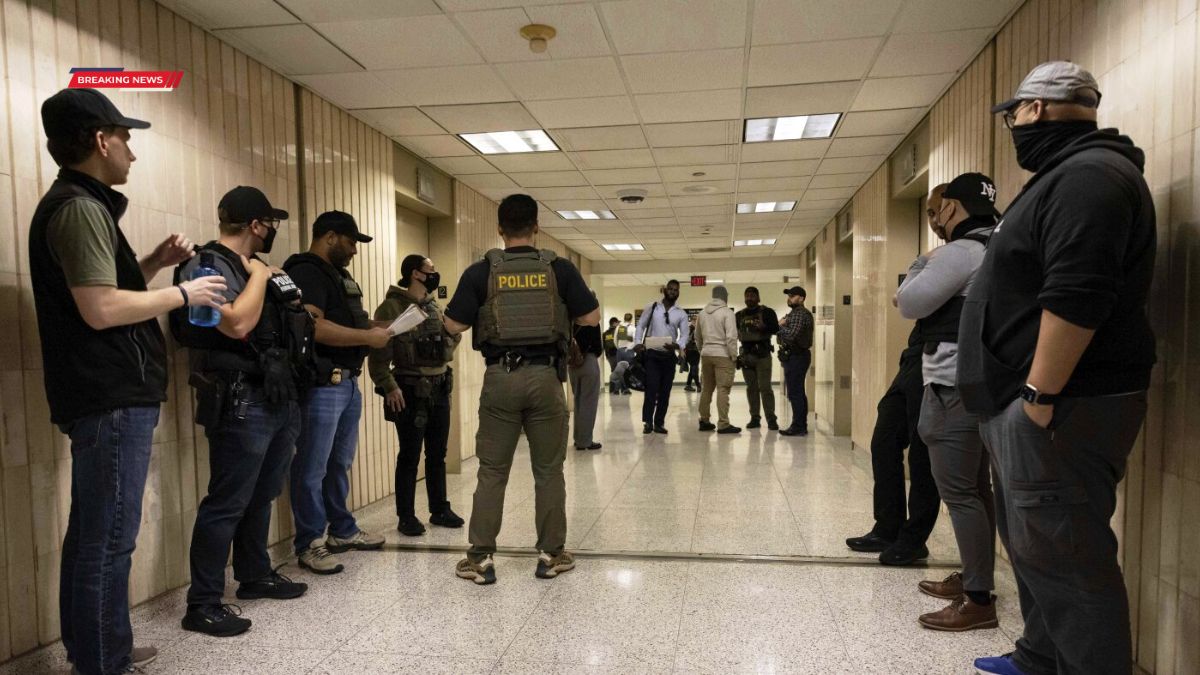
Beginning last year, ICE officers started detaining migrants in and around immigration courthouses, in some cases moments after individuals appeared before judges to plead their cases. The policy followed the rescission of long-standing guidance that had restricted immigration enforcement actions at or near courthouses.
Advocates argued the shift fundamentally changed the nature of immigration courts, discouraging people from attending required hearings and undermining due process. They said migrants who were complying with legal requirements were effectively being punished for showing up.
Trump administration officials defended the move, saying the earlier restrictions limited ICE’s ability to detain individuals they viewed as public safety risks.
Ruling
In a 71-page decision, U.S. District Judge P. Casey Pitts issued a nationwide injunction blocking the policy. Pitts found that ICE’s approach failed to adequately consider the consequences of courthouse arrests, particularly their impact on court attendance.
The judge described the policy as “arbitrary and capricious” and cited its chilling effect on noncitizens’ willingness to appear for hearings.
“For the avoidance of doubt, simply extending the 2025 courthouse-arrest policies to cover immigration courthouses would not cure those policies’ fatal defects,” Pitts wrote. He added that ICE did not sufficiently address how arrests at courthouses discourage participation in legal proceedings, which he described as a critical concern.
The ruling also faulted ICE for removing prior restrictions without offering a clear or rational explanation for doing so.
Legal Context
Courthouse arrest restrictions had been in place for years, based on the idea that courts should remain accessible and neutral spaces. The guidance was designed to ensure that individuals could participate in legal proceedings without fear of immediate detention.
By reversing that policy, ICE argued it was restoring its ability to enforce immigration laws more effectively. The court, however, found that the agency failed to weigh competing interests or explain its departure from earlier practices.
Reaction
Jordan Wells, senior staff attorney at the Lawyers’ Committee for Civil Rights of the San Francisco Bay Area, welcomed the decision.
“The courthouse is meant to be a refuge for the pursuit of justice, not a hunting ground for ICE,” Wells said in a statement. “No immigrant, whether appearing in San Francisco, Miami, Chicago, or New York, should be forced to choose between their liberty and their day in court.”
Administration Response
The Department of Homeland Security criticized the ruling. DHS General Counsel James Percival said on X that the decision interferes with enforcement authority.
“When a judge sentences a defendant, the defendant is taken into custody,” Percival wrote. “If an alien is ordered removed by an immigration judge, the same should happen.” He described the ruling as judicial overreach.
What Comes Next
The injunction prevents ICE from continuing the practice while the case proceeds. It remains unclear whether the administration will appeal the ruling or revise its policies to address the court’s concerns.
For now, immigration courts nationwide will operate without the presence of ICE arrests tied directly to court appearances, restoring restrictions that had been in place prior to the policy change.
FAQs
What did the judge block?
The judge blocked ICE arrests at immigration courts nationwide.
Who issued the ruling?
U.S. District Judge P. Casey Pitts in California.
Why was the policy challenged?

Critics said it discouraged migrants from attending court.
Does the ruling apply nationwide?
Yes, the injunction applies across the United States.
Can the decision be appealed?
Yes, the administration can appeal the ruling.