
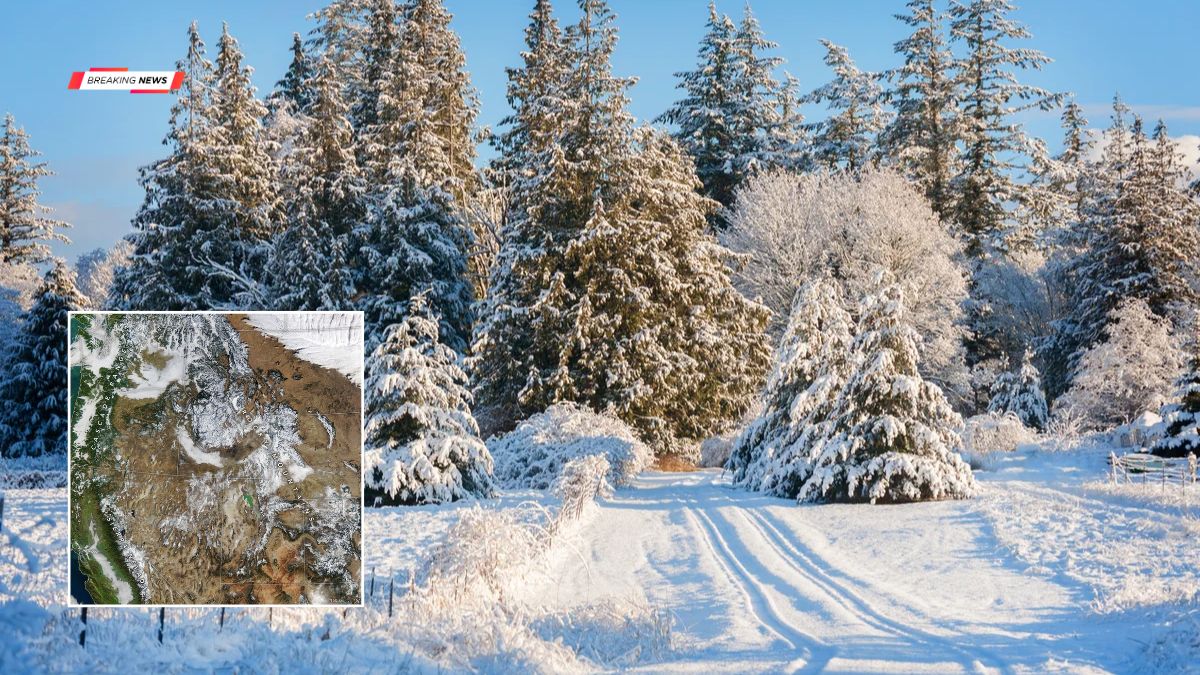
Snow has long served as one of the American West’s most important natural water resources, storing winter precipitation and releasing it gradually during spring and summer. However, new research suggests that warming temperatures are changing how winter storms behave, with more precipitation falling as rain instead of snow in many parts of the region.
The findings point to measurable changes across Western mountain ranges that supply water to millions of people. While heavy snow years can still occur, researchers say the long-term trend shows shorter snow seasons, earlier snowmelt and less dependable mountain snowpack.
Findings
Researchers reported in May 2025 that snowfall patterns across the American West are changing as winter temperatures continue to rise. The study examined mountain regions that provide water for states including California, Colorado, Utah, Arizona and Nevada.
According to the analysis, the largest snowfall declines are occurring in areas where winter temperatures frequently hover near the freezing point. In these locations, even a small increase in temperature can determine whether precipitation falls as snow or rain.
Rather than affecting a single ski resort or watershed, the research describes a regional pattern across much of the Western United States.
Snowpack
Mountain snowpack plays a critical role in the West’s water system. Snow accumulates during winter and gradually melts as temperatures rise, supplying rivers, reservoirs and communities with water during the warmer months.
Researchers say warming conditions are reducing that natural storage system in two important ways. First, more winter storms are producing rain instead of snow. Second, snow that does accumulate is melting earlier than it has historically.
Earlier snowmelt can reduce water availability later in spring and summer, creating additional challenges for water managers and agricultural users.
| Snowpack Function | Why It Matters |
|---|---|
| Stores winter precipitation | Acts as a natural water reservoir |
| Releases water gradually | Supports rivers and reservoirs |
| Provides summer runoff | Helps agriculture and communities |
| Maintains streamflows | Supports ecosystems and water supplies |
Impact
The effects are expected to be most noticeable at lower and middle elevations, where temperatures are closest to freezing during winter storms.
Mountain communities may experience shorter periods of snow cover, while transportation routes that typically receive snow could increasingly see winter rain events.
Researchers also note that winter recreation industries may experience greater variability from season to season. However, the study does not suggest that snowfall will disappear entirely.
Higher elevations are still expected to receive significant snowfall during many winters, although long-term changes remain under observation.
Water
The consequences extend beyond winter weather.
Earlier snowmelt can change the timing of streamflows, affecting reservoir operations, irrigation planning and municipal water supplies. Water managers often rely on predictable spring runoff when making decisions about storage and distribution.
Changes in snowpack can also influence soil moisture later in the year, potentially contributing to drier conditions during summer.
Researchers say these shifts highlight the importance of mountain snowpack as part of the region’s broader water infrastructure.
Climate
The primary factor identified in the research is rising temperature.
When winter storms move through warmer air, precipitation is more likely to fall as rain instead of snow. In locations where temperatures are already close to 32 degrees Fahrenheit, relatively small increases can significantly alter snowfall patterns.
Scientists have documented warming across the Western United States for many years. Snow-dependent watersheds are considered particularly sensitive because their water supplies depend heavily on consistent winter snowfall.
The new analysis builds on that understanding by showing how temperature changes are influencing both snowfall amounts and the timing of snowmelt.
Outlook
Researchers emphasize that year-to-year weather will continue to vary. Individual winters may still produce substantial snowfall, particularly at higher elevations and during colder storm systems.
However, the broader trend indicates that snow seasons across much of the American West are becoming shorter and less consistent than in previous decades.
Communities, water managers and policymakers will continue monitoring these changes as they plan for future water needs, infrastructure and environmental management.
While snowfall remains an essential part of Western winters, the latest research suggests that its timing, duration and reliability are gradually changing across many mountain regions.
FAQs
Why is snowfall changing in the West?
Warmer temperatures are causing more winter rain than snow.
Which states are affected?
States include California, Colorado, Utah, Arizona and Nevada.
Why is mountain snowpack important?

It stores water that supplies rivers and reservoirs.
Will snowfall disappear completely?
No, researchers say heavy snow years can still occur.
What is the biggest concern?
Earlier snowmelt may reduce late-season water supplies.