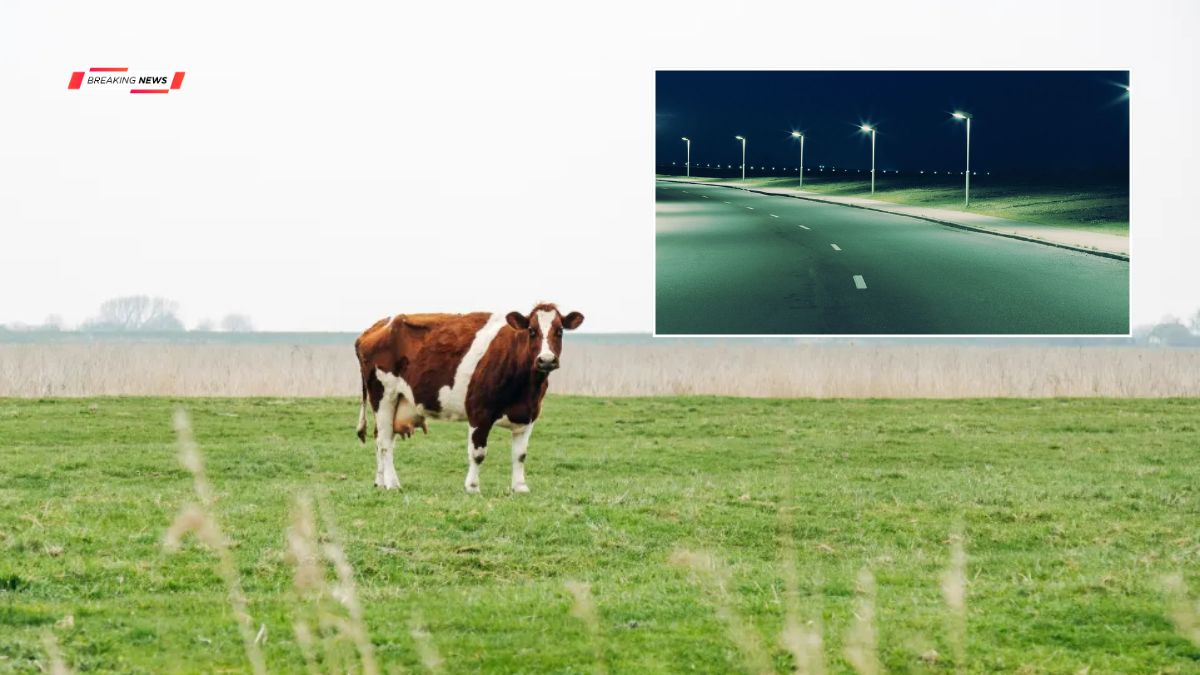
Kentucky has introduced a new law requiring certain highway lights to change how they direct light after sunset in an effort to reduce the impact of artificial lighting on nearby farmland. The legislation focuses on protecting crops from excessive nighttime light while applying only to specific state-maintained highway lighting systems.
Law
Kentucky House Bill 571 officially took effect on July 15.
Under the new law, streetlights installed on state highways maintained by Kentucky must include shielding that prevents light from shining onto nearby farmland. The goal is to reduce unnecessary light exposure that could affect agricultural production.
The legislation applies to state-maintained highway lighting but does not require changes to local government streetlights or privately owned outdoor lighting.
Requirements
The law establishes different requirements for new and existing highway lights.
All newly installed state highway lights must include shielding from the beginning. Existing fixtures will be modified after a complaint is filed by a nearby farmland owner.
Once a complaint is received, the Kentucky Transportation Cabinet must install the required shielding within 30 days.
| Requirement | Details |
|---|---|
| Effective Date | July 15 |
| Applies To | State-maintained highway lights |
| New Installations | Shielding required immediately |
| Existing Lights | Updated after complaints |
| Response Time | Within 30 days |
Exemptions
Several types of lighting are not covered by the new legislation.
The law does not apply to:
- Local government streetlights
- Privately owned outdoor lighting
- Temporary highway construction lighting
- Highway maintenance lighting used for fewer than 180 days when turned off outside active work
As a result, most homeowners and businesses in Kentucky will not be required to make any changes to their outdoor lighting.
Background
The legislation was introduced after a Graves County farmer raised concerns about highway lights shining onto soybean fields.
According to supporters of the bill, excessive artificial light may affect crop growth by interfering with natural biological processes.
Researchers have noted that prolonged nighttime light exposure can influence plant photosynthesis, disrupt the circadian rhythms of pollinating insects, and alter bacterial activity in soil that supports healthy crop development.
Support
Republican State Representative Kim Holloway, who sponsored House Bill 571, said further research showed that light pollution has become an increasing concern as outdoor lighting expands across the state.
She also noted that studies examining the effects of light pollution on people reinforced the importance of reviewing the issue more closely.
Supporters say the legislation represents a practical approach to balancing roadway safety with agricultural needs.
Similar Efforts
Kentucky is not the only state considering measures related to outdoor lighting.
In New York, lawmakers have proposed legislation that would require uncovered outdoor lights to be reduced in an effort to limit glare and light pollution.
The proposal would also require recreational facilities to turn off outdoor lighting between 11 p.m. and 5 a.m., unless an event is actively taking place.
While the New York proposal has not become law, it reflects growing interest in reducing unnecessary nighttime lighting in different parts of the country.
Kentucky’s new highway lighting law introduces targeted changes designed to protect farmland without affecting most residents or private property owners. By requiring shielding on state-maintained highway lights near agricultural areas, the law seeks to reduce light exposure while maintaining roadway illumination for drivers.
FAQs
What is Kentucky House Bill 571?
It requires shielding on certain state highway lights.
Who can file a complaint?
Owners of nearby farmland affected by highway lights.
Does the law affect private lights?

No. Private outdoor lighting is exempt.
Why was the law introduced?
To help reduce light exposure affecting crops.
When did the law take effect?
The law became effective on July 15.