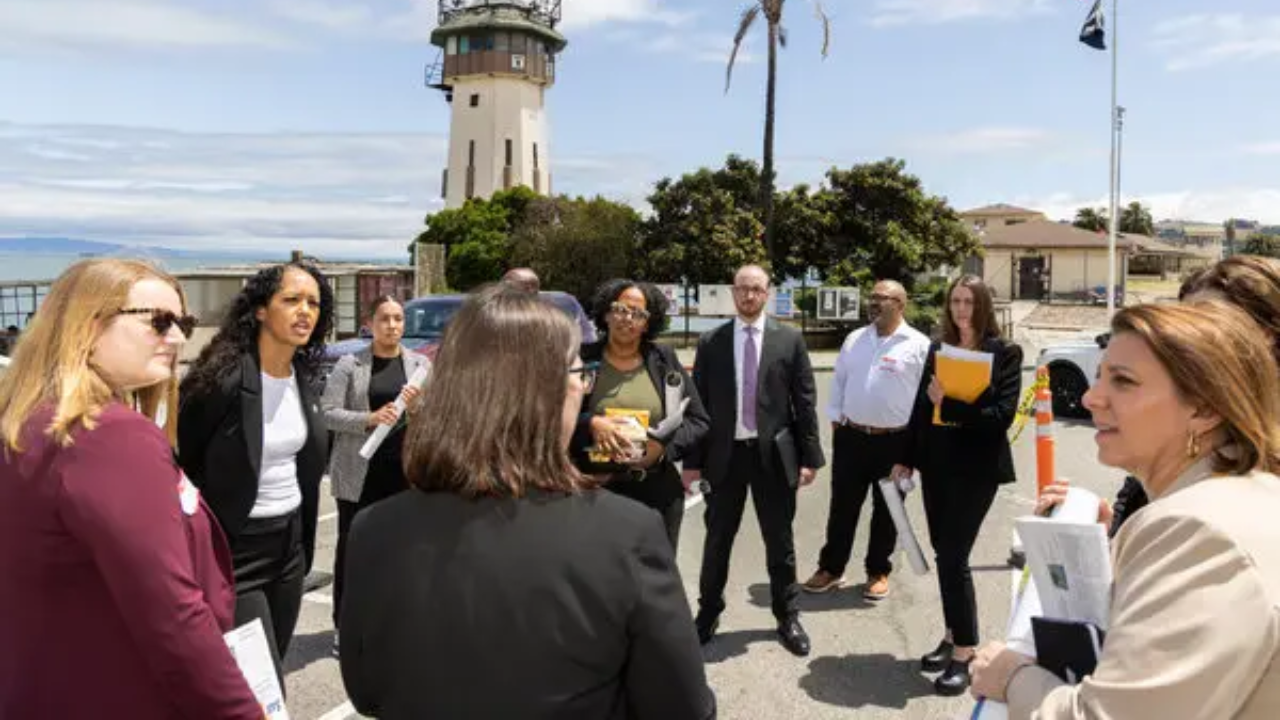
In an uncommon effort to rethink crime prevention strategies, a group of prosecutors traveled to San Quentin Rehabilitation Center in San Quentin, California, to meet directly with incarcerated individuals and ask an unusual question: How can communities better prevent crime before it happens? The discussions marked a shift from traditional criminal justice approaches by seeking perspectives from people who have firsthand experience with the justice system.
The meetings were designed to encourage honest conversations about the root causes of crime, rehabilitation, and ways to reduce future violence. Rather than focusing solely on punishment, prosecutors listened to inmates’ experiences with poverty, trauma, addiction, education, and community support, hoping those insights could help shape more effective crime prevention policies across California.
Prosecutors and Inmates Hold Unprecedented Discussions
The conversations took place inside San Quentin Rehabilitation Center, where prosecutors sat face-to-face with incarcerated individuals in structured discussions. Participants spoke openly about the life experiences that contributed to their criminal behavior, including unstable childhoods, gang involvement, substance abuse, lack of educational opportunities, and limited access to mental health services. The goal was to better understand the circumstances that often precede criminal activity.
Many inmates emphasized that intervention at an early age could have significantly altered their lives. They described the importance of mentoring programs, stronger family support, improved schools, job opportunities, and accessible counseling services. Prosecutors listened to these perspectives as part of a broader effort to explore practical solutions that may help reduce future crime before it occurs.
Rehabilitation and Prevention Become the Focus
The discussions reflected California’s growing emphasis on rehabilitation alongside accountability. Rather than viewing incarceration solely as punishment, officials explored how correctional facilities can provide education, vocational training, counseling, and life-skills programs that prepare incarcerated individuals for successful reintegration into society. Participants argued that these resources can reduce repeat offenses and improve long-term public safety.
Several inmates shared personal stories of transformation after participating in educational and rehabilitation programs while incarcerated. They explained how access to therapy, mentorship, and career training helped them understand the consequences of their actions and develop plans for a different future. Prosecutors considered these experiences valuable when evaluating policies aimed at reducing recidivism and strengthening community safety.
Different Perspectives Shape Future Crime Prevention Efforts
Justice officials acknowledged that hearing directly from incarcerated individuals offered insights that are rarely available through traditional legal proceedings. Prosecutors noted that understanding why crimes occur can complement enforcement efforts by helping policymakers identify risk factors and invest in prevention initiatives. The discussions were not intended to excuse criminal conduct but to better understand the conditions that often contribute to it.
Not everyone agrees with this approach, and some critics argue that prosecutors should focus primarily on enforcing laws and supporting victims. Others, however, believe that listening to people who have experienced the criminal justice system firsthand can help develop more balanced and effective public safety strategies. As criminal justice reforms continue to evolve, these conversations may influence future discussions on rehabilitation, prevention, and community investment.
Discussion at a Glance
| Detail | Information |
|---|---|
| Event | Prosecutors met with incarcerated individuals |
| Location | San Quentin Rehabilitation Center, San Quentin, California |
| Purpose | Discuss crime prevention and rehabilitation |
| Participants | Prosecutors and incarcerated individuals |
| Main Topics | Crime prevention, rehabilitation, education, mental health, reentry |
| Focus | Understanding root causes of crime |
| Goal | Improve future public safety strategies |
| Current Status | Ongoing policy discussions |
| Broader Impact | May inform future criminal justice reforms |
The meetings at San Quentin Rehabilitation Center represent an unconventional but significant effort to understand crime from multiple perspectives. By listening to incarcerated individuals describe the factors that contributed to their offenses, prosecutors sought insights that may help strengthen prevention programs and reduce future violence. The conversations highlighted the importance of education, mental health support, family stability, and economic opportunity in addressing the underlying causes of criminal behavior.
Although opinions differ on the value of this approach, the discussions reflect an evolving conversation about how criminal justice systems can balance accountability with prevention and rehabilitation. Whether these meetings ultimately influence public policy remains to be seen, but they have already sparked broader debate about how communities can most effectively reduce crime while improving public safety for future generations.
FAQ’s:
Where did the meeting take place?
The discussions were held at San Quentin Rehabilitation Center in San Quentin, California.
Why did prosecutors meet with inmates?
The purpose was to gain firsthand insight into the root causes of crime and explore ideas for preventing criminal behavior before it occurs.
What topics were discussed?

Participants discussed issues such as poverty, trauma, education, gang involvement, substance abuse, mental health, rehabilitation, and successful reentry into society.
Did the meetings involve legal cases?
No. The discussions were focused on crime prevention and public policy, not on reviewing individual criminal cases or legal proceedings.
What could come from these discussions?
Officials hope the insights gathered may help shape future crime prevention strategies, rehabilitation programs, and criminal justice policies aimed at reducing repeat offenses and improving public safety.